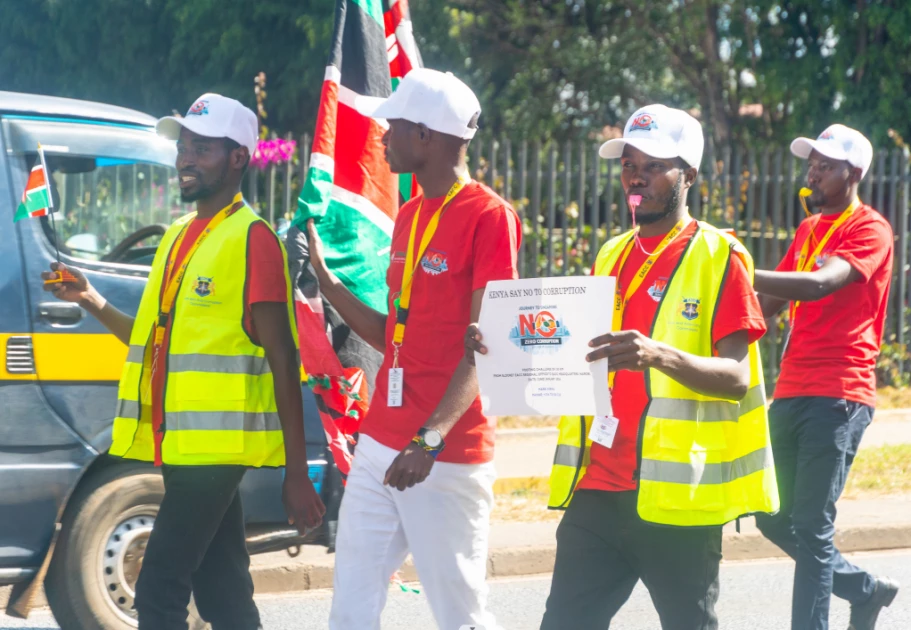
A group of young Kenyans has embarked on a 350-kilometre walk from Eldoret to Nairobi to raise public awareness about the social and economic costs of corruption, underscoring growing youth engagement in governance and accountability initiatives.
The walk, led by activist Mark Kirwa, aims to spark a national conversation on the impact of corruption on development, service delivery, and public trust in state institutions.
The initiative has drawn support from the Ethics and Anti-Corruption Commission (EACC), which described citizen participation as central to Kenya’s anti-graft efforts.
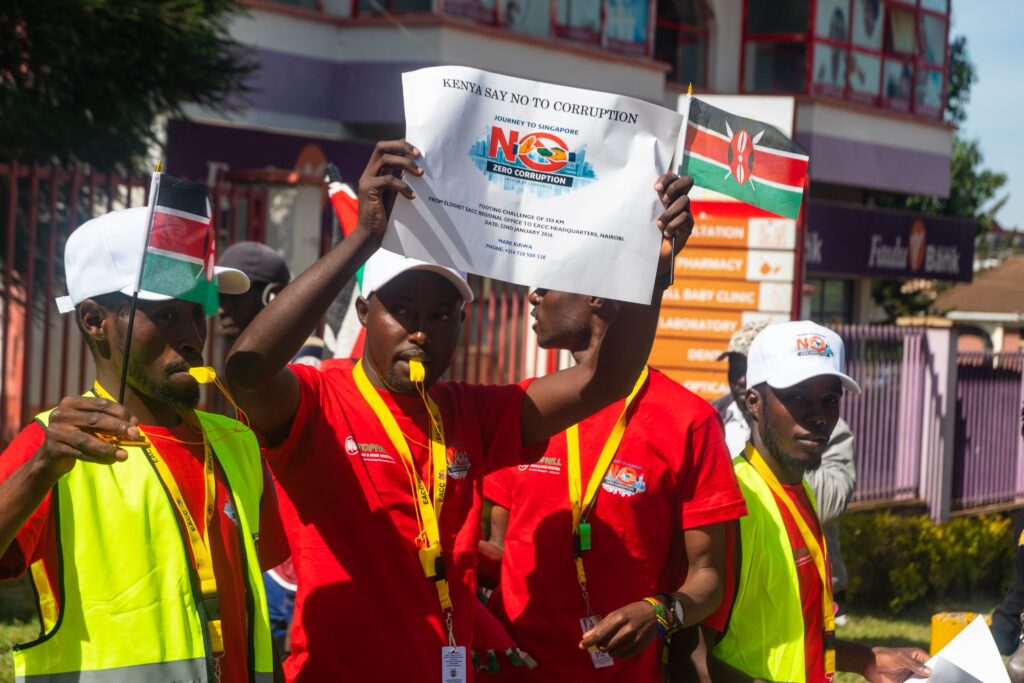
Before setting off, the team paid a courtesy visit to the EACC’s North Rift Regional Manager, Maj. (Rtd) Kuntai Ole Tingisha. Speaking during the engagement, Tingisha said meaningful citizen involvement was critical to building a prosperous and accountable society.
“Citizen engagement in governance is not optional. It is a pillar of sustainable development and national prosperity,” Tingisha said, according to an EACC statement.
The commission reaffirmed its support for citizen-led anti-corruption initiatives, noting that public participation strengthens prevention efforts by promoting ethical values and social accountability beyond enforcement and prosecutions.
Under Article 10 of the Constitution of Kenya, 2010, public participation, integrity, transparency, and accountability are binding national values that apply to all state organs and public officers. Anti-corruption agencies have increasingly emphasized civic education and community engagement as part of a broader prevention strategy anchored in these constitutional principles.
EACC officials say youth engagement is particularly critical, given that young people make up the majority of Kenya’s population and are often the most affected by corruption through unemployment, poor services, and limited economic opportunities.
The commission’s support for the walk aligns with its mandate under the Ethics and Anti-Corruption Commission Act, which includes developing and promoting standards and best practices in integrity and anti-corruption awareness.

The Eldoret–Nairobi walk is expected to culminate in the capital, where the team plans to engage the public and stakeholders on integrity, ethical leadership, and the long-term costs of corruption to national development.
As the march progresses, EACC said it would continue to encourage similar grassroots initiatives, emphasizing that the fight against corruption is a shared responsibility between state institutions and citizens.