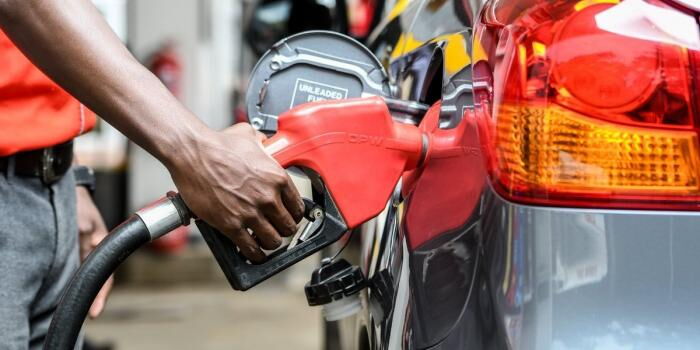
Motorists across Kenya will experience slight relief at the pump after the Energy and Petroleum Regulatory Authority (EPRA) announced a downward adjustment in fuel prices following a government decision to reduce Value Added Tax (VAT) on petroleum products.
In an addendum to its earlier pricing review released on April 15, 2026, EPRA confirmed that the National Treasury had lowered VAT from 13 per cent to 8 per cent under a legal notice issued on the same day. The revised prices will apply from April 16 to May 14, 2026.
Acting EPRA Director General Dr. Joseph Oketch said the tax revision directly influenced the new pump prices.
“As a result, the pump price per litre in Nairobi of Super Petrol and Diesel decreases by Ksh9.37 and Ksh10.21 respectively while that of Kerosene remains unchanged,” he stated.

Following the adjustment, Nairobi motorists will now pay KSh197.60 per litre for Super Petrol, KSh196.63 for Diesel, and KSh152.78 for Kerosene. In Mombasa, prices will stand at KSh194.32 for Super Petrol, KSh193.35 for Diesel, and KSh149.49 for Kerosene.
EPRA further noted that although kerosene prices remain unchanged, its subsidy has been reduced from KSh108.10 to KSh96.56 per litre, reflecting a shift in government spending priorities.
The latest review comes just a day after EPRA announced a sharp increase in fuel prices for the April–May cycle, which had triggered public uproar.
Initially, Super Petrol had risen by KSh28.69 per litre while Diesel had increased by KSh40.30, driven by global oil price spikes and a weakening shilling.
Energy Cabinet Secretary Opiyo Wandayi defended the government’s intervention, stating that President William Ruto directed the implementation of a KSh6.2 billion subsidy package to cushion consumers from a steeper price surge.
“The prices could have gone up much more, but because the Head of State directed us to put a subsidy, the rise was moderated,” he said.
The government has also maintained temporary tax relief measures and fuel stabilization efforts aimed at easing transport and commodity costs.
While the latest reduction offers modest relief, analysts warn that volatility in global oil markets and currency fluctuations may continue to influence pump prices in the coming months.