Arsenal and Chelsea were the biggest beneficiaries of video assistant referee and on-field errors this season.
Mikel Arteta’s Gunners won the Premier League while becoming the first team to go the whole campaign without receiving a red card or conceding a penalty.
But data logged by the Premier League’s key match incidents (KMI) panel shows that Arsenal should have conceded three penalties and received three red cards.
In total, Arsenal had seven referee mistakes in their favour, while London rivals Chelsea gained from eight.
The Stamford Bridge club received two of the three incorrect VAR interventions, leading to a disallowed goal for Fulham and a penalty against Crystal Palace.
The full judgements, seen by BBC Sport, show there were 25 VAR errors this season, up from the 18 in the 2024-25 campaign
It is still a marked improvement on previous years, with 31 errors in 2023-24 and 38 in 2022-23.
Here, BBC Sport looks how each club was affected and lists every mistake at the end of the article.
Who won and lost with VAR?
This takes into account three aspects: decisions wrongly changed on review – or where the referee incorrectly stuck by his call when at the monitor – and those that should have been fixed but were not.
Bournemouth and Chelsea gained most, with four in their favour.
As well as the Fulham and Palace decisions, the Blues should also have conceded penalties against Brighton and Bournemouth.
The Cherries escaped Marcos Senesi red cards twice, against Liverpool and Palace, and should have conceded a penalty at home to Sunderland. Plus, they got away with a wrongly awarded spot-kick in the return game against the Eagles.
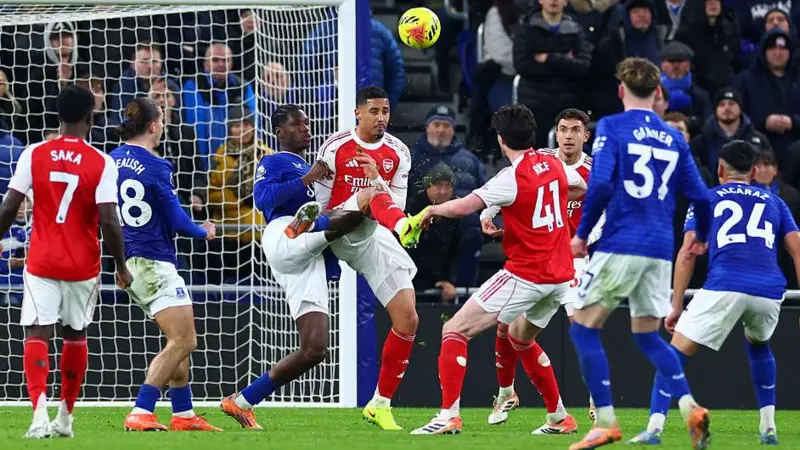
Arsenal gained from three errors, including spot-kicks which should have been awarded to Everton and Brighton.
When it comes to the clubs who suffered, Palace and Everton had the most with three mistakes.
The Toffees should have been awarded penalties against Arsenal, West Ham and Manchester City, but did escape a spot-kick against Wolves.
Overall, Chelsea come out on top because they did not suffer any VAR mistakes, followed by Arsenal on a net score of two.
Palace came out worst on -3, with Everton and Brighton on -2.
The on-field errors not for VAR
The KMI panel first votes on the referee’s decision, and then considers if a mistake should go to video review.
Each season there is a list of incidents which the KMI panel feels should have been a penalty or a straight red card but they did not reach the threshold for VAR.
The KMI panel also looks at second yellow cards. Should a player have been dismissed? Or did they wrongly escape red?
Brentford gained most with four, but also suffered the greatest with five mistakes.
Arsenal, Everton and Wolves were the next biggest beneficiaries, with three in their favour.
Mikel Merino should have been shown a second yellow for Arsenal against Aston Villa when the score was 0-0 in a game the Gunners would win 4-1.
Gabriel should have seen red against Manchester City, while Arsenal‘s late penalty against Leeds for a foul on Max Dowman was wrongly awarded.
The Toffees should have given a penalty away against the Gunners and Chelsea, while James Garner escaped a second yellow at Villa.
After Brentford‘s five mistakes against them, there are then four clubs on four errors: Aston Villa, Manchester City, Newcastle and Tottenham.
Pep Guardiola’s men should have received a penalty against Tottenham and a Liverpool goal should have been chalked off for offside. Gabriel and Diogo Dalot both escaped red cards.
Overall it is Everton, Sunderland and Wolves who come out on top on +3. Bournemouth are most affected on -4, with Villa, Leeds and Newcastle on -3.
The overall winners and losers
This takes into account both VAR and on-field errors.
Chelsea and Arsenal benefitted from the most mistakes, on eight and seven respectively.
The two London clubs are then followed by Wolves on six.
Brentford were impacted the most with seven errors, followed by Bournemouth on six and Manchester City on five.
Once you factor in decisions for and against, Arsenal and Chelsea share the top spot with a score of +5, followed by Wolves on +4.
The club who should have the biggest cause for complaint is Leeds, who have an overall score of -4.
The Elland Road club are the only team not to have any kind of officiating mistake go for them.
Villa are next on -3, with Brighton and Palace on -2.
What do the fans really think of VAR?
The past few months have seen two vastly different supporters’ polls about VAR.
A survey of just under 8,000 fans carried out by the Football Supporters’ Association (FSA) in March found that 75% of fans of Premier League clubs are against VAR.
But a YouGov poll published on Friday, external found that only 18% of fans wanted the Premier League to stop using VAR entirely, with 68% instead favouring changes being made to how it is used.
The YouGov poll of just over 2,000 people found that 72% of regular viewers felt the game was less enjoyable, but the FSA survey was more than 90%.
The difference can largely be put down to the target audience, as well as the framing of the questions.
What is certain from both is that all fans do not feel VAR has been successful.
Professional Game Match Officials (PGMO), which runs refereeing in the professional game, was happy with the season-on-season improvements in recent seasons.
An increase in mistakes is a setback to that progress, but it would argue the overall trend is positive.
One marked improvement has been on serious foul play, with the missed red card in the penultimate gameweek the first error of the campaign. Last season a record four red cards were overturned on appeal after a player had been wrongly sent off.
This season saw the fewest VAR interventions of all seven seasons, and the Premier League continues to have the lowest rate of reviews across Europe’s top leagues.
PGMO also says delays have improved, to 47 seconds per game this season from 64 seconds in 2023-24.