The U.S. Federal Reserve lowered its benchmark interest rate by 0.25 percentage points on Wednesday, marking its third cut this year amid deepening internal divisions over the economic outlook and the path forward.
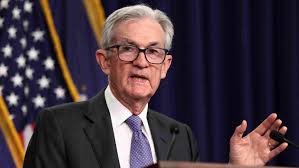
The move brings the federal funds rate to a range of 3.50% to 3.75%, its lowest level in three years. While the central bank’s latest projections suggest just one more rate cut in 2025, Fed Chair Jerome Powell emphasized a cautious, data-dependent approach, signaling a likely pause.
“We are well-positioned to wait to see how the economy evolves,” Powell told reporters, noting that policymakers need time to assess how this year’s cuts are filtering through the economy. He acknowledged the Fed faces a “very challenging situation” in balancing the competing risks of rising inflation and a softening labor market. “You can’t do two things at once,” he said.
The decision revealed significant rifts within the committee, passing in a non-unanimous vote with three dissents. Stephen Miran, on leave from Trump’s Council of Economic Advisers, argued for a more aggressive 0.5-point cut, while Chicago Fed President Austan Goolsbee and Kansas City Fed President Jeffrey Schmid favored holding rates steady.
President Donald Trump, a frequent critic of Powell, said after the meeting that the cut should have been “at least doubled.” “Our rates should be much lower,” he insisted.
While inflation remains above the Fed’s 2% target, recent milder readings and concerns over a cooling job market—with unemployment ticking up to 4.4% in September—have shifted the Fed’s focus toward supporting employment. Analysts note that earlier fears of tariff-driven inflation have eased, allowing the central bank to prioritize labor market stability for now.
With key economic data delayed by November’s government shutdown, the Fed enters 2025 guided more by uncertainty than conviction, poised to react rather than lead.
By James Kisoo