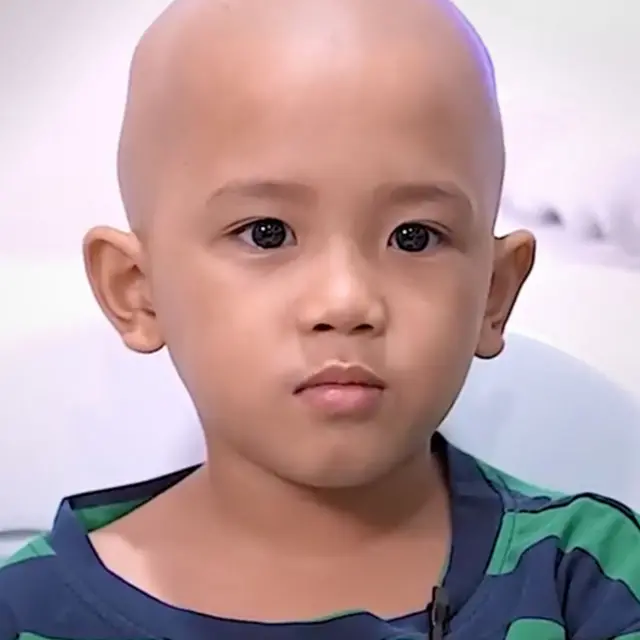
A young boy, pale and bald, stares into the camera. “I am seven years old and I have cancer,” he says in a small voice. “Please save my life and help me.”
His name was Khalil. But his plea was a performance, his distress staged. According to his mother, Aljin, he didn’t want to record the video. Crews had shaved his head, hooked him to a fake IV drip, and asked his family to pretend it was his birthday.
They gave him a script to recite in English. When he didn’t cry on cue, they placed chopped onions beside him and dabbed menthol under his eyes.
Aljin agreed to this because, despite the artifice, Khalil’s cancer was heartbreakingly real. She was told the film would crowdfund money for better treatment. It worked—a campaign in his name raised $27,000.
Yet Aljin was later told the campaign had failed. She says she received none of that money, only a $700 “filming fee.” Khalil died one year later.
This is not an isolated tragedy. A BBC World Service investigation has uncovered a global network of fundraising scams exploiting desperately ill children and their families. We have identified at least 15 families who saw little to none of the money raised in their names, and who often had no idea their children’s images were being used in slick, highly successful online campaigns.
In nine cases linked to a single network, families say they received nothing from the $4 million apparently raised for their children. A whistleblower from the network described scouting for “beautiful children” who “had to be three to nine years old… without hair.”
Our investigation points to a key player: an Israeli man named Erez Hadari, now living in Canada.
The story began in October 2023, when a YouTube advertisement stopped us cold. “I don’t want to die,” sobbed a girl named Alexandra from Ghana. “My treatments cost a lot.”
Her campaign had seemingly raised nearly $700,000. We soon found more videos—slick, emotionally charged pleas from sick children worldwide, all following the same pattern.
The most prominent campaigns were under the name Chance Letikva (“Chance for Hope”), registered in Israel and the US.
Tracking down the children featured required a complex digital search—using geolocation, social media, and facial recognition software to find families from Colombia to the Philippines. Their stories revealed a pattern of exploitation and broken promises.
By James Kisoo