President William Ruto has unveiled an ambitious slate of multi-billion-shilling infrastructure projects set to take shape from early 2026, with a strong focus on easing traffic congestion, opening up regional economies and modernising Kenya’s road network.
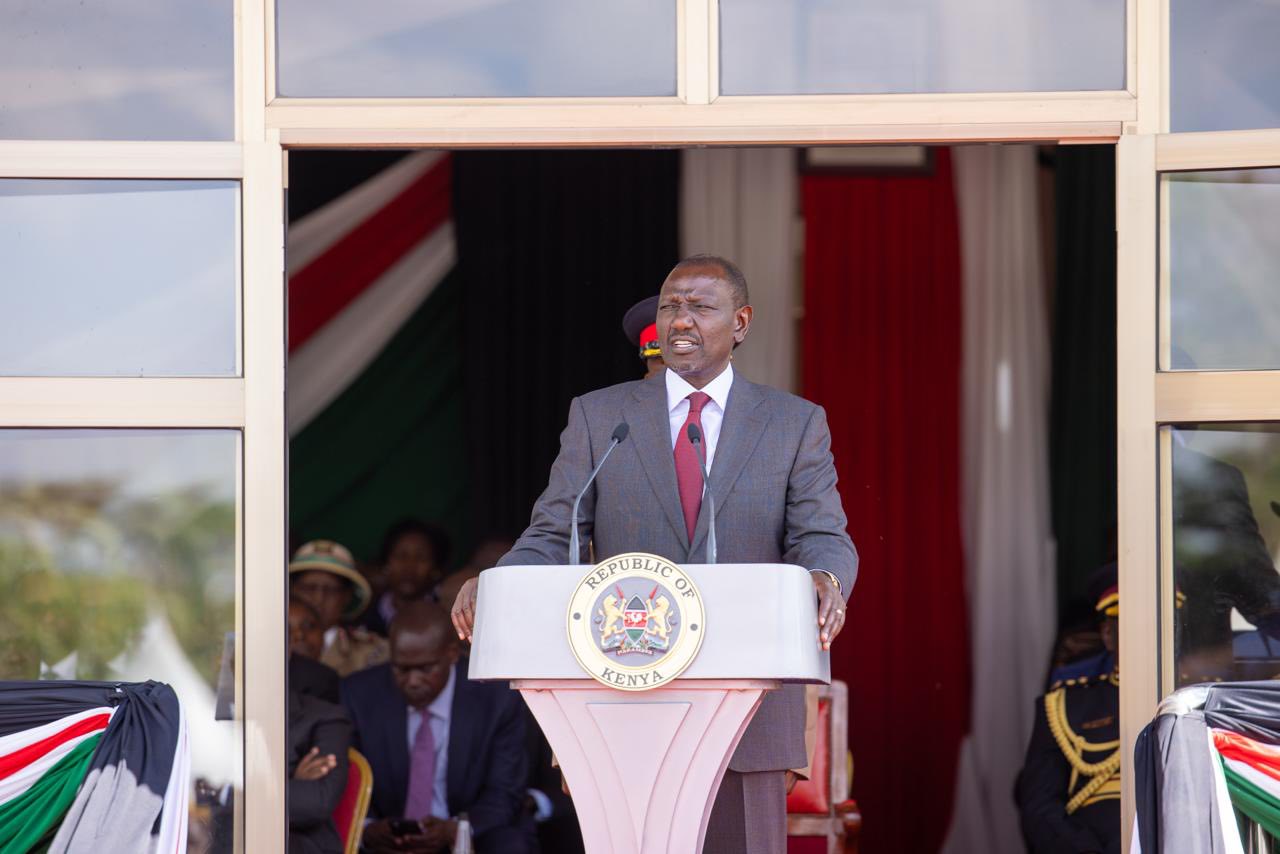
Speaking during the 62nd Jamhuri Day celebrations at Nyayo Stadium on Friday, December 12, Ruto announced plans to construct a 60-kilometre Nairobi–Thika Expressway, one of the most significant additions to the capital’s transport system in decades.
The proposed expressway will branch off the existing Nairobi Expressway at the Museum Hill interchange before terminating in Thika town, Kiambu County. Construction is expected to begin in 2026.
According to the President, the new highway is designed to complement the Thika Superhighway by decongesting one of the busiest transport corridors in the country and improving travel times between Nairobi and Central Kenya.
Another major addition to the transport network announced previously is the Nairobi–Mombasa Usahihi Expressway, a 525-kilometre, six-lane highway valued at USD 3.5 billion, which will run parallel to the existing road and significantly cut travel time between the two cities.
Nairobi–Nakuru–Mau Summit Expressway
The Nairobi–Nakuru–Mau Summit Expressway is another flagship project in Ruto’s infrastructure agenda.
Launched on November 28, 2025, in Kiambu County, the project incorporates two major corridors: the 175-kilometre Nairobi–Nakuru–Mau Summit Road (A8) and the 58-kilometre Nairobi–Mai Mahiu–Naivasha Road.
Both routes will be upgraded into modern, multi-lane dual carriageways aimed at improving safety, boosting trade and enhancing connectivity along the Northern Corridor.
JKIA–Waiyaki Way Upgrade
During this year’s Mashujaa Day celebrations, the President also announced plans to upgrade the highway linking Jomo Kenyatta International Airport (JKIA) to ABC Place through Uhuru Highway and Waiyaki Way.
The upgrade will include beautification works to align the road with the standards of the Nairobi Expressway. Ruto said the project is critical to easing congestion on one of Nairobi’s most heavily used routes.
Isiolo–Mandera Highway (LAPSSET)
In northern Kenya, construction of the Isiolo–Mandera Highway is advancing in phases under the LAPSSET corridor programme.
On December 9, 2025, the Kenya National Highways Authority (KeNHA) announced plans to begin the second phase of the project — the 70-kilometre Modogashe–Samatar stretch.
This will be followed by the third phase, the 76-kilometre Rhamu–Mandera section, forming part of the larger 750-kilometre Mandera–Wajir–Garissa–Isiolo Highway.
The first phase, the 195-kilometre Isiolo–Modogashe road, is nearing completion after construction began in May 2025. The World Bank’s International Development Association has already disbursed Ksh81 billion to support the project.
Kakamega–Nandi Road Projects
In Western Kenya, Ruto launched the upgrade of the 19-kilometre Kakamega Airstrip–Shinyalu–Chepsonoi (B12) Road on October 30, 2025, improving connectivity between Kakamega and Nandi counties.
He also commissioned the 34-kilometre Turbo–Sikhendu Road in Lugari, Kakamega County, a Ksh3.6 billion project expected to spur trade and ease movement in the region.
Rusinga Ring Road
Meanwhile, the Kenya Urban Roads Authority (KURA) completed the Ksh1.3 billion, 19-kilometre Rusinga Ring Road on December 9, 2025.
The road is the first fully tarmacked route on Rusinga Island and is expected to significantly transform the island’s economic prospects by improving access and mobility.
Rail, ports and energy projects
Beyond roads, Ruto confirmed that the Standard Gauge Railway (SGR) will be extended from Naivasha to Kisumu starting January 2026, before proceeding to Malaba, strengthening Kenya’s role as a regional transport hub.
He also announced plans to modernise JKIA, the Port of Mombasa and the Port of Lamu through public-private partnership (PPP) arrangements.
In the energy sector, construction of Kenya’s first PPP-funded electricity transmission lines, worth Sh40.4 billion, is expected to begin by August 2026.
The projects include the Lessos–Lossuk line and the Kisumu–Kibos–Kakamega–Musaga line.
Aviation and sports infrastructure
Ruto also revealed plans for a new international airport in Nairobi, estimated to cost USD 2 billion (about Sh264 billion), to be developed through a PPP model.
The project, which he is expected to seek US financial support for during an upcoming visit to Washington DC, aims to ease pressure on JKIA and position Nairobi as a leading regional aviation hub.
In sports infrastructure, the government plans to install a canopy at Nyayo National Stadium as part of efforts to modernise the facility and align it with international standards.
According to the President, transport infrastructure remains central to Kenya’s competitiveness. He said 2,500 kilometres of highways have been earmarked for dualling and 28,000 kilometres for tarmacking over the next decade.
With several projects already underway and others slated to begin in January 2026, the government says the investments are central to its long-term plan to drive economic growth through infrastructure development.