Who would have thought that serums infused with snail mucin—the sticky substance snails secrete—would become a skincare staple worldwide? Yet this gooey ingredient, celebrated in viral TikTok challenges for its elasticity, did exactly that.
It propelled its manufacturer, the small South Korean label CosRX, onto the global stage, eventually leading to its acquisition by Amorepacific, the country’s cosmetics giant.
The rapid rise of that sticky serum is a perfect snapshot of how K-beauty transformed from a viral trend into an economic powerhouse.
Driven by social media trends and an almost cult-like online following, it has become one of South Korea’s biggest industries, rooted in a society where the pressure to look flawless runs high in a fiercely competitive culture.
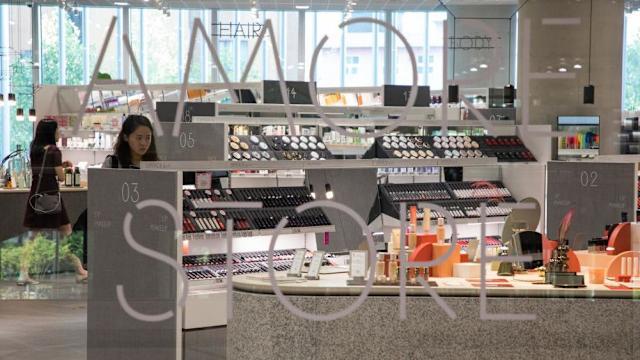
The numbers tell the story. South Korea’s domestic beauty market was valued at about $13bn (£9.6bn) in 2024, with sales of some products growing at double-digit rates.
But its reach is undeniably global. In the first half of 2025, South Korea overtook France—the historic birthplace of modern cosmetics—to become the world’s second-largest beauty exporter, trailing only the United States.
This success is part of the broader Hallyu, or Korean Wave, that swept K-pop and K-dramas across the world. Today, K-beauty brands command entire aisles in global retailers from Sephora and Boots to Walmart.
Online, searching “Korean skincare” on TikTok, Instagram, or YouTube unleashes a deluge of content. Influencers with hundreds of millions of followers dissect ingredient lists, film unboxings, and create “Get Ready With Me” videos built around concepts like “glass skin,” sheet masks, and, of course, snail mucin.
“There are so many products and brands, and a lot of times you’re exposed to millions of them as a consumer—it’s highly saturated and competitive,” said Liah Yoo, a beauty influencer and founder of the U.S.-based K-beauty brand Krave Beauty.
From a niche trend to a dominant global force, K-beauty has solidified its status not just as a beauty phenomenon, but as a formidable economic engine.
By James Kisoo