By Peter John
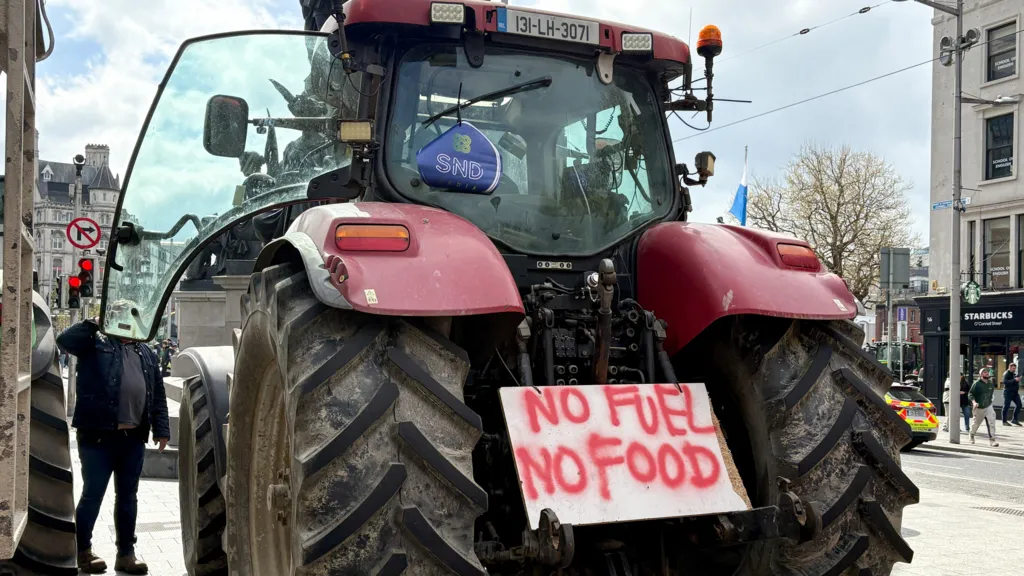
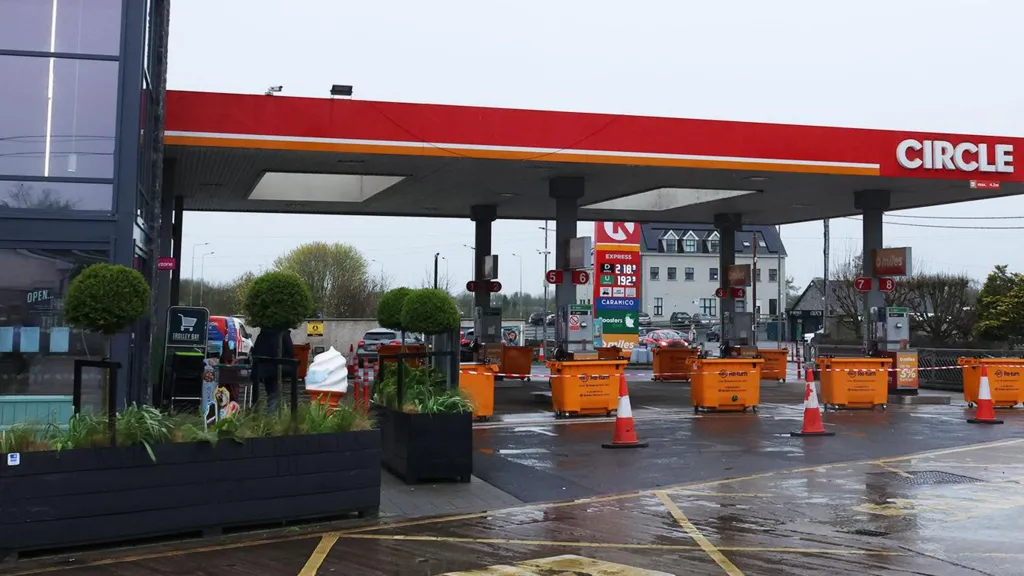
Hundreds of petrol stations across the Republic of Ireland have run out of fuel as nationwide protests over soaring prices entered their fifth day, triggering widespread disruption to transport and daily life.
State broadcaster RTÉ reported that about 500 forecourts have run dry of both petrol and diesel, largely due to ongoing demonstrations involving slow-moving convoys of trucks and tractors blocking major roads.
The protests, which began earlier this week, have been driven by sharp increases in fuel prices linked to the ongoing Middle East conflict involving the United States, Israel and Iran.
Widespread disruption
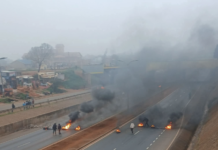
Large parts of Dublin city centre remain paralysed, with key routes including O’Connell Street and South Quay closed to traffic. Major highways have also been affected, including the M50, M7 at Portlaoise and the M8 near Cashel, with blockages reported in multiple counties.
Traffic congestion has intensified, with long queues forming on major routes such as the M1 near Dundalk, where protesters have blocked both lanes.
Public transport services have also been disrupted, with some routes suspended and delays reported across Dublin. Bus Éireann said it would prioritise airport passengers where possible, while travellers heading to Dublin and Shannon airports have been urged to allow extra time.
Police invoke emergency measures
In response to the escalating situation, An Garda Síochána has declared the protests an “exceptional event,” enabling it to deploy additional officers to manage the crisis.
Meanwhile, the National Emergency Coordination Group warned that fuel supplies for essential services, including ambulances and fire engines, are coming under increasing strain.
Government under pressure
The Irish government has acknowledged the severity of the situation and is working on a fuel support package following what it described as “constructive engagement” with representatives from the haulage and farming sectors.
Tánaiste and Finance Minister Simon Harris said the proposed measures would be “substantial and significant,” adding that talks with stakeholders would continue over the weekend.
However, he also called for an end to the blockades, saying, “The blockade has to end.”
Taoiseach Micheál Martin warned that the protests risk pushing the country “to the precipice of turning oil away” at a time of global supply constraints.
Global crisis driving local anger
The demonstrations have been fuelled by a surge in global oil prices following disruptions to supply chains, including the closure of the Strait of Hormuz—a key route that handles around 20 percent of the world’s oil trade.
In recent weeks, diesel prices in Ireland have jumped from about €1.70 to €2.17 per litre, while petrol prices have risen by as much as 25 cents per litre at many pumps.
Uncertain outlook
With negotiations ongoing and protests showing little sign of easing, Ireland faces continued disruptions in the days ahead.
Authorities have warned that unless a resolution is reached soon, the crisis could deepen, placing further strain on essential services and the wider economy.