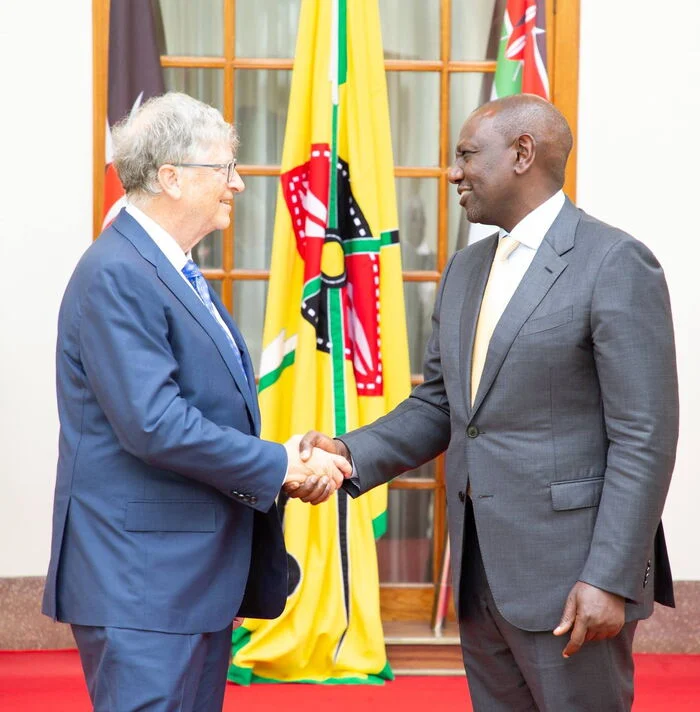
The Bill and Melinda Gates Foundation has dismissed claims circulating on social media alleging that it is involved in releasing mosquitoes in Kenya.
In a statement on Monday, February 9, the organization denied the claims, stating that it does not run any such operations either in Nairobi or elsewhere.
“The Gates Foundation is aware of social media posts claiming that we release mosquitoes in Kenya. This claim is false.
“The Gates Foundation does not release mosquitoes, operate laboratories that do so, or run vector-control activities in Nairobi or anywhere else,” the statement read.
Gates Foundation also clarified that malaria control initiatives in Kenya are managed locally, with the foundation only playing a supportive role.
“In Kenya, malaria prevention and control efforts are led by Kenyan authorities and institutions, in accordance with national laws and regulatory oversight.
“The foundation supports Kenyan-led priorities transparently and responsibly, working alongside governments, researchers, and public health partners,” the statement added.
Notably, gene drive technology is a new genetic tool designed to help fight malaria by targeting the mosquitoes that spread the disease.
Normally, a gene has a 50% chance of being passed on to the next generation, but a gene drive can ensure almost all offspring inherit a specific trait.
Scientists are using this technology to either reduce mosquito populations by making females infertile or to make mosquitoes unable to carry the malaria parasite.
Over time, this could significantly lower malaria transmission.

This comes months after the Kenya Medical Research Institute (KEMRI) unveiled a Ksh516 million partnership with the Bill & Melinda Gates Foundation aimed at boosting women’s health research and innovation across Africa.
In a press statement on Saturday, October 11, 2025, KEMRI said the three-year initiative, officially set to begin in January 2026, will focus on empowering African women researchers through mentorship, capacity building, and leadership training.
The programme, known as the Leadership in Excellence for African Women’s Health (LEA-WH), is designed to help scientists and innovators develop locally tailored solutions to some of the continent’s most critical health challenges.
“The LEA-WH Programme represents KEMRI’s commitment to building scientific leadership that is inclusive, innovative, and African-led. By empowering scientists to lead groundbreaking research, we are investing in the future of Africa’s health and development,” Acting Director General, Prof. Elijah Songok, said.
According to KEMRI, the programme has set ambitious goals for the next decade.
By 2033, it aims to bring between five and ten new health products to the market-testing phase, support a similar number of startups, facilitate patent applications, and enable up to half of its research fellows to secure independent grants.
KEMRI noted that a key feature of the initiative will be the annual ScienceX Africa Summit to serve as a hub for collaboration, mentorship, and knowledge sharing among researchers from across the continent.
“Our vision is to cultivate a vibrant ecosystem where African researchers and innovators lead in developing transformative solutions for women’s health,” LEA-WH Programme Director, Prof. Elizabeth Anne Bukusi, said.
The programme will be carried out in partnership with the US National Academy of Medicine and overseen by the LEA-WH Advisory Council, chaired by Songok.