A German biotechnology firm is pioneering the use of live Madagascar hissing cockroaches as controllable bio-robots, equipping them with miniature electronic backpacks to conduct reconnaissance in environments too dangerous or inaccessible for humans or conventional machines.
SWARM Biotactics, founded in 2024 and headquartered in Kassel with operations extending to Berlin and San Francisco, has developed systems that fit the insects with neural interfaces, sensors, cameras, microphones, Doppler radar and secure communication modules.
Electrodes attached to the antennae stimulate natural navigation, allowing operators to steer individual cockroaches or coordinate autonomous swarms of dozens, potentially hundreds, via advanced algorithms.
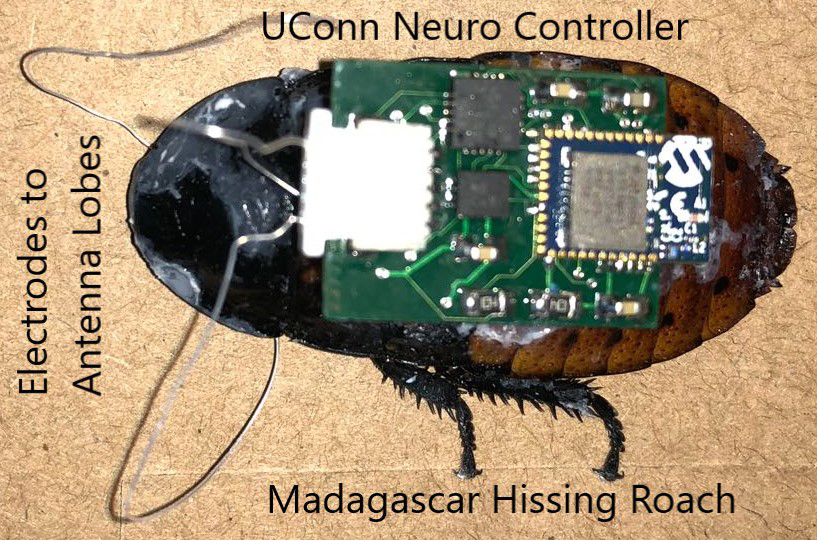
Chief executive Stefan Wilhelm explained the choice of species to reporters, noting its size, resilience to extreme conditions including chemicals, heat and radiation, and energy efficiency honed by evolution. Current backpacks weigh up to 15 grams, with engineers targeting 10 grams to minimise burden.
“It’s low signature, super energy efficient, almost undetectable, and you can scale it almost unlimitedly,” he said, insisting procedures are painless and insect welfare prioritised for reliable performance.
The technology has attracted Bundeswehr interest amid Europe’s heightened security posture following Russia’s invasion of Ukraine.
Collaboration focuses on intelligence gathering in denied areas like rubble or underground tunnels, with specialised insects handling imaging, positioning or relay tasks for precise mapping. Offensive applications are not current priorities.
Beyond defence, Wilhelm highlighted humanitarian uses, such as locating survivors in collapsed structures after disasters. The company, which raised €13 million in funding this year from investors including Vertex Ventures and Possible Ventures, anticipates larger deployments within 18 to 24 months and is exploring locusts and grasshoppers.
While biohybrid robotics promises innovative solutions for search-and-rescue and security, it raises ethical debates over modifying living creatures, even insects, for technological ends in an era of rapid military innovation.