
By Andrew Kariuki
The late-night demolition of structures at Nairobi’s Gikomba Market has moved beyond a single event. It has become a defining moment in the ongoing tension between urban planning enforcement and the protection of livelihoods.
Carried out in the dead of night on 31 March 2026, the operation left traders waking up to flattened stalls, destroyed goods and uncertain futures. Authorities maintained that the exercise targeted structures on riparian land as part of broader efforts to address flooding and restore drainage systems.
But the manner in which it was executed has drawn sustained criticism, particularly from political leaders across the divide.
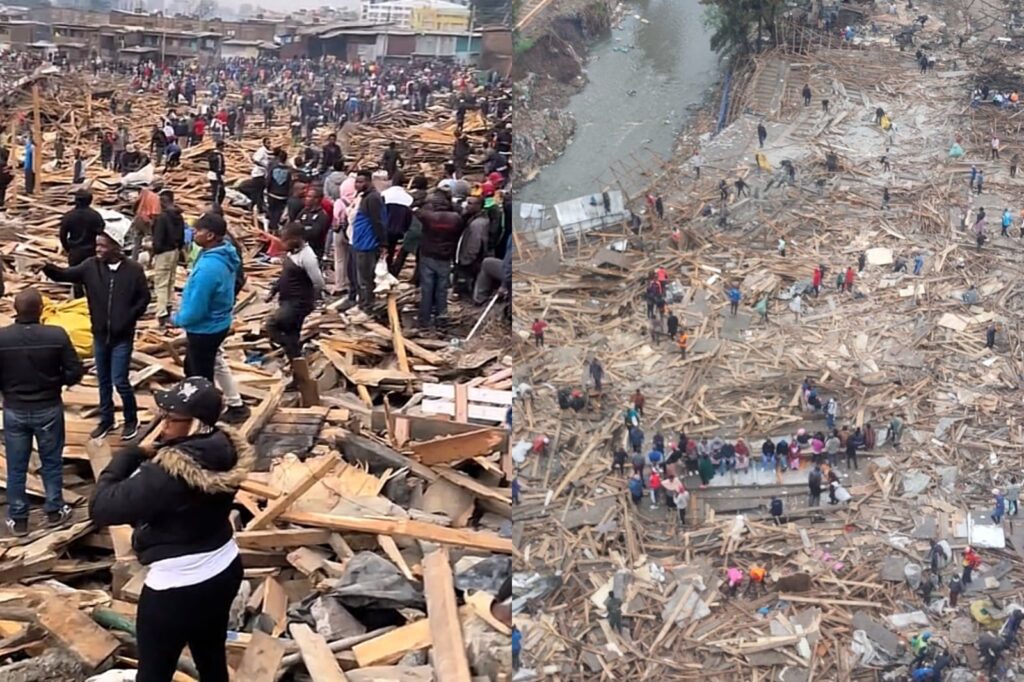
Former Deputy President Rigathi Gachagua described the demolitions as “inhuman and beastly,” framing them as an attack on businesses linked to the Mt. Kenya region. Wiper Party leader Kalonzo Musyoka questioned the legitimacy of a government that destroys the livelihoods of its own citizens.
Embakasi East MP Babu Owino, who had already secured a court order as the traders lawyer, further escalated the matter to court, arguing that the demolitions violated existing court orders that had directed that the status quo be maintained pending hearing.
Other leaders echoed similar concerns. Manyatta MP Gitonga Mukunji called for compensation stating “A market is the people and not the buildings,”while Bazenga MP James Mwangi Gakuya described the losses suffered by traders as devastating. People’s Liberation Party leader Martha Karua questioned whether due process had been followed, raising concerns about selective enforcement of riparian regulations.
Former Nominated Senator Millicent Omanga termed the demolitions a significant blow to thousands of traders who depend on Gikomba for daily income.
Airbase MCA aspirant Abdiwahad Mohamed Nurow captured a broader sentiment on the ground, stating: “Demolishing Gikomba Market without a clear relocation plan, adequate compensation and structured government support is not only unjust but deeply inhumane.
Thousands of hardworking traders depend on this market for their daily livelihood. Abrupt actions that disregard their survival, dignity and economic stability reflect a failure in leadership and planning. The road to Singapore should never come at the expense of the very people it is meant to uplift.
A humane and responsible approach requires dialogue, proper resettlement and empowerment of affected traders. Anything less is a disservice to wananchi.”
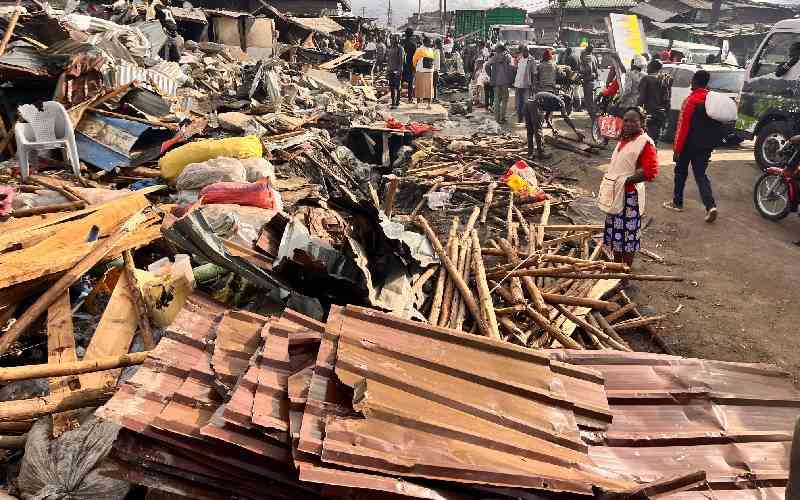
At the centre of the debate is not just whether the demolitions were legally justified, but whether they were carried out in a manner consistent with constitutional principles of dignity, fairness and administrative justice.
Kenya’s laws on riparian reserves and urban planning are clear. Structures built on such land are subject to removal, particularly where public safety is at risk. Recent floods across the country, which claimed lives and displaced families, have reinforced the urgency of enforcing these regulations.
However, enforcement alone does not resolve the deeper question: how should such action be carried out in a way that protects both lives and livelihoods?
Gikomba is not just a market. It is an economic lifeline for thousands of small-scale traders who operate on thin margins. For many, it represents years of investment, informal credit systems and daily survival.
The absence of a clear relocation framework, compensation plan or a vigorous and structured engagement process to raise awareness on the relocation plan has raised concerns about whether enforcement is being pursued without adequate safeguards.
Equally, court orders directing the maintenance of status quo being disregarded raise serious questions about adherence to the rule of law, undermine not only the judiciary in totality but also the voice of the petitioners and their hope in justice being their ‘Shield and Dender.’

The demolitions have also reignited longstanding concerns about selective enforcement, with critics questioning whether similar measures are applied uniformly across all developments along riparian land.
As Nairobi continues to grapple with rapid urbanisation, climate-related risks and informal economic growth, the Gikomba case underscores the complexity of balancing environmental compliance with social and economic realities.
Ultimately, the immediate issue is not whether illegal structures should be removed or whether the market is finally going to get a much needed ‘face lift’ but how that process is carried out.
The events at Gikomba suggest that without transparency, proper planning and humane execution, even legally grounded actions risk eroding public trust and deepening economic vulnerability.
As the debate continues, the question remains whether future enforcement efforts will integrate both the urgency of environmental protection and the equally pressing need to safeguard not only lives but also their livelihoods.