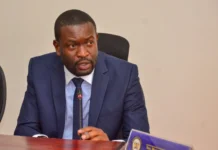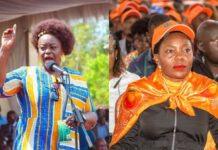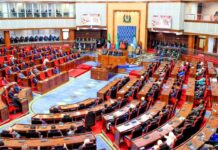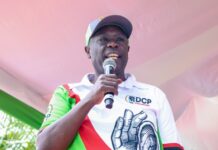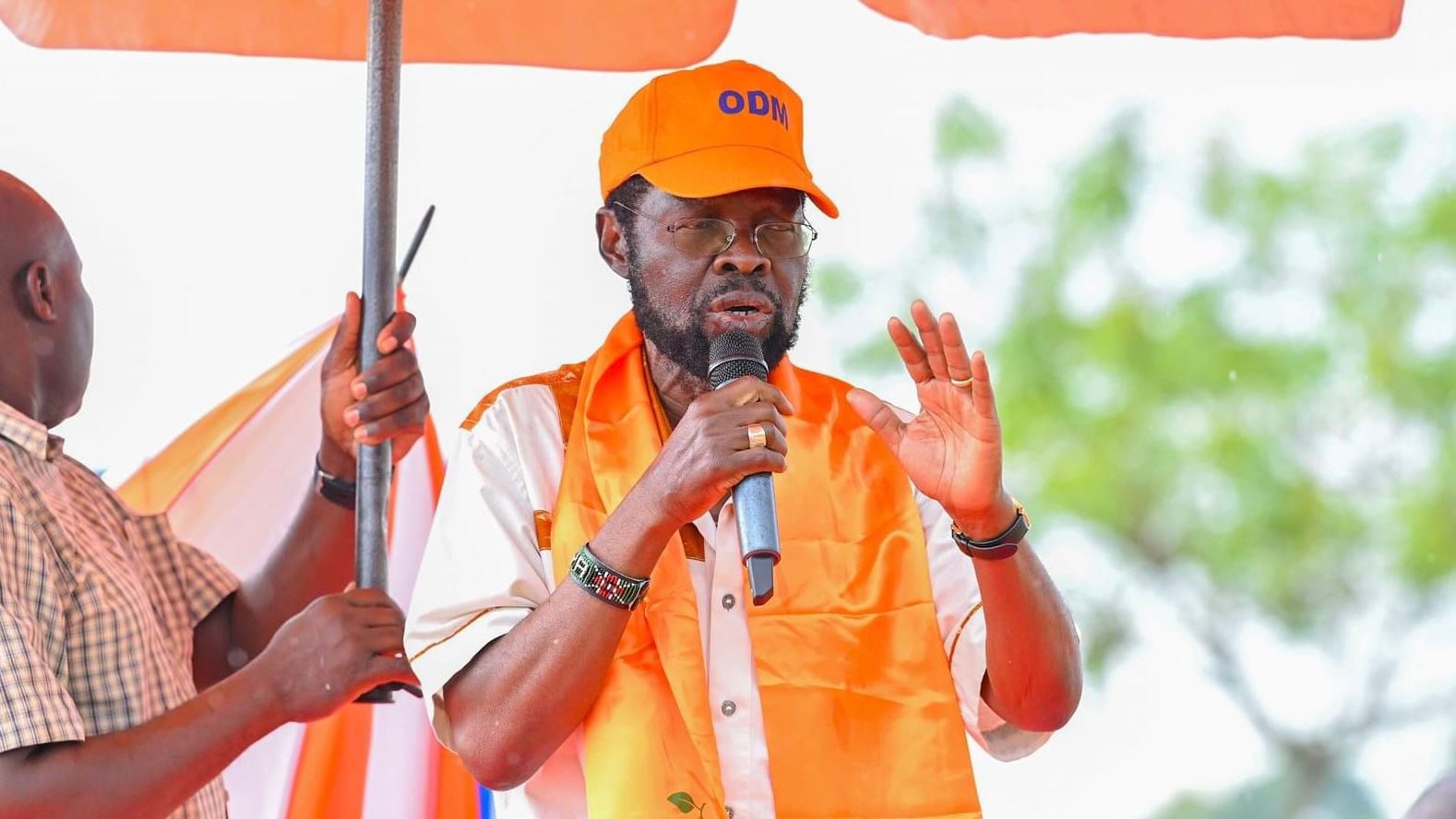
Kisumu Governor Anyang Nyong’o now says his Orange Democratic Movement (ODM) party must return to its basics as the country gears up for the next elections.
Nyong’o is warning that the party is eroding its original ideals following the demise of its founder Raila Odinga last year.
“His life and his passing remind us that the cost of being a nationalist in Kenya is never small. It is paid in detention cells, in exile, in ridicule, in betrayal, and sometimes in lonely hospital rooms far from home. But history is kind to such men,” he said.
The Governor, who served as ODM’s founder Secretary General, says in a statement that the party was born as a nationalist movement to fight for democracy, rule of law and justice, not self-aggrandisement.
“If we abandon the moral vocabulary of reform, we become indistinguishable from those we once opposed. Selective devolution weakens the architecture we built. Reducing politics to ethnic calculus betrays our nationalist vision.”
As ODM marks its 20th anniversary and plans to formalise a coalition with the ruling UDA, Nyong’o says the party must ask itself why it was born out of the 2005 referendum.
“To understand ODM at 20, we must return to the fire that forged it, the 2005 Kenyan constitutional referendum. By the early 2000s, Kenya faced a dangerous contradiction: multiparty democracy existed in form, but not in substance. Power had changed hands, but not character.”
He said belonging to ODM was never about wearing orange but about embracing sacrifice, accepting scrutiny, and understanding that leadership is stewardship, not entitlement.
“Transparency was foundational. Accountability was a duty. Forgetting these foundations risks turning a living movement into a nostalgic monument.”
The Governor said ODM must remain a workshop, not a shrine – sharpening ideas, testing leadership, and also the Republic’s conscience.
The Governor, while acknowledging that ethnicity still bedevils the country, not sparing his own party, said Kenyans must be united despite their diversity.
He said that we are all born into one ethnic community or another; we speak our mother tongue, sing our music, often marry within our ethnic groups, and stand for elective positions where we are known best.
“It is easier to be an ethnic chauvinist than a nationalist in Kenyan politics today. Politics has long been organised along ethnic lines; ethnicity appeals to familiarity, fear, and immediate material expectation. But true leadership confronts difficult choices.”
Nyong’o argued that nationalism is not the denial of ethnicity but its subordination to constitutionalism and that the state belongs equally to all citizens, not to whichever ethnic coalition temporarily captures the presidency.
He said, “ODM was formed on the conviction that while ethnicity is an objective reality, it must not become a political destiny. If we took state power, we could transform the political culture from ethnic patronage to constitutional citizenship.”
Nyong’o recalled that an orange became a symbol of defiance 20 years ago, adding that today, it must remain the symbol of conscience, urging the party to return to first principles: transparency without fear, constitutionalism without compromise, and democratisation as a permanent struggle.
“The next 20 years must deepen economic justice, strengthen social protection, defend devolution, and protect democracy as a living process. ODM is not a monument to 2005; it is a movement for tomorrow.”