By John Mutiso
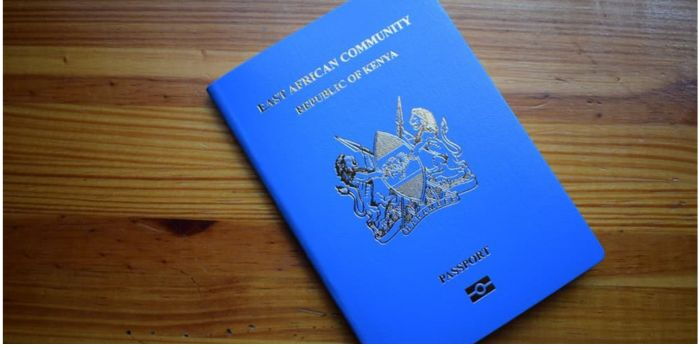
The government has unveiled plans to roll out several new passport-processing centres in Nairobi and across counties, in a bid to ease chronic congestion at Nyayo House and bring passport services closer to Kenyans.
Under the proposal, new application centres will open in Westlands, Upper Hill and Makadara in Nairobi, as well as in fast-growing towns such as Athi River, Kiserian and Thika. Outside the capital, additional centres are being eyed for Malindi, Voi, Kwale, Isiolo, Lodwar, Machakos, Narok and Siaya counties.
Interior and immigration authorities say the move responds to sharp growth in passport demand, driven by many Kenyans seeking jobs, education and travel opportunities abroad. Recent data show daily applications have risen to around 5,000, equating to roughly 1.8 million requests a year. The expansion aims to reduce travel time, cut long queues, and make the process more accessible for rural and remote applicants.
The plan follows broader reforms that began earlier in 2024, including a decision by the Ministry of Public Service and Human Capital to explore moving passport-processing services to the country’s network of Huduma Centres.
Cabinet Secretary Geoffrey Ruku told journalists that the government was working to synchronise immigration services with Huduma Centres nationwide. He mentioned that he has laid out plans to decentralise passport processing: “There is one service which most Kenyans come to Huduma Centres asking for, passport registration.
We will coordinate with the Ministry of Immigration to ensure this can be done here. ”Principal Secretary for Immigration and Citizen Services, Prof. Julius Bitok, has said recent reforms, including the procurement of high-capacity printers and expansion of application counters, have reduced passport-issuance time to seven days, down from months previously.
“We expanded application counters at Nyayo House from 14 to 40, effectively econgesting the facility.” He also noted that the department had boosted production capacity, saying, “We are now producing 10,000 passports daily.”
The government’s goal is to ensure that once the planned centres are operational, applicants anywhere in Kenya can access passports without long-distance travel or prolonged wait times.
“I want to assure the country that services at Nyayo House are going well… we are producing about 3,600 passports per day.” Bitok added The initiative to decongest Nyayo House and decentralise service delivery gains urgency against a backdrop of past backlogs and public frustration. At one point, the backlog reportedly reached hundreds of thousands of applications, compounded by periodic shortages of passport booklets and logistical bottlenecks.
If implemented fully, the decentralisation will mark a major overhaul of Kenya’s immigration- service architecture: services will shift from centralized, often congested offices to local centres, bringing convenience to remote and underserved areas while reducing pressure on Nairobi’s immigration headquarters.
But challenges remain: the government needs to ensure adequate staffing, biometric-verification capacity, consistent supply of passport booklets, and robust tracking systems so that decentralisation doesn’t simply replicate delays, only closer to home.