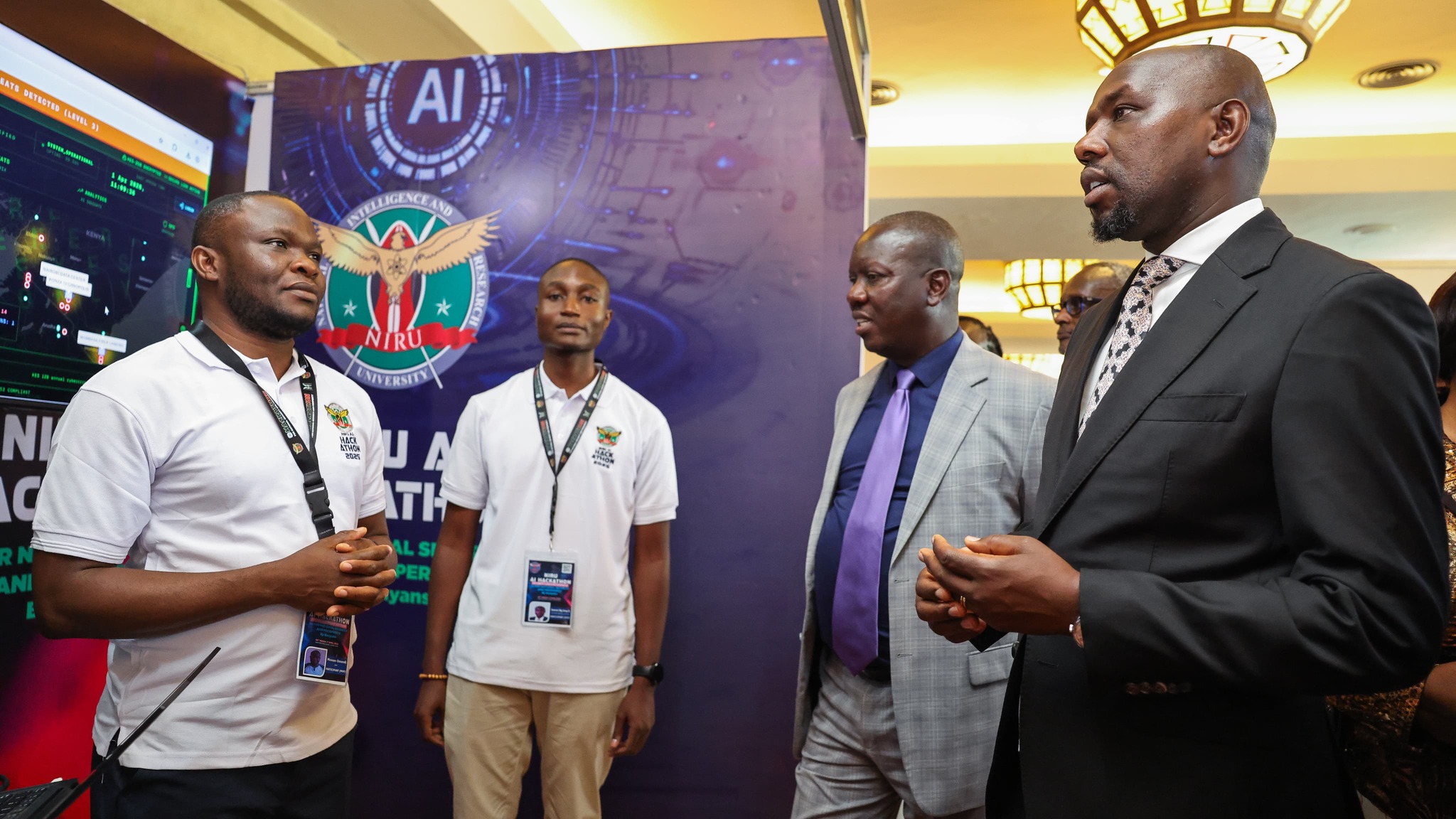
Interior Cabinet Secretary Kipchumba Murkomen has called for urgent legal reforms and deeper integration between security institutions and the country’s growing innovation ecosystem.
While speaking at the AI Hackathon Competition held at Safari Park Hotel on Wednesday, April 1, Murkomen noted that the most advanced digital economies are built on strong security and intelligence systems.
He emphasised that security and safety is an enabler for national development.
Murkomen drew parallels with global trends, pointing out that much of the technology available in the market today originated from defence ministries and intelligence organisations in other countries, a model he believes Kenya should embrace.
On the question of law and technology, the CS acknowledged that legislation has historically lagged behind technological advancement, and called for deliberate legal reforms to address emerging challenges posed by artificial intelligence.
He highlighted pressing issues including AI-generated content, data protection, consumer rights, intellectual property, and the regulation of autonomous vehicles, areas he said require fresh legal thinking.
Murkomen also touched on the transformation of education, noting that AI has fundamentally disrupted the traditional classroom dynamic, forcing educators to shift from knowledge-sharing to interactive instruction.
Turning to policing, he announced that the government is in the process of establishing a digital occurrence book, allowing citizens to report crimes from their homes or directly at the scene.
He also revealed plans to roll out digital gadgets and ICT systems to police stations across the country, and called for the next police recruitment to prioritise professionals with AI and technology expertise.
“The skills required to defend a nation in the digital age are the same skills required to build a prosperous and competitive digital economy,” he said.
Murkomen commended the hackathon participants, noting that over 2,000 proposals were submitted, with 185 innovations shortlisted and mentored into minimum viable products.
“We have lots of the challenges where brutalities happen within police stations that affect citizens. I am informed that over 2000 proposals were submitted. 185 innovations were listed, and mentored into minimum fire products, and since the finalist started into this stage. This reflects on only the depth of talent in our country, but also the growing maturity of our innovation ecosystem,” he stated.
He said the solutions presented, spanning cybersecurity, policing, governance, generative AI, and sustainable development, demonstrated Kenya’s readiness to tackle national challenges using cutting-edge technology.
“The solutions presented here across the cyber security is policing governance, generative AI, and sustainable development demonstrates that Kenya, Kenya, United, are ready to tackle real national challenges using cutting age technology. The government remains committed to supporting the innovation in the system, strengthening partnership between government, academia, and industry, and creating pathways for talent, to put hydrated national priorities. We are particularly keen to ensure that promising innovations are supported towards commercialization, and exceptional talent is integrated into national studies where their skills can have maximum impact to the participants,” Murkomen concluded.
The CS reaffirmed the government’s commitment to supporting commercialisation of promising innovations and integrating top talent into national priorities.