Guatemala’s President Bernardo Arevalo on Sunday declared a 30-day state of emergency after suspected gang members killed at least seven police officers, following a standoff in three of the country’s prisons.
The state of siege requires a congressional nod but can take effect before a vote.
According to Guatemalan law, a state of emergency can temporarily limit or suspend civil liberties and expand the the power of security forces in response to threats to public order.
On Saturday, 46 guards were held hostage by gang-affiliated inmates in three Guatemalan men’s security prisons.
Authorities blamed the riots on the Barrio18 gang which has been demanding that its incarcerated leaders get greater privileges, including being moved to lower-security facilities.
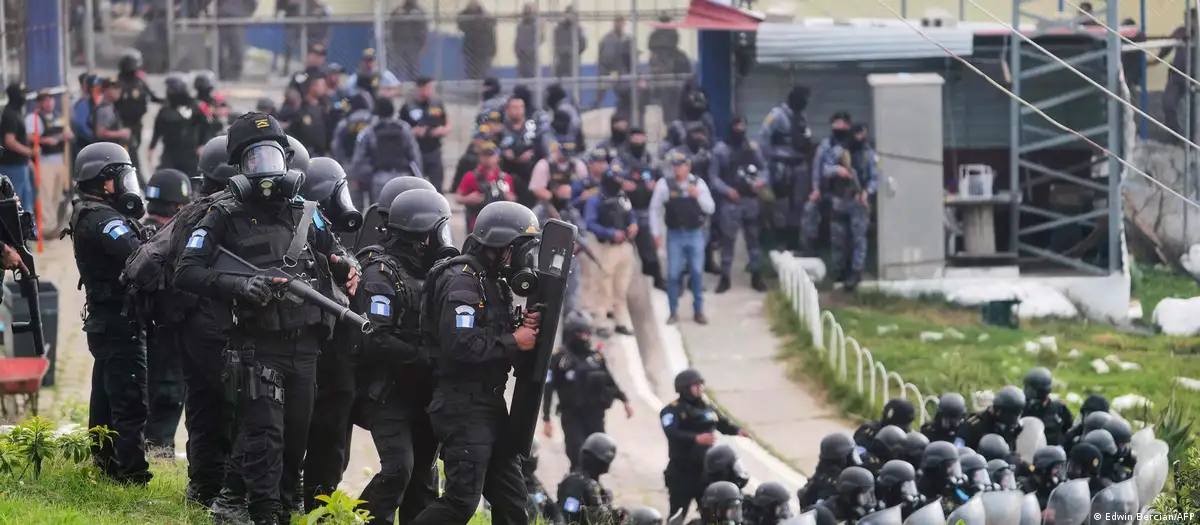
The killings of the police officers took place in the capital Guatemala City and nearby areas in an apparent retaliation to hundreds of anti-riot police sweeping in and regaining control of the maximum security Renovacion prison in Escuintla where Barrio 18’s leader, Aldo Duppie, was held.
Duppie, also known as El Lobo, was subdued and taken back into custody.
Images provided by authorities showed officers on Sunday morning escorting the leader, who appeared to have a bloody shoulder, out of the prison.
Interior Minister Marco Antonio Villeda told a press conference that the killings were carried out “by these terrorists, in response to the actions the Guatemalan state is taking against them.”
Ten other police officers were injured in the attack, while one suspected gang member was killed, he added.
President Arevalo said authorities had retaken control of all three prisons on Sunday and freed all the hostage guards.
He announced a nationwide emergency to combat criminal gangs in a televised address.
The state of siege, he said, would allow the full force of the state — including the police and the army — to tackle gang violence.
“They rioted in the prisons and took hostages with the intention of making the state accept their demands, which for decades were granted,” the president said.
He added that the retaliatory attacks following the retaking of the prisons were “an attempt to terrorize security forces and the population so that the government relents in its head-on fight against the gangs.”
Arevalo also declared three days of national mourning following the violence and said that the emergency should not affect normal life for Guatemalans.
On Sunday morning, National Civil Police director David Boteo had advised Guatemalans to stay at home while the US Embassy in Guatemala issued a security warning for American citizens.