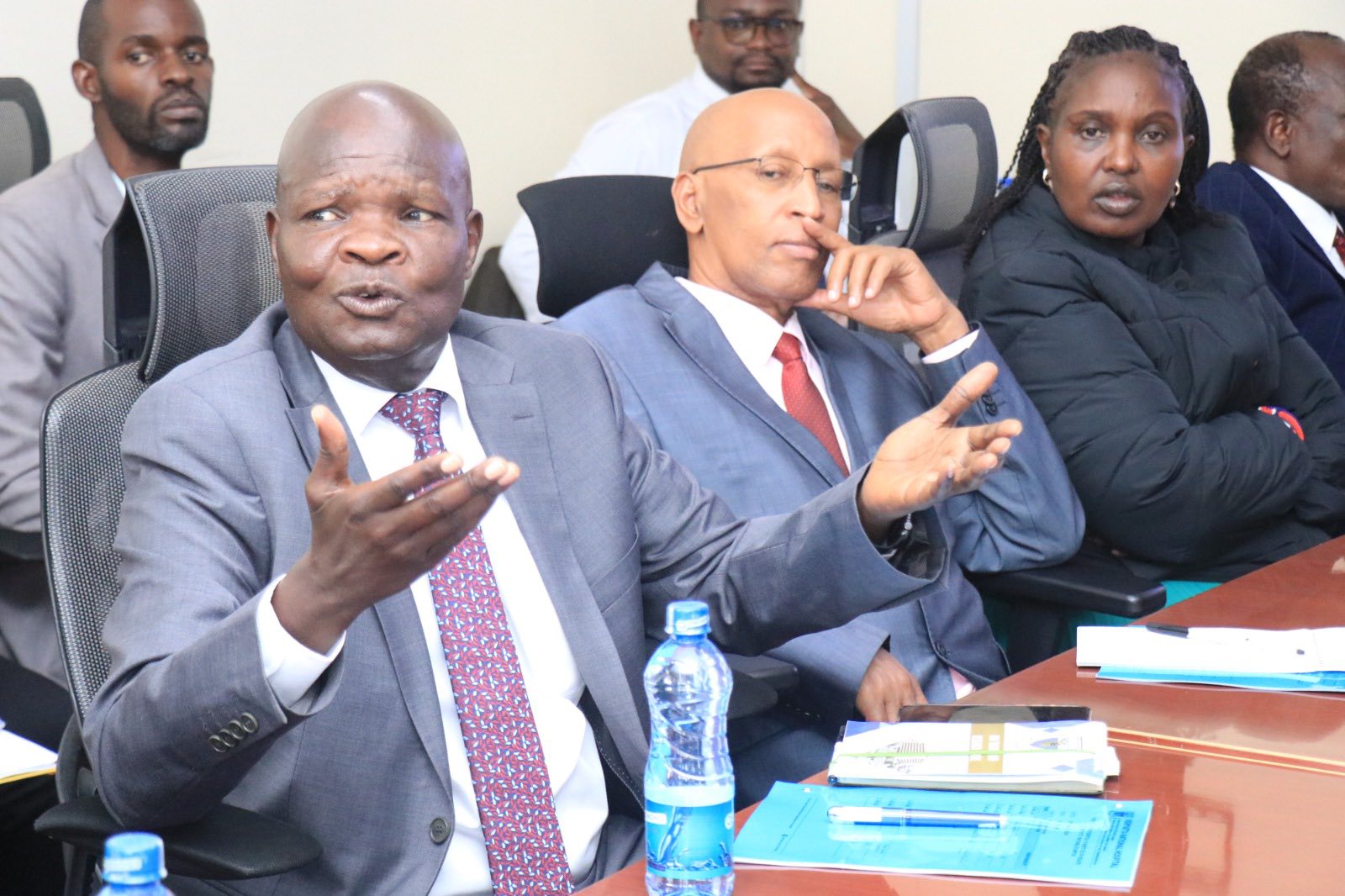
The National Assembly’s Departmental Committee on Health has raised serious concerns over critical service gaps at the Kenyatta National Hospital following a fact-finding visit to the country’s largest referral facility.
Led by Seme MP Hon. (Dr.) James Nyikal, the committee toured key departments at the hospital and acknowledged ongoing improvements but warned that congestion, equipment breakdowns and a non-functional oxygen plant are straining service delivery and putting patients at risk.
“This oxygen plant is actually a major issue. It is not operational. It is not functional. It is not producing even a litre of oxygen in a day,” Said Hon. Nyikal. “The truth is, as of now, Kenyatta does not have an oxygen plant. The plant is not producing any oxygen.”
He described the situation as unacceptable, noting that significant public funds had been spent on the project.
“It does appear that there were problems all the way from procurement, the design, the tender process, what was awarded, supervision and even the payment process,” he said.
“It is something the committee must take up with the ministry and other government agencies to establish what went wrong and who did what.”
Dr. Nyikal warned that the country continues to spend substantial amounts purchasing oxygen externally costs that could have been avoided if the plant were functional.
A working plant, he added, would not only serve KNH but could also support other health facilities.
KNH Acting Chief Executive Officer Dr. Richard Leyisampe told the committee that the hospital currently serves about 700 patients daily who require oxygen support.
“We are procuring that oxygen for our patients. Occasionally, we also get oxygen from our sister institutions such as KU Teaching and Referral Hospital and Mama Lucy Kibaki Hospital,” he said. “Therefore, we do not have shortages of oxygen.”
However, he emphasised the urgent need for the hospital to have its own reliable supply system, and sought the MPs’ support to get that.
The committee also raised concerns over disruptions in cancer care services following the breakdown of a Linear Accelerator (LINAC) machine at the hospital’s oncology unit.
Dr. Nyikal confirmed that the LINAC, used for advanced radiotherapy treatment is currently not operational, forcing the hospital to rely on a cobalt machine.
“They are improvising with what is called cobalt treatment. But really, the truth is some patients are missing the services they deserve,” he said.
He disclosed that the hospital management had assured the committee that repairs on the LINAC would be completed within a week. In addition, the committee is exploring budgetary allocations to support procurement of an additional machine.
“We are in the budget process and are going to get them some funds to at least get another LINAC or two, depending on availability of funds,” Dr. Nyikal said.
Dr. Leyisampe confirmed that the hospital normally treats about 100 cancer patients daily. With the LINAC out of service, only 50 patients are currently being treated using the cobalt machine.
“Fifty per cent of our patients could not get our services,” he said. “In most instances, we refer them to Kenyatta University Teaching and Referral Hospital to support them.”
He expressed optimism that the LINAC would be back in operation by the end of the week, noting that the breakdown was due to several small components requiring repair.
Beyond equipment challenges, the committee flagged severe congestion in maternity wards, linking it to dysfunction in lower-level health facilities.
Dr. Nyikal said expectant mothers are arriving late at KNH, overwhelming the system and contributing to avoidable maternal and neonatal deaths.
“Because of this congestion, they come late, and when they come here, they overwhelm the system. So mothers and sometimes babies are dying because they have to wait for a long time because other facilities are not working,” he said.
He indicated that the committee would call upon the Nairobi County Government to address gaps in primary and secondary facilities to reduce pressure on the national referral hospital.
At the blood donation unit, the committee found that demand far outstrips supply. Currently, the hospital relies heavily on relatives of patients to donate blood.
“They need more blood than they can receive,” Dr. Nyikal said, adding that the committee had resolved to support the unit financially to enable aggressive public blood donation drives.
“As of now, they are depending on relatives who have come to donate blood. We have decided to upgrade them in the blood donation system and support them so that they can mobilise people to donate blood,” he said.
The committee also visited the Accident and Emergency Department, now referred to as the Trauma Unit. While acknowledging improvements since its previous visit, Dr. Nyikal noted persistent congestion.
The unit receives a high number of walk-in patients from within Nairobi, many of whom could be treated at primary care facilities.
“They are getting a lot of patients from within Nairobi. Some are walking patients who do not require referral, and that brings a problem of how they pay,” he said.
He explained that patients who are not registered under the Social Health Insurance Fund and have not paid premiums cannot be reimbursed, creating financial strain on the facility.
The committee advised the hospital to establish a dedicated unit to handle such patients under the Primary Care Fund, while strengthening systems to access resources from the Emergency and Critical Care Fund.
Despite the challenges, Dr. Nyikal commended the hospital’s management for prudent use of funds allocated for renovations.
The hospital received Sh1.1 billion for refurbishment of key floors. According to the committee chair, renovation works on Level Eight have been completed satisfactorily, while works on Level Seven are ongoing and expected to be finalised by April.
“We must say we are happy with what they have done. If they complete the remaining works as scheduled, then they have used the money we gave them well,” he said.
By Anthony Solly