By Andrew Kariuki
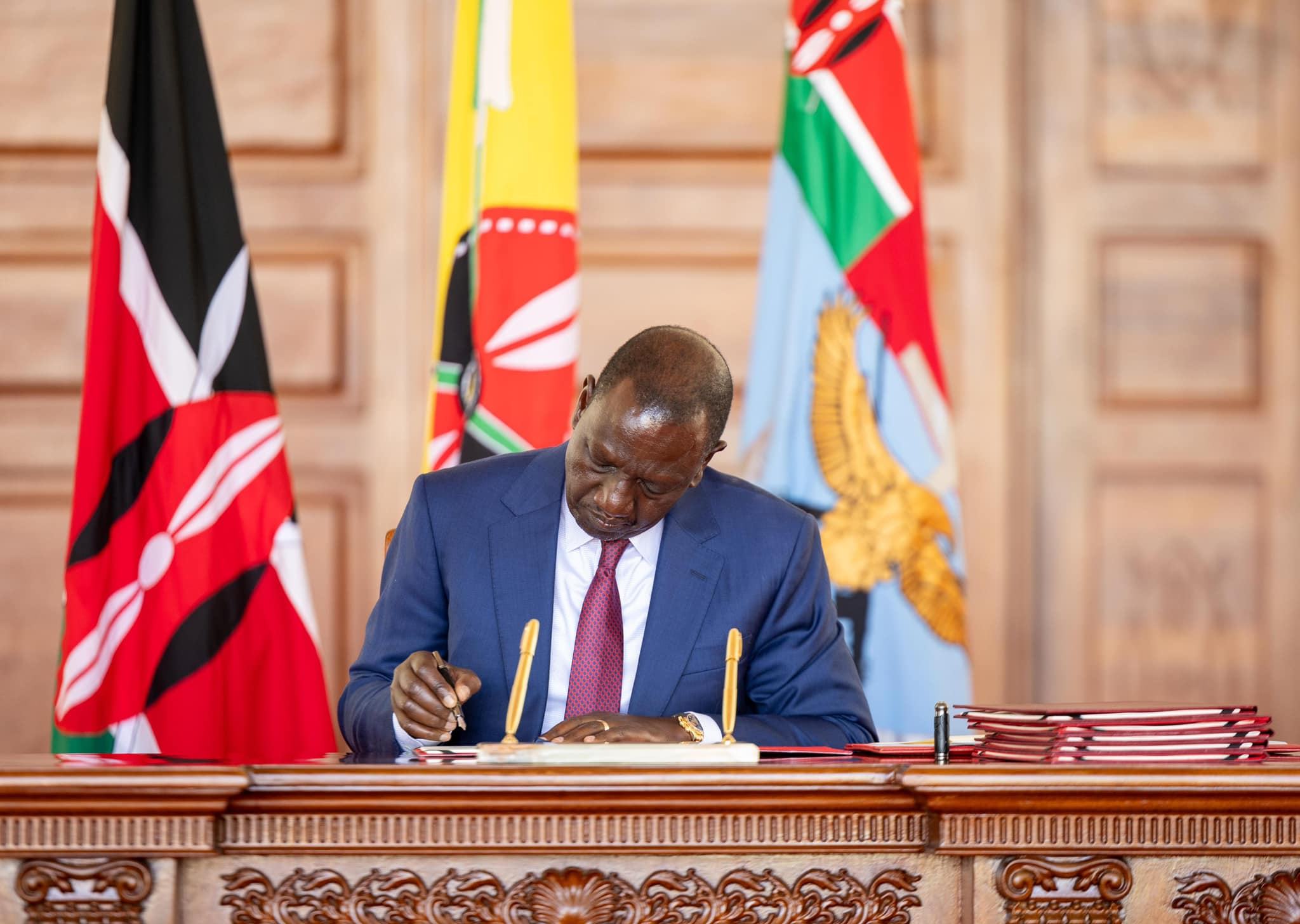
The High Court has declared that President William Ruto acted outside his constitution powers when he appointed a special advisory panel to guide compensation for victims of police brutality and protest-related violence, ruling that the mandate lies exclusively with the Kenya National Commission on Human Rights (KNCHR).
In its judgment, the court held that the President has no constitutional authority to constitute a body for the purpose of identifying victims, assessing harm or advising on compensation.
The judges found that the Constitution and existing statutes already assign that function to KNCHR as the principal organ mandated to oversee human-rights protection and redress.
The petition, filed by lawyer Levy Munyiri, challenged a presidential proclamation issued through a Gazette Notice dated August 25, which established a 17-member panel chaired by Prof. Makau Mutua.
The team had been tasked with overseeing compensation for victims of police killings and injuries reported during last year’s and this year’s youth-led anti-government demonstrations, which left more than 120 people dead and hundreds injured.
The Law Society of Kenya President Faith Odhiambo had initially served as vice-chair before stepping down and being replaced by KNCHR Chairperson Claris Awuor Ogangah-Onyango.
The court rejected arguments by the State that the committee was merely an administrative initiative intended to fast-track compensation, stressing that “good intentions cannot cure a constitutional defect.”
It ruled that creating a parallel body undermines the independence of KNCHR and disrupts the constitutional structure governing victims’ rights.
According to the judgment, the President’s proclamations establishing the committee are unconstitutional and therefore invalid.
The bench emphasised that KNCHR is the only body empowered to initiate victim-identification processes, coordinate assessments of harm and recommend appropriate reparations.
As part of its orders, the court directed that the committee’s report be immediately forwarded to KNCHR, which must scrutinise it, make any necessary adjustments to align it with constitutional requirements and undertake all actions within its lawful mandate.
KNCHR has been given 30 days to complete the corrective steps.
The court warned that continued non-compliance would render the President’s proclamations invalid, although it clarified that quashing does not automatically occur at the expiry of 30 days.
Instead, persistent failure to align the process with the Constitution would lead to automatic invalidation.
The ruling is likely to have far-reaching consequences for the State’s approach to victims’ compensation, transitional justice efforts and the limits of executive discretion in human-rights matters.