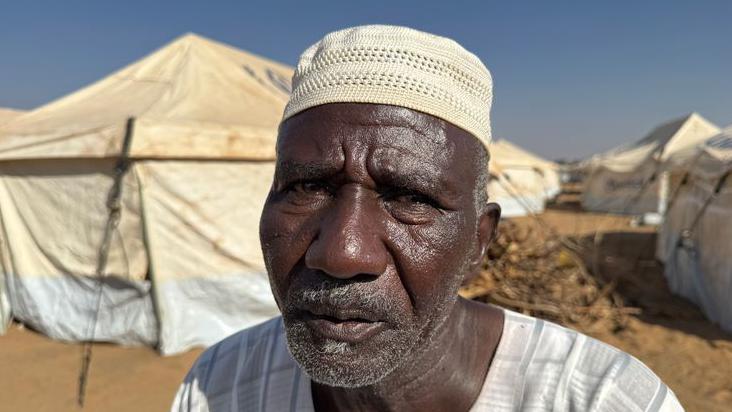
Abdulqadir Abdullah Ali, 62, had already endured months of agony. During the long siege of the Sudanese city of el-Fasher, he suffered serious nerve damage in his leg when he could no longer get medicine for his diabetes. He walked with a heavy limp.
But on the morning the paramilitary Rapid Support Forces (RSF) finally stormed the city, a new terror took hold. As bullets and explosives filled the air, pain was forgotten in the panic to flee.
“People were out of control with fear. They ran out of their houses—the father, the son, the daughter—running in every direction,” he says.
In that moment of sheer survival, he ran too. His damaged leg, for once, did not slow him down.
The fall of el-Fasher—the Sudanese army’s last stronghold in the Darfur region—after an 18-month siege marks one of the most brutal chapters in the country’s civil war. The conflict erupted in April 2023 from a power struggle between the regular army and the RSF, and this major victory for the paramilitary group has been followed by allegations of mass atrocities, drawing international condemnation and intensifying U.S. efforts to mediate an end to the fighting.
To hear the stories of those who escaped, the BBC travelled to a tent camp in northern Sudan, in territory still controlled by the army. Authorities monitored the team throughout the visit.
Among the displaced, the trauma of el-Fasher’s final hours remains raw. For Abdulqadir and thousands like him, survival came at the price of everything left behind.
By James Kisoo