








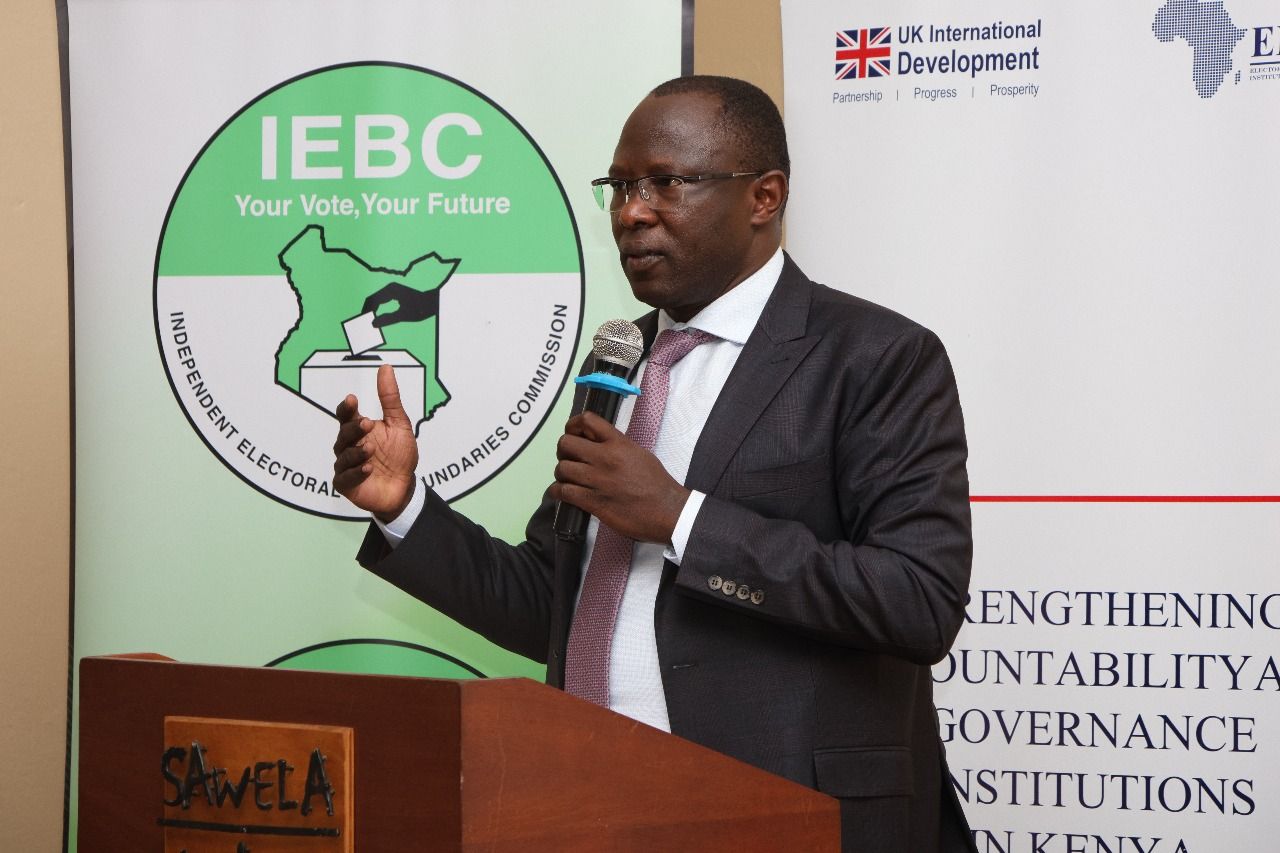
Independent Electoral and Boundaries Commission (IEBC) Chairperson Erastus Ethekon has announced that the commission cannot increase the number of constituencies during the boundary review process.
Addressing the media on Tuesday, January 27, Ethekon explained that the Constitution of Kenya sets a fixed cap of 290 constituencies.
He noted that IEBC has no authority to either increase or reduce the number of constituencies.
“We wish to inform the public that the constitution under Article 89 places a cap on the number of constituencies.
“Currently, Kenya has 290 constituencies, and that number, even if the commission were to conclude the boundary review ahead of the 2027 general election, we cannot increase these constituencies beyond 290, nor can we reduce them below 290,” Ethekon explained.

The IEBC Chairperson noted that the commission’s mandate is limited to reviewing the names of constituencies and adjusting their boundaries.
“What any boundary review process looks at is the review of constituency names and boundaries. We can change boundaries to ensure that constituencies with smaller populations can accommodate population pressure from constituencies with much larger populations,” he stated.
On Wards, Ethekon said the Constitution grants the commission the mandate to determine the number of wards, but noted that the County Governments Act contradicts the Constitution by capping the number of wards at 1,450.
“For Wards, there is a contradiction currently, the constitution gives the commission mandate to determine the number of wards, their names and their boundaries, and it has not placed any cap, but the county governments act has capped wards at 1,450,” said Ethekon.
Further, the IEBC Chairperson said the commission has opted for a phased boundary review process.
He argued that undertaking full delimitation along with other obligations will create operational bottlenecks and may compromise preparedness for the 2027 general election.
“The commission has decided to undertake limited and phased activities towards electoral boundaries reviews without compromising the quality and level of preparedness of the upcoming general election,” the IEBC Chairperson announced.
The decision by IEBC comes after it failed to meet the constitutional requirement to review boundaries.
According to the constitution, the commission should review boundaries every eight to twelve years.
The last boundary review was concluded in 2012, meaning the IEBC should have completed the subsequent review by March 2024.
The commission was unable to conduct the boundary delimitation process as there were no commissioners in office at the time.
The new IEBC Chairperson and commissioners came to office on July 11, 2025, following a competitive recruitment process.