By Peter John
The International Monetary Fund (IMF) has reached a staff-level agreement with Seychelles on the final reviews of its economic reform programmes, underscoring the island nation’s steady progress in stabilizing its economy and strengthening resilience.
The agreement covers the fifth and sixth reviews under the Extended Fund Facility (EFF) and the Resilience and Sustainability Facility (RSF), alongside discussions for the 2026 Article IV Consultation.
Pending approval by the IMF Executive Board in May 2026, Seychelles stands to receive an additional SDR 32.9 million (about $45 million), bringing total support under the programme to more than $105 million since 2023.
Seychelles’ economic performance in 2025 has been notably strong, with real GDP growth estimated at 5.1 percent, driven largely by record-breaking tourism arrivals.
Inflation remained subdued, hovering just below zero, while improved fiscal discipline resulted in a primary surplus of 2.5 percent of GDP.
This helped reduce public debt to 53.6 percent of GDP, reinforcing macroeconomic stability.
External indicators have also improved significantly. Higher tourism earnings narrowed the current account deficit to 6.5 percent of GDP and boosted foreign exchange reserves to cover just over four months of imports, providing a stronger buffer against external shocks.
Implementation of reforms under the IMF-supported programme has been largely on track.
Most quantitative targets have been met, while structural reforms—particularly in monetary policy and financial sector supervision—are progressing, though a few require additional time to be completed.
Climate-focused reforms under the RSF are also advancing, with progress made in integrating climate risk into financial sector oversight.
Remaining measures, including strengthening climate data systems and electricity tariff reforms, are expected to be finalized before the programme concludes.
Despite the strong performance, the outlook for 2026 presents new challenges.
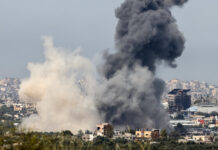
The IMF projects economic growth to slow to 1.5 percent, largely due to external pressures linked to ongoing Middle East tensions affecting tourism and global commodity prices.
Inflation is expected to rise modestly to 2.6 percent, while both the fiscal position and external balance may face renewed strain.
The IMF has urged authorities to adopt targeted and temporary measures to cushion vulnerable groups, while maintaining fiscal discipline.
It also emphasized the need for exchange rate flexibility and continued structural reforms to enhance economic diversification and resilience to climate-related shocks.
As Seychelles approaches the conclusion of its IMF-supported programmes, the agreement highlights both the success of recent reforms and the importance of sustaining momentum amid an increasingly uncertain global environment.