LAGOS, Nigeria
Victor Ahansu was barely awake with his wife and baby twins before the grinding sound of bulldozers woke them. It was all the warning the family had, he said, before fleeing mass evictions in their historic community of Makoko in Lagos.
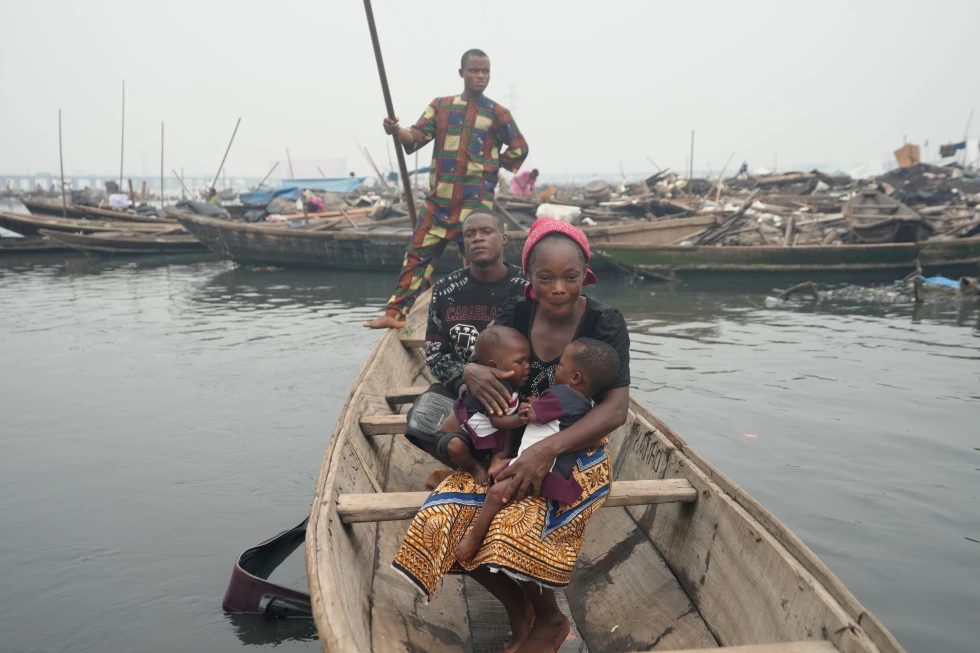
Their house was demolished on Jan. 11, one of thousands taken down by the ongoing operation.
For decades, tens of thousands of people have lived in homes on stilts above the lagoon in Makoko, one of Africa’s oldest and largest waterfront communities.
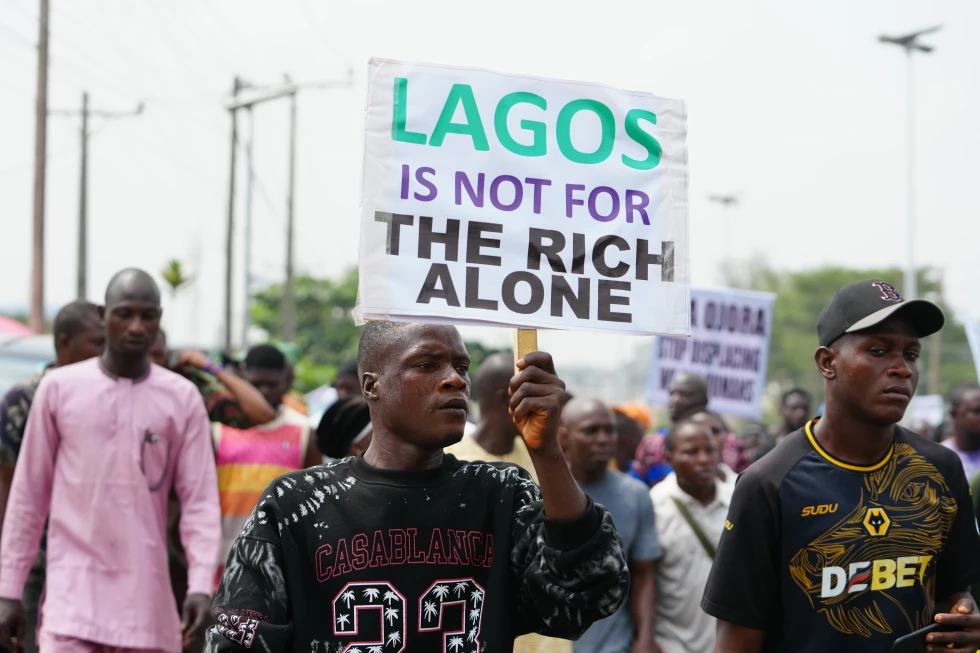
To many Nigerians, Makoko has long been distinctive. To nonprofit organizations, it has been a testing ground for ideas like floating schools.
But to some developers and authorities, it’s valuable waterfront property in the hands of some of the megacity’s poorest people.
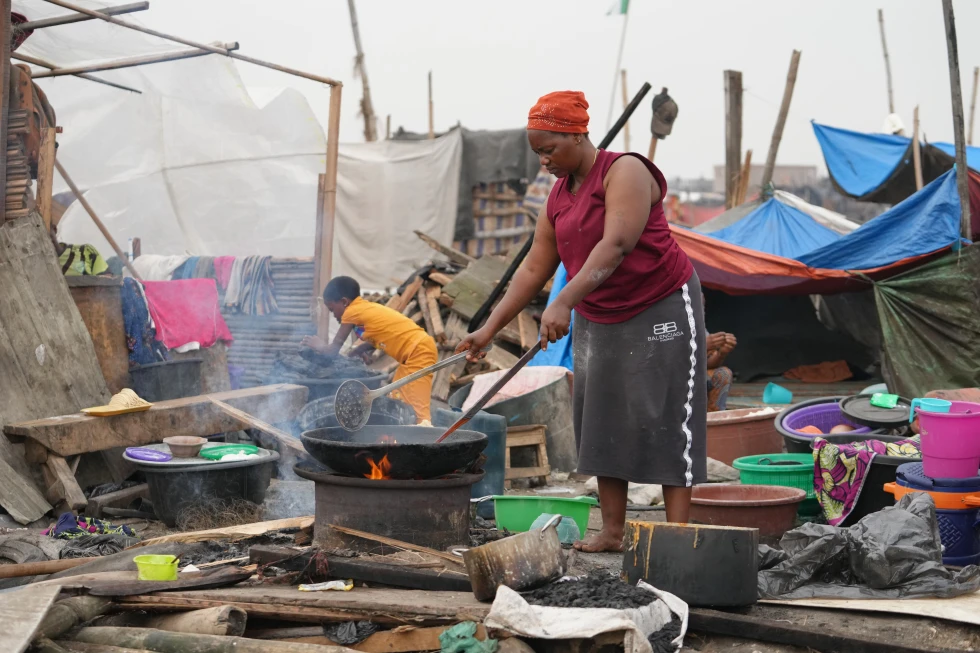
Now the 5-month-old twins and their parents live in a wooden canoe, with a woven plastic sack for shelter from the rain.
The thump of hammers fills the air as other residents of Nigeria’s largest city break down homes and salvage what they can.
“I have not even been able to go to work to make money, because I don’t want to leave my wife and children, and the government comes again,” Ahansu, a fisherman, said.
By James Kisoo