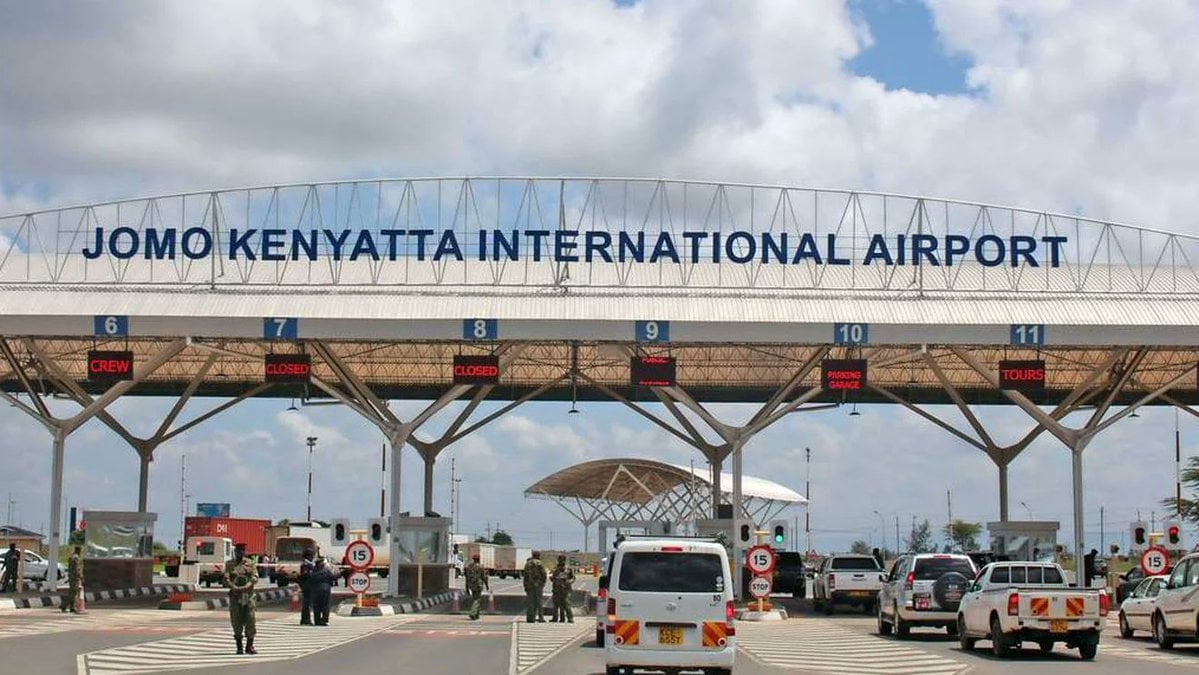
The Ministry of Roads and Transport has unveiled a multi-billion shilling transformation plan targeting a major upgrade and expansion of Jomo Kenyatta International Airport (JKIA) to address congestion and boost capacity.
In a statement on Tuesday, March 3, Roads and Transport Cabinet Secretary Davis Chirchir confirmed that Kenya Airports Authority (KAA) had floated a tender to construct new facilities at JKIA while upgrading existing infrastructure to meet growing demand.
In his statement, Chirchir noted that the airport is currently operating beyond its intended design capacity.
“Jomo Kenyatta International Airport (JKIA) is Kenya’s primary international gateway and regional aviation hub, serving a wide range of passenger and cargo operations. Its strategic location and status as a hub for Kenya Airways (KQ) position it as a critical driver of national and regional connectivity.
“Currently, the airport is experiencing significant congestion during peak operating hours, particularly across the runway system, passenger terminal facilities, and apron areas. These constraints not only affect operational efficiency but also limit the Airport’s ability to accommodate the future growth,” the statement read.
According to the ministry, JKIA handled approximately 8.93 million passengers in 2025, surpassing its designed capacity of 7.5 million passengers annually.
To address the challenges, KAA finalized an Integrated Master Plan and Feasibility Study in February 2026, outlining a phased development approach.
The study recommends enhancing existing terminal and runway infrastructure to tackle short-term pressures while simultaneously expanding JKIA to accommodate long-term growth.
Comprehensive forecasts project passenger traffic rising from 8.93 million in 2025 to approximately 22.31 million by 2045, representing an average annual growth rate of 4.6 percent.
Air cargo volumes are also expected to more than double from 407,214 tons in 2025 to 860,400 tons by 2045.
The ministry warned that without intervention, the airport faces serious operational risks.
“Assessment of future demand against existing infrastructure identifies clear capacity shortfalls across airside, terminal, and landside systems,” the statement added, citing limited runway capacity, insufficient aircraft stands, terminal congestion, and increasing landside road congestion as major constraints.

In the short to medium term, the project will include upgrading the existing runway, developing a partial parallel taxiway, constructing rapid exit taxiways to improve landing efficiency, and reconfiguring passenger terminals to ease bottlenecks.
The government also plans to digitize and modernize passenger processing systems, including check-in, security screening, immigration, and baggage handling.
To meet long-term demand, KAA will develop a new passenger terminal capable of handling an additional 10 million passengers annually, with room for future expansion.
The plan also includes upgrading taxiways and aprons, expanding aircraft support facilities, modernizing air traffic control and firefighting stations, and improving cargo, maintenance, fuel, and utility infrastructure.
Landside access roads and parking facilities will also be enhanced to improve connectivity and reduce congestion.
Beyond aviation infrastructure, the government intends to establish an Airport City and Special Economic Zone (SEZ) around JKIA to unlock additional economic value.
“KAA intends to develop an Airport City and a Special Economic Zone (SEZ) to position Jomo Kenyatta International Airport as a fully integrated aviation-led economic hub of national and regional significance.
“The Airport City and SEZ will maximize the economic value of the airport beyond aeronautical operations by attracting logistics, trade, manufacturing, business, and service-oriented activities that benefit from direct proximity to air transport,” the statement said.
The SEZ is designed to support export-oriented and time-sensitive industries such as air cargo logistics, agro-processing, pharmaceuticals, light manufacturing, e-commerce fulfillment, and regional distribution.
Meanwhile, the Airport City will feature business parks, corporate offices, hotels, convention and exhibition facilities, aviation support services, and mixed-use developments.
“Together, these developments are expected to generate significant employment, attract foreign and domestic investment, diversify airport and national revenues, whilst also providing benefits to the surrounding communities, strengthen Kenya’s position as an East African trade and aviation hub, and support the objectives of Kenya Vision 2030,” the statement explained.
Chirchir described the expansion as a national initiative aimed at safeguarding JKIA’s status as a leading regional gateway while enhancing service quality and long-term sustainability.
“The planned enhancement and expansion of JKIA is a strategic national initiative aimed at meeting Kenya’s future aviation needs, enhancing service quality, and safeguarding the airport’s role as a leading regional gateway.
“The Government, through the Ministry of Transport and Kenya Airports Authority, is committed to transparent implementation of the project and will continue to keep stakeholders and the public informed as the project progresses,” the statement further read.