The Ministry of Interior has released a report revealing how political violence in the country is systematically orchestrated by powerful actors, rather than occurring spontaneously.
The report, released on Wednesday, February 25, shows that political elites deliberately mobilise supporters to intimidate opponents, disrupt rallies, and assert control during politically sensitive periods.
“Political violence in Kenya is largely organised and enabled by political actors, rather than being spontaneous. Historical and intelligence assessments indicate that political elites deliberately mobilise supporters, including youth groups, to intimidate opponents, disrupt activities, and assert control during politically sensitive periods,” the report stated.
The ministry linked organised violence to previous election cycles, citing the 2007-2008 and 2017 elections as periods where political operatives were allegedly involved in orchestrated violent activity.

The report identifies vulnerable groups frequently targeted for recruitment, including unemployed or underemployed youth, boda boda riders, and casual labourers. These groups are mobilised through informal networks and deployed strategically during political events to dominate spaces or disrupt opposition activities.
“Groups primarily targeted for mobilisation include unemployed or underemployed youth, boda boda riders, and casual labourers. Recruitment occurs through informal networks that operate between mobilisation and militancy. During political events, these groups are often deployed to fill rallies, dominate public spaces, intimidate opponents, or disrupt opposition activities,” the report reads.
According to the ministry, such operations are usually planned and financed discreetly, with leaders distancing themselves from incidents afterward.
“Intelligence indicates that deployment is pre-planned and, in many cases, covertly financed by political actors. Leaders often distance themselves after incidents, denying responsibility while the public reconciles observed events with official narratives,” the report added.
The report warned that repeated use of organised political violence undermines democratic institutions, erodes public trust, and heightens ethnic and regional tensions.
“The systematic use of political violence erodes public trust and accountability. Young people are treated as expendable tools, reinforcing the perception that violence is a legitimate strategy for gaining or maintaining power. Ethnic and regional tensions are often heightened, increasing the risk of escalation beyond political events,” it noted.
Political leaders, the ministry said, bear primary responsibility for preventing violence within their ranks and should enforce internal disciplinary measures while monitoring inflammatory rhetoric.
“Political leaders must actively ensure that party operations do not exploit vulnerable youth or encourage violent mobilisation. Internal accountability mechanisms should be enforced to penalise members involved in intimidation or clashes. Political rhetoric that promotes fear, tribalism, or coercion must be monitored and addressed where evidence indicates incitement,” the report stated.

The ministry also called on citizens and communities to refuse participation in violent mobilisation and report credible intelligence to authorities, stressing that silence or tolerance enables violence to persist.
“While political actors are the main drivers, communities and citizens also have a responsibility to refuse participation in violent mobilisation and report credible intelligence. Silence or tolerance provides social permission for violence to persist. Community engagement is crucial in providing early warnings and preventing escalation,” it said.
Security agencies were urged to act impartially and consistently, using intelligence to prevent mobilisation before violence occurs.

“Security agencies must enforce the law impartially and consistently, acting on intelligence to prevent mobilisation before violence occurs. Enforcement must be predictable, fair, and transparent to maintain public trust,” the report advised.
The ministry recommended coordinated efforts to address root causes, strengthen intelligence-led interventions, and ensure accountability for political operatives and affiliates.
“Political leaders must take proactive steps to prevent violence and ensure accountability for affiliates. Security agencies should strengthen intelligence-led operations targeting high-risk mobilisation networks and maintain impartial enforcement. Communities must actively reject participation in political intimidation and report threats to relevant authorities,” the report concluded.
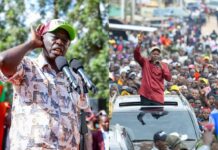
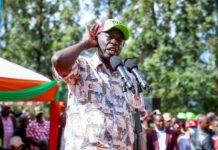
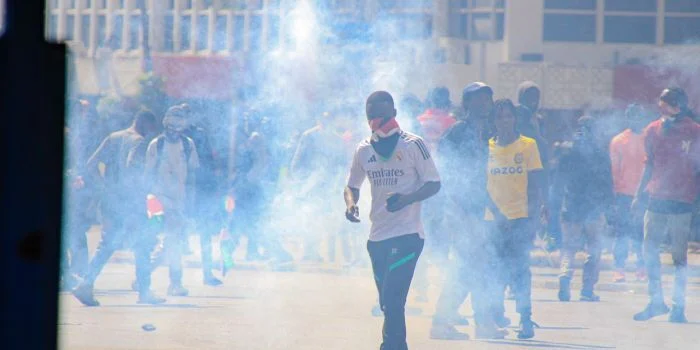
The release comes days after a teargas canister was lobbed at a rally in Kakamega attended by Nairobi Senator Edwin Sifuna and Embakasi East MP Babu Owino on Saturday, February 21. Supporters fled as gas spread across the grounds. Sifuna encouraged the crowd to stay and cover the canister rather than run, while cautioning against retaliation.
“Hatutoroki leo. Use a jacket to cover the canister so that we can continue with the rally. Do not go anywhere. They will not stop our meeting today. Throw another one if you are man enough,” Sifuna said. He and Babu later intervened to rescue a young man targeted by the crowd.
“Let me just warn you. If you have been sent to cause chaos in this rally, these people will kill you,” Sifuna warned.