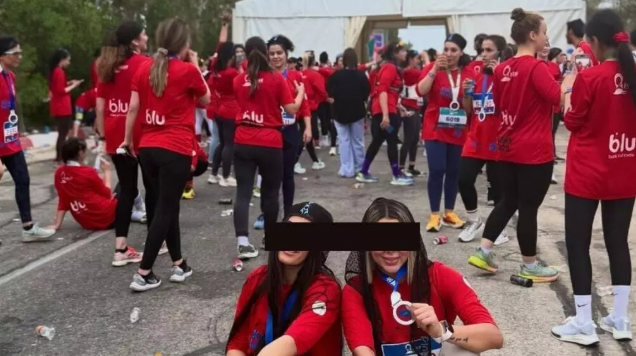
Iran’s judiciary has arrested two key organisers of a marathon on Kish Island after women competed without headscarves.
The detentions, announced on Saturday via the judiciary’s Mizan Online outlet, targeted an official from the Kish free trade zone and a representative of the private firm behind Friday’s event.
More than 5,000 runners participated, but social media images of unveiled female athletes, hair flowing freely amid the coastal heat, ignited swift condemnation from conservative media like Tasnim and Fars. These outlets decried the race as a flagrant breach of post-1979 revolutionary laws mandating hijab and modest attire for women in public.
“Despite prior warnings to adhere to legal, religious, and ethical norms, the event violated public decency,” Mizan quoted the local prosecutor as saying. A criminal case now hangs over the organisers, underscoring Tehran’s intolerance for perceived slights against its moral order.
The episode unfolds against a backdrop of simmering rebellion. Since Mahsa Amini’s death in custody in September 2022 – after her arrest for an alleged hijab violation, Iranian women have increasingly cast off the mandatory veil in urban streets, parks and even official spaces.
Protests that followed her killing, under the banner “Woman, Life, Freedom”, marked an “irreversible” shift, as activists describe it, with sporadic non-compliance now a daily act of resistance.
Yet the regime digs in. Earlier this week, a parliamentary majority lambasted the judiciary for lax enforcement, prompting Chief Justice Gholamhossein Mohseni Ejei to demand tougher measures.
President Masoud Pezeshkian’s reformist-leaning government has balked at ratifying a draconian hijab bill, but such gestures offer little succour to women navigating a web of surveillance, morality police patrols and arbitrary arrests.
This is not isolated: in May 2023, the head of Iran’s athletics federation quit after unveiled women ran in a Shiraz event, mirroring Kish’s fallout.