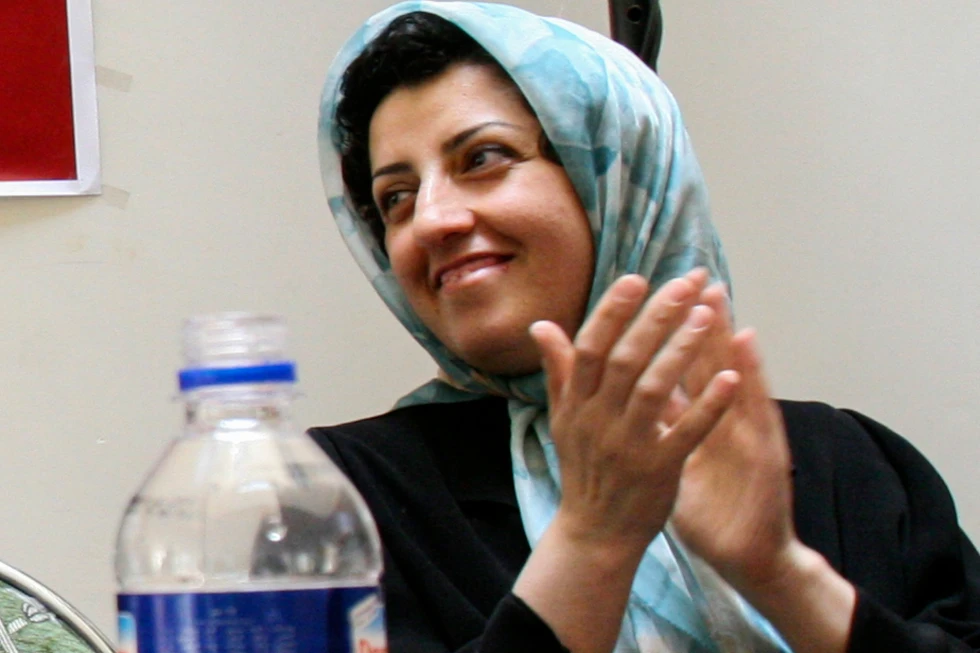
Narges Mohammadi, Iran’s imprisoned Nobel Peace Prize laureate, has been transferred to hospital twice after security forces violently arrested her on 12 December 2025 while she attended a memorial event in Tehran.
Mohammadi, who was on temporary medical furlough from Tehran’s notorious Evin Prison, had joined a gathering to commemorate a victim of the 2022 Woman, Life, Freedom protests triggered by the death of Mahsa Amini in custody.
According to her family, plainclothes agents interrupted the event, beat her with batons, and forcibly detained her.In a statement released through supporters, the family said: “Security forces violently arrested her, beating her with batons.”
They added that the injuries necessitated two hospital transfers from prison, though authorities have provided no official details on her condition.Mohammadi was permitted one short phone call to relatives shortly after the arrest.
During the conversation, she confirmed the violent circumstances but sounded unwell. Contact has since been severed, deepening concerns among human rights groups about her health.Iranian officials justified the arrest by accusing Mohammadi of collaborating with foreign entities and spreading propaganda against the regime.
These charges are commonly used against dissidents. The detention ended her brief period of medical release, returning her to Evin Prison where she has spent much of the past decade campaigning against the death penalty and for women’s rights.
The Nobel Foundation reacted swiftly to the reports. A spokesperson stated: “We are deeply concerned about the reports of violence against Narges Mohammadi and call for her immediate release.” The organisation emphasised that such treatment of a laureate undermines Iran’s international standing.
Mohammadi, awarded the 2023 Nobel Peace Prize for her fight against the oppression of women in Iran, has endured repeated imprisonment, solitary confinement, and health complications exacerbated by lack of adequate medical care.
Her activism gained global prominence during the nationwide protests following Amini’s death, which the regime suppressed with hundreds of deaths and thousands of arrests.The incident has reignited criticism of Iran’s handling of political prisoners.
Human rights organisations note that Mohammadi’s case exemplifies a broader pattern of physical mistreatment and denial of medical treatment to detainees. Despite occasional furloughs granted for health reasons, activists say these are often revoked arbitrarily to punish perceived defiance.
Iranian authorities have not publicly addressed the allegations of violence, describing the arrest instead as routine enforcement against an unauthorised gathering. State media has portrayed Mohammadi’s activities as threats to national security.
International pressure on Tehran has grown in recent days, with calls from European governments and the United Nations for transparent information on her wellbeing and access for independent medical examination.As Mohammadi remains in custody, supporters fear further deterioration of her health.
Written by Were Kelly
Sources: Reuters, Al Jazeera, The Guardian, Amnesty International, Nobel Foundation statements, Human Rights Watch.