The Israeli embassy in Kenya has defended its decision to jointly attack Iran with the United States.
In a statement issued on Wednesday, the embassy said the military action against Iran was taken in response to the Middle East country’s continued nuclear programme advancement, as well as its financing of terror activities.
The statement comes as Russia wades into the conflict, accusing the US of manufacturing threats as an excuse to attack Iran and orchestrate regime change there, while Spain and France continued to condemn the military action against Iran.
The embassy maintained that the decision to strike was born out of Iran’s relentless advancement of its nuclear programme and its continued financing of global terror networks.
For Israel, it said, this was not just a military manoeuvre, but an act of survival.
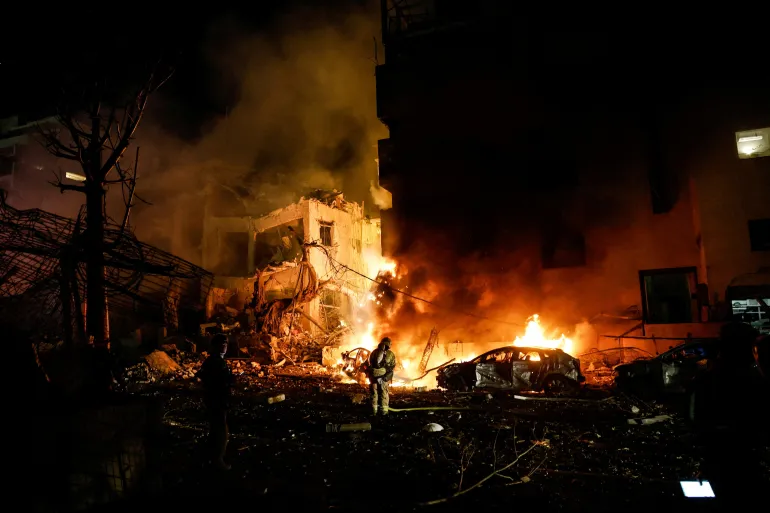
But as the smoke clears over Tehran, the international community is far from united. While the White House describes a unique window of opportunity to cripple Iran’s missile buildup, others see a dangerous departure from global norms.
“It appears that the actions are inconsistent with international law,” said Canada Prime Minister Mark Carney.
The dissent is not just coming from the usual sceptics. In Washington, the halls of Congress are echoing with internal debate.
While House Speaker Mike Johnson defends the strikes as a response to Iranian intimidation, others are questioning the legality of the administration’s “rush to war.”
“The US Constitution is clear that the power to declare war completely sits with Congress… this administration has not put forward a viable argument why the US should be going to war with Iran,” Congress Rep. Melanie Stansbury said.
Across the Atlantic, the fracture is even more pronounced. Spain and France have moved from concern to outright condemnation.
Spanish Prime Minister Pedro Sanchez has made it clear that Madrid will not be a silent partner in what he deems a moral and strategic error.
“We will not be complicit in something that is bad for the world and contrary to our values and interests, just because we might fear reprisals… we feel prouder than ever to be Spanish,” Sanchez stated.
That defiance has drawn the ire of President Donald Trump. In characteristic fashion, Trump did not just target Spain’s stance; he threatened its economy while simultaneously venting his frustration with the United Kingdom’s level of cooperation.
“I could stop tomorrow, or today, even better — stop everything having to do with Spain. All businesses having to do with Spain… embargoes, do anything I want with it. And we may do that… I’m not happy with the UK either. This is not Winston Churchill that we’re dealing with,” Trump noted.
As the West argues over trade and tactics, Russia is seizing the narrative. Moscow has accused the US and Israel of manufacturing a crisis to facilitate what it termed a long-planned scheme for regime change.
“There is no doubt that the so-called Iranian threat… was merely a pretext for carrying out a long-planned scheme to forcibly overthrow the constitutional government of a sovereign state,” Russian Foreign Ministry Spokeswoman Maria Zakharova said.
With missiles still flying and allies drifting apart, the narrow window the US spoke of may have set it on a path towards achieving its military goals, but the diplomatic cost is proving to be a price many are not yet willing to pay.