By Bonface Mulyungi
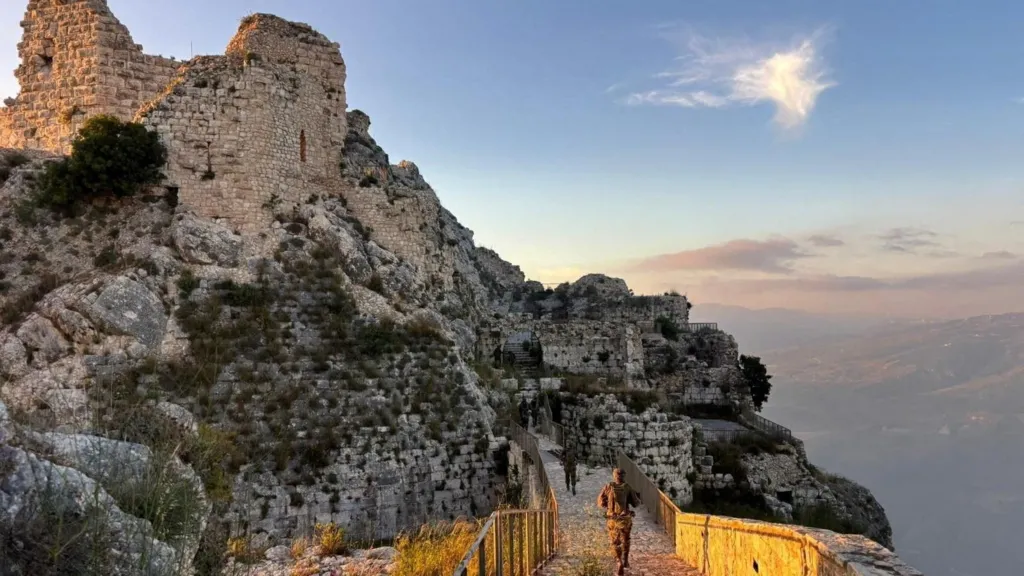
The Israeli military has captured the strategic site of Beaufort Castle in southern Lebanon, in what Prime Minister Benjamin Netanyahu described as a “decisive shift” in its offensive against Hezbollah.
It comes as ground troops move ever deeper into Lebanese territory beyond their original demarcation line of the Litani river.
Meanwhile the Israel Defense Forces (IDF) increased the zone in southern Lebanon that it has warned residents to evacuate from.
Lebanon’s prime minister has accused Israel of carrying out “collective punishment”.
Perched over the Litani valley, Beaufort Castle has been key to controlling the region around it since the Crusaders built it some 900 years ago. The Israeli army captured it 44 years ago in what’s known in Israel as the First Lebanon War.
In a statement on Sunday following its capture, Netanyahu said it was “a decisive stage and decisive shift in our policy”.
“We have broken the barrier of fear. We are taking the initiative, we are operating on all fronts – in Syria, in Gaza, in Lebanon,” he said.
Netanyahu added that his aim was to “deepen and expand our grip on the places that were under Hezbollah’s control”.
Defence Minister Israel Katz recalled the battle 44 years ago against the Palestine Liberation Organisation (PLO) – one of the first of the Lebanon war. He said the Golani Brigade, which took it then, had returned and raised the Israeli flag above it.
So, it’s a highly symbolic as well as strategic victory, as far as Israel is concerned.
In 1982 Israeli forces occupied the castle – which is just 14.5km (nine miles) from the Israeli border – but left in 2000 when they withdrew from their self-declared buffer zone in southern Lebanon.
For the Lebanese, it’s the latest historic landmark to be seized in recent days, while the city of Nabatieh further north appears to increasingly be a target for the IDF.
Katz said control of the castle and the ridge it stands upon was an important step in protecting Israeli communities on the other side of the border.
The latest evacuation warning is the second time in recent days that Israel has told residents to leave the entire south of Lebanon below the Zahrani river.
“Anyone present near Hezbollah elements, facilities or means of combat endangers their life,” an IDF spokesman said.
The spokesman said a “significant number of IDF ground soldiers” were involved in the operation, which was “currently expanding to additional areas”.
It’s another clear indication that Israeli ground forces are moving ever deeper into Lebanese territory beyond their original demarcation line of the Litani river.
Israel says it’s been intensifying its onslaught against Hezbollah in response to the Iranian-backed group’s ramping up of its own explosive drone and missile attacks, both on Israeli troops inside Lebanon and communities across the border.
On Sunday, Lebanon’s Health Ministry said 13 hospital staff had been injured in an airstrike in the vicinity of Hiram hospital in Tyre, southern Lebanon, which caused significant damage.
The military confirmed another soldier had been killed, while schools in communities on the Israeli side of the border have been closed on Sunday as a precaution.
On Saturday, Hezbollah fired some 25 projectiles towards that area, prompting calls from opposition Israeli politicians for the government to do more to ensure the safety of residents.
In Lebanon, Prime Minister Nawaf Salam made a televised address in which he accused Israel of a “scorched-earth policy and collective punishment” in the south of the country.
And France, which has historical ties with Lebanon, has requested a meeting of the United Nations Security Council to discuss the Israeli military operations.
President Emmanuel Macron said on X “it is urgent that the weapons fall silent – all of them, and for good”.
“Nothing justifies the major escalation currently under way in southern Lebanon,” he added.
Foreign Minister Jean-Noël Barrot told French network BFMTV the situation was a “major mistake for Israel”.
Israeli officials have said Hezbollah’s attacks are violating the temporary ceasefire deal between the Israeli and Lebanese governments, which has been extended twice since it came into force last month.
Lebanese officials have pointed to the Israeli strikes themselves as violations.
The mutual accusations mean the ceasefire is essentially in tatters, but nevertheless a fourth round of negotiations between delegations from the two governments is due to be held in Washington this week.
Salam has said this is Lebanon’s only route away from the conflict, but Hezbollah is not involved. And the Lebanese government and army, as ever, can only watch on as bystanders in the latest confrontation between Israel and Hezbollah.
Lebanon was drawn into the war between the US and Israel on one side, and Iran on the other, on 2 March, when Hezbollah launched rockets into Israel in retaliation for an Israeli strike that killed Iran’s Supreme Leader Ali Khamenei. Israel responded with an air campaign across Lebanon and a ground invasion.
Since then the Lebanese authorities say more than 3,300 people have been killed, while there have been 25 Israeli military deaths.