Stacy Boit,

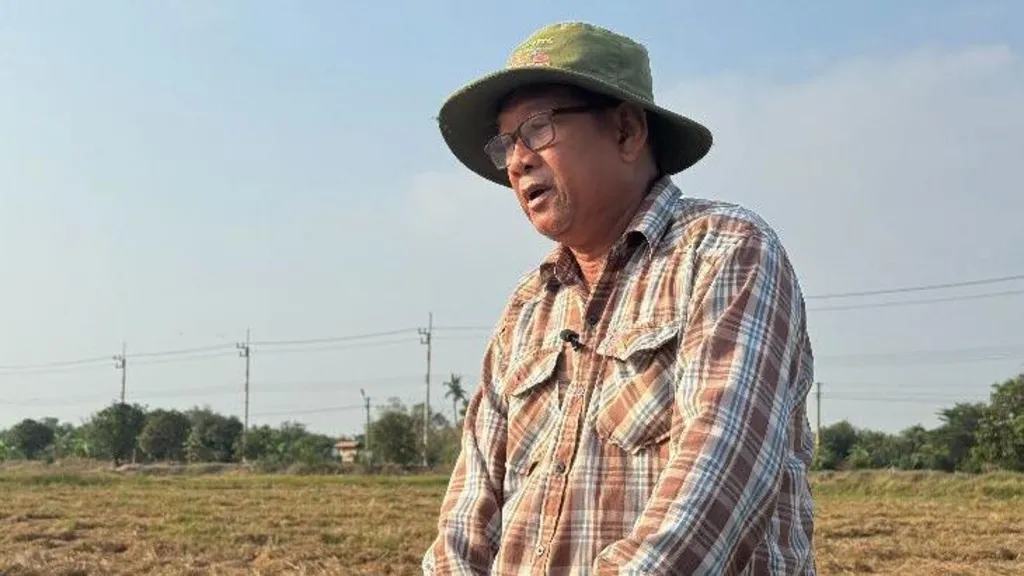
As planting season dawned across South East Asia’s rice fields, Suchart Piamsomboon, a 60-year-old farmer from Thailand’s Chachoengsao province, went to the local shop for fertilisers.
But the fertiliser had not arrived.
And, he was told, it might not arrive. Even if it did, it would cost over 1,100 baht a sack – a jump from the 800-900 baht it cost just over a month ago.
By the time Piamsomboon got home, word was already circulating that prices could even hit 1,200 baht.
“I’ve decided not to do it,” he said, when asked whether he would plant this season. “Farming only leads to financial losses. I’d rather work as a day labourer and earn 100 to 200 baht a day just to get by. Expenses don’t go down, but income keeps falling.”
Piamsomboon is not alone.
From Thailand’s rice belt to Vietnam’s Mekong Delta, farmers across Asia are making the same calculation – and arriving at the same grim conclusion. The planting season is here. The fertiliser is not.
And the decisions being made in the next few weeks will determine how much the world’s rice bowl yields at the end of the year.
The proximate cause of this crisis is a war that most of these farmers had little reason to care about before.
When the United States and Israel struck Iran on 28 February, the Strait of Hormuz, the narrow waterway through which roughly one-third of the world’s seaborne fertiliser trade flows, effectively shut down.
Many countries import a large amount of fertilisers from the Persian Gulf region.
Within weeks of the war starting, the price of urea, the world’s most common nitrogen fertiliser, had jumped more than 40%.
As exports through the Strait halted, the world’s gaze turned to China, the planet’s single largest fertiliser producer.
Last year, China was responsible for 25% of global output of fertiliser and exported more than $13 billion of it.
But China has shut its own doors – in March it banned exports of several types of fertiliser, crucial to the agricultural industry. This came on top of restrictions that have been steadily been put in place since 2021.
Between half and 80% of those fertiliser exports are now restricted, according to a Reuters’ analysis of Chinese customs data.
In China’s Shandong province, a fertiliser exporter who asked not to be named described receiving the notice to halt exports from the government.
For the past few years, his import-export company has exported fertilisers to countries mostly based in the Asia Pacific region like Thailand, Indonesia, and New Zealand.
He said that the company had contracts signed and shipping dates confirmed to “at least five or six countries” prior to the ban.
“We had already received the orders,” he said. “The clients were waiting. But now we have been told not to ship.”
“Of course, we are worried about business, but we understand why the government is doing this,” he added. “The government is trying to ensure enough domestic supply, so we will follow the regulations.”
The only fertiliser China still exports in meaningful quantities is ammonium sulfate, a lower-grade industrial byproduct that is a poor substitute for other more crucial fertilisers that are needed to grow essential food crops like rice.
“The combined effect of China’s export ban and the closure of the Strait of Hormuz will inevitably rattle the global fertiliser market and food security,” said Joseph Glauber, a Research Fellow Emeritus at the Washington-based International Food Policy Research Institute.