By Andrew Kariuki
Japan is preparing to ease its long-standing restrictions on arms exports, a move that is already drawing strong interest from countries across Europe and Asia seeking to strengthen their defence capabilities amid growing global uncertainty.
The policy shift, backed by Prime Minister Sanae Takaichi’s ruling party, is expected to be formally adopted as early as this month, according to government officials. It marks a significant departure from Japan’s post-World War II pacifist stance, which has largely kept it out of the global weapons market.
The changes come at a time when traditional allies of the United States are reassessing their security strategies. Concerns over former U.S. President Donald Trump’s unpredictable foreign policy positions, coupled with ongoing conflicts in Ukraine and Iran, have placed strain on American weapons supplies and raised doubts about long-term security commitments.
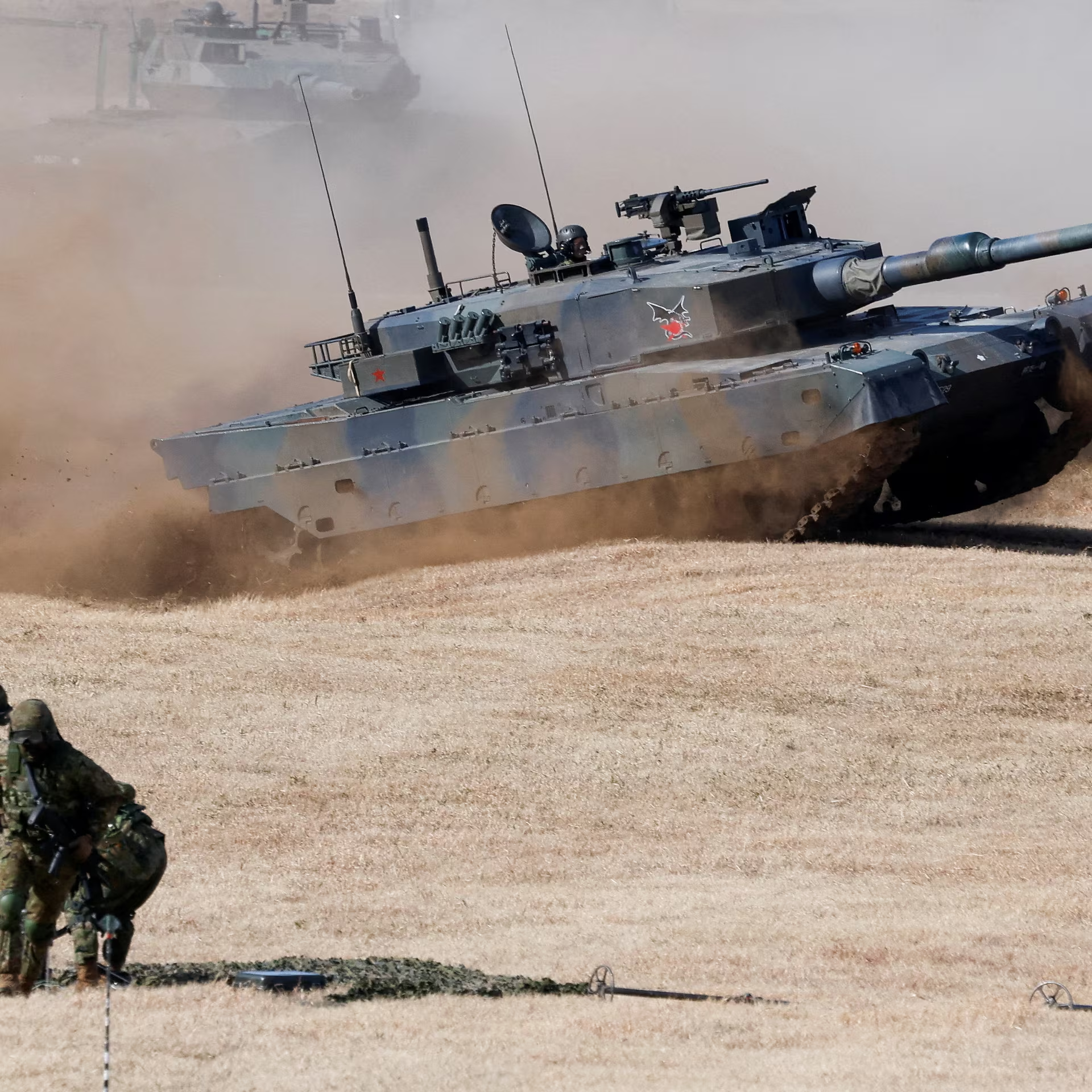
Japan, which already spends approximately $60 billion annually on defence, has developed a robust military-industrial base capable of producing advanced systems, including submarines and fighter jets. The easing of export rules is expected to open this capacity to international markets.
Countries such as Poland and the Philippines have emerged as potential early partners. Both nations are currently undergoing military modernisation, driven by regional security pressures. The Philippines, in particular, is facing ongoing tensions with China in the South China Sea, while Poland continues to strengthen its defence posture in response to the war in Ukraine.
Among the initial deals under consideration is the export of used Japanese frigates to the Philippine navy, with further discussions potentially extending to missile defence systems. In Europe, Poland is exploring cooperation with Japan in areas such as anti-drone and electronic warfare technologies.
“There are some bottlenecks that we can overcome having Japan on board,” said Mariusz Boguszewski, deputy chief of mission at Poland’s embassy in Tokyo, pointing to the potential for joint defence development.
European diplomats have also indicated that Japan’s entry into the arms export market could help reduce reliance on U.S. defence manufacturers, whose production capacity has been stretched by multiple global conflicts.
Japanese defence firms are already positioning themselves to take advantage of the anticipated demand. Companies such as Toshiba and Mitsubishi Electric are expanding operations and hiring additional staff, with Mitsubishi Electric increasing its presence in key international hubs like London and Singapore.
“Offers are coming from everywhere,” said Masahiko Arai, a senior executive at Mitsubishi Electric’s defence unit, highlighting the level of global interest.
While Tokyo has yet to confirm specific agreements, Takaichi has previously indicated that the review of export controls is aimed at strengthening Japan’s own defence production while also supporting allied nations.
The shift signals a broader recalibration of Japan’s role in global security, as it moves from a strictly defensive posture toward becoming an active player in the international defence market.