In a continued effort to reclaim road reserves and enhance transport infrastructure along the Thika Superhighway, the Kenya National Highways Authority (KeNHA) has carried out demolitions at the Roysambu Roundabout.
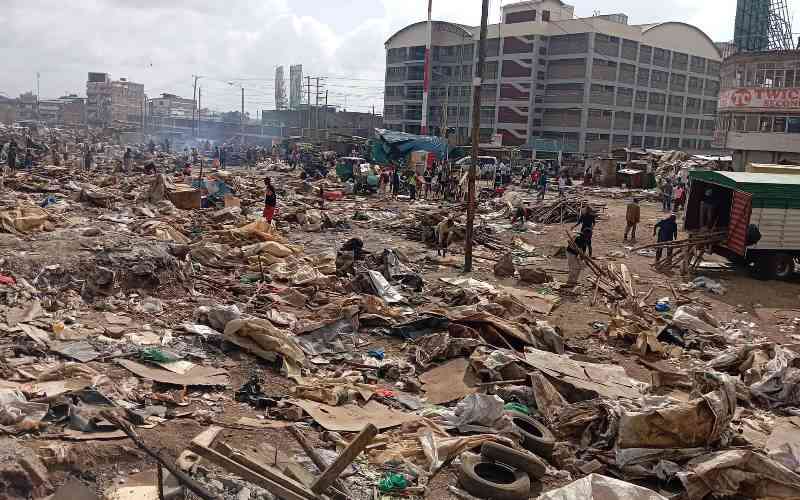
The operation, which took place on the night of March 4, 2026, targeted illegal stalls and kiosks that had encroached on public land, affecting both sides of the busy highway section.
Eyewitness accounts describe a thorough clearance. Structures on the side touching the Kenya Power perimeter wall were pulled down, including parts of stalls that extended into the restricted area. The area along Thika Road, where vendors commonly sold clothes and other goods, was completely levelled.
Additionally, kiosks lining the edge near the Shell petrol station, particularly along the exit leading to Kamiti Road, were demolished. This left the once-bustling roadside bare, with debris scattered as excavators and bulldozers moved in under police protection.


Thika road evictions: Traders at Allsops, Kihunguro, Delview told to vacate in 7 days


‘No blame game, let’s solve it together’ – Ruto breaks silence over demolition of Githurai stalls

The demolitions at Roysambu come just days after a similar exercise in Githurai, where KeNHA flattened hundreds of roadside stalls on 18-19 February 2026.
In Githurai, the operation sparked protests from affected traders, who clashed with police and blocked sections of Thika Road in anger.

Demonstrators burned tyres and threw stones, highlighting the frustration among small-scale business owners who claimed the nighttime demolitions caught them off guard despite prior notices.
Over a thousand traders in Githurai were left counting heavy losses, with kiosks, wooden sheds, and makeshift markets reduced to rubble to make way for new bus bays.
KeNHA had issued a public notice on February 9, 2026, giving roadside traders at both Roysambu and Githurai seven days to vacate the road reserves.
The authority stated that the clearances were essential for developing modern bus parks, which would ease traffic congestion, improve connectivity to the highway, and boost road safety in these commuter-heavy areas.