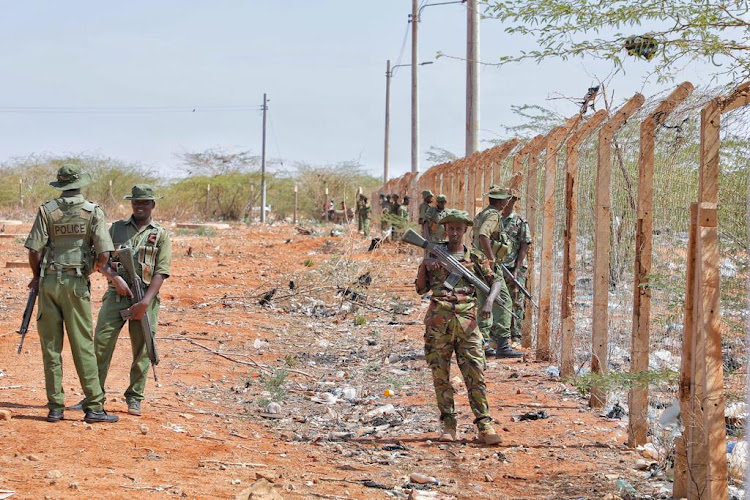
The government will reopen the Kenya-Somalia border in April, ending a closure that has been in place since 2011 due to security concerns linked to Al-Shabaab.
Speaking in Mandera, President William Ruto said adequate security personnel will be deployed at the border to ensure the reopening does not compromise safety.
He said the reopening of border points in Mandera and Garissa counties is expected to revive cross-border trade and allow traders from both countries to operate freely.
“We cannot trade with closed borders. For that reason, I will be returning here in April to officially open the border post linking Kenya and Somalia,” Ruto said.
He added, “We will deploy adequate security to ensure that criminals and insurgent groups do not infiltrate, while giving traders from both regions the freedom to operate. Leave the insurgents to us; we will deal with them.”
The Head of State also urged local residents and regional leaders to collaborate with the government by providing timely intelligence to help dismantle any Al-Shabaab networks that might attempt to exploit the border reopening.
Plans to reopen the border in phases in 2023 were suspended in July that year following a surge in Al-Shabaab activities. In 2024, Interior Principal Secretary Raymond Omollo said the closure would remain in place amid ongoing security operations in Somalia.
On February 6, the government, through the Ministry of Interior, officially announced the border’s reopening to facilitate the export of miraa from Kenya.
The move followed a request from the Chairman of the Nyambene Miraa Trade Association, who petitioned the Ministry for access to the sensitive border to benefit miraa farmers and traders.
In response, Interior Principal Secretary Raymond Omollo confirmed that the National Security Council Committee had ratified the reopening, specifying that cross-border trade of miraa would be permitted through designated points, including Mandera, Liboi, and Kiunga.
The reopening calls for a cautious, intelligence led approach, including close coordination with international partners such as the United Kingdom and the United States, with whom Kenya works closely in combating Al Shabaab.