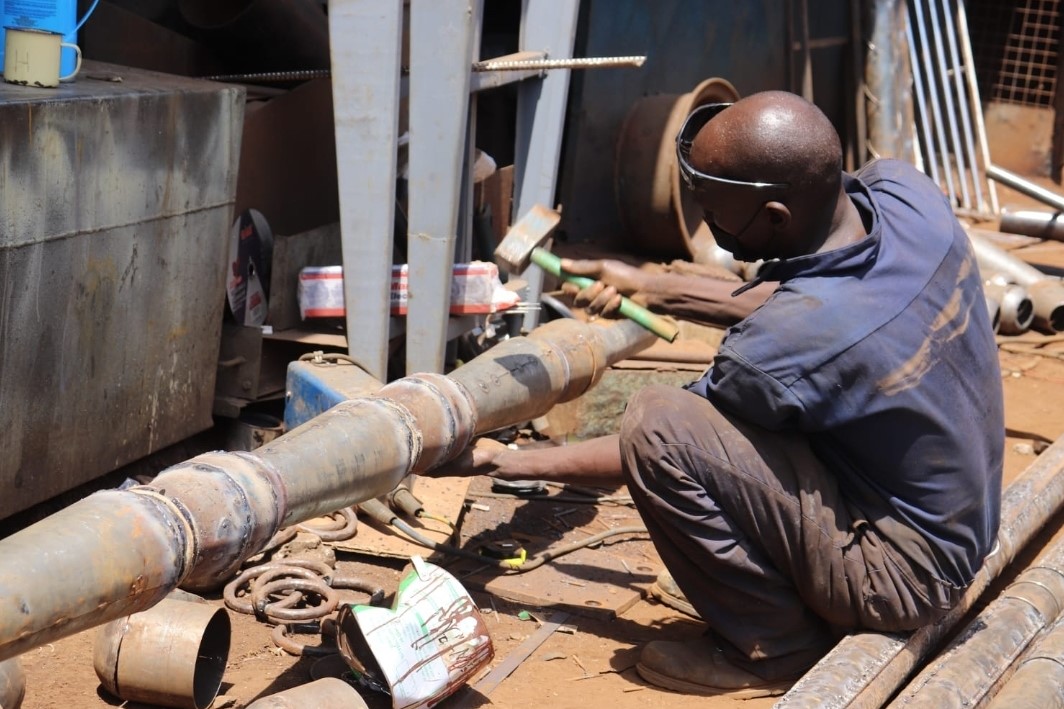
Kenya’s formal employment grew modestly by 2.4 per cent to 3.4 million in 2024, yet the informal sector continued to absorb the bulk of the workforce, highlighting persistent challenges in creating structured, quality jobs.
According to the 2025 Economic Survey by the Kenya National Bureau of Statistics, manufacturing remained the largest formal employer with 347,294 workers, followed by agriculture at 308,865. Formal jobs accounted for just 16.4 per cent of total employment, with the informal sector claiming 83.6 per cent.
Private sector wages reached KSh 2,117.4 billion, significantly exceeding the public sector’s KSh 881.4 billion. Overall, the economy generated 782,300 new jobs, of which 703,700 were informal, largely through micro, small and medium enterprises. Export processing zones employed 66,804 in apparel manufacturing.
A separate report from the Kenya Institute for Public Policy Research and Analysis warns that subdued domestic savings are constraining productive investment and slowing employment growth. Gross national savings dipped slightly to 16.0 per cent of GDP in 2024 from 16.1 per cent in 2023, while total investment declined to 17.5 per cent of GDP.
The savings-investment gap narrowed to 1.6 per cent of GDP, but analysts argue low savings limit capital formation across sectors. Government channels include tax revenues, pension contributions, bonds and diaspora remittances, yet household and corporate mobilisation remains insufficient.
Youth unemployment and barriers to formalising informal roles exacerbate the issue. Initiatives targeting skills development and MSME support aim to facilitate transitions, but structural constraints persist.
As Kenya projects higher growth in 2025, policymakers face pressure to boost savings through incentives and enhance investment for equitable job creation.