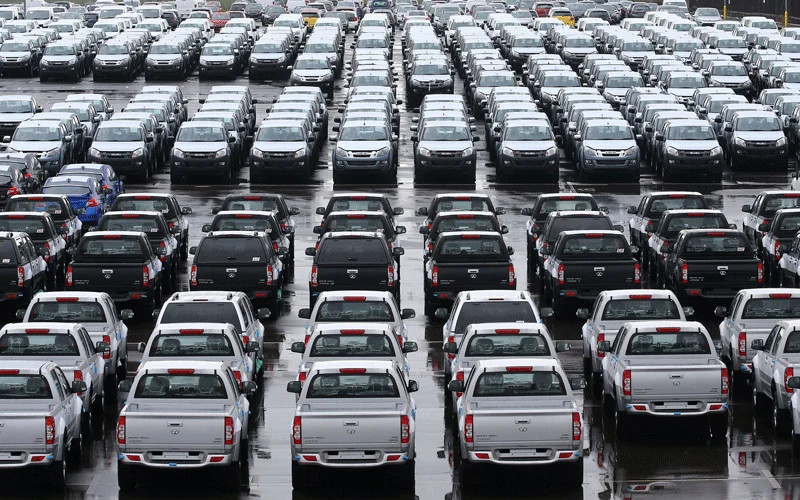
Kenya’s new vehicle market recorded a strong performance in 2025, driven by lower borrowing costs and a steady rise in local assembly.
Data from the Kenya Motor Industry Association (KMIA) shows that the 11 main dealers sold 13,583 vehicles last year, up from 11,352 in 2024, a jump of 2,231 units or nearly 20 per cent.
The increase is largely linked to declining interest rates in the credit market following cuts by the Central Bank of Kenya (CBK).
By the end of the year, the benchmark rate stood at nine per cent, down from 13 per cent in mid-2024, marking nine successive reductions.
The first single-digit rate of 9.75 per cent was achieved in June 2025. According to industry analysts, these lower rates encouraged both businesses and individuals to take advantage of affordable financing to buy new vehicles.
“A notable driver for the growth in 2025 was the progressive CBK interest rate decrease in the first half of 2025, with lower financing costs enabling more vehicle purchases and a recovery in business confidence,” KMIA said.
Continued government vehicle leases, schools investing in buses, and steady activity across sectors like transport, construction, and retail further strengthened demand.
Trucks led the sales chart with 5,496 units, followed by pickups at 3,242 and buses at 2,675, reflecting strong demand in logistics, construction, agriculture, and commerce.
Isuzu East Africa maintained the largest market share, selling 6,494 vehicles, up 20.48 per cent from 5,390 units in 2024, while CFAO sold 4,410 units and Simba Corporation moved 1,134 vehicles.
Local assembly remains a key driver of growth, with firms such as Associated Vehicle Assemblers (AVA), Isuzu East Africa, and Kenya Vehicle Manufacturers (KVM) producing models from Toyota, Isuzu, Hyundai, Fuso, and Scania.
By 2025, nearly 85 per cent of new vehicles sold in Kenya were locally assembled, benefiting from government tax incentives and a focus on electric vehicles such as BasiGo buses.
Credit to major sectors such as manufacturing, construction, trade, and consumer goods remained strong, rising to 6.3 per cent in November from 5.9 per cent in October, and recovering from a negative 2.9 per cent in January.
“This mainly reflects improved demand for credit in line with the declining lending interest rates. Average commercial banks’ lending rates declined to 14.9 per cent in November 2025 from 15 per cent in October, and 17.2 per cent in November 2024,” CBK governor Kamau Thugge said.
Kenya’s economy showed resilience, expanding 4.9 per cent in the third quarter of 2025, led by rebounds in construction, mining, manufacturing, and transport.
Despite rising new car sales, affordability challenges and stricter bank loan conditions have kept demand for used vehicles high. Kenya imports between 7,000 and 9,000 second-hand vehicles monthly, mainly from Japan, the UAE, the UK, Singapore, and South Africa.
These are largely saloon cars and SUVs, which dominate the local roads, with buyers spending an estimated Sh60 billion annually. Prices for new vehicles typically start from Sh500,000, reaching an average of Sh2.5 million.