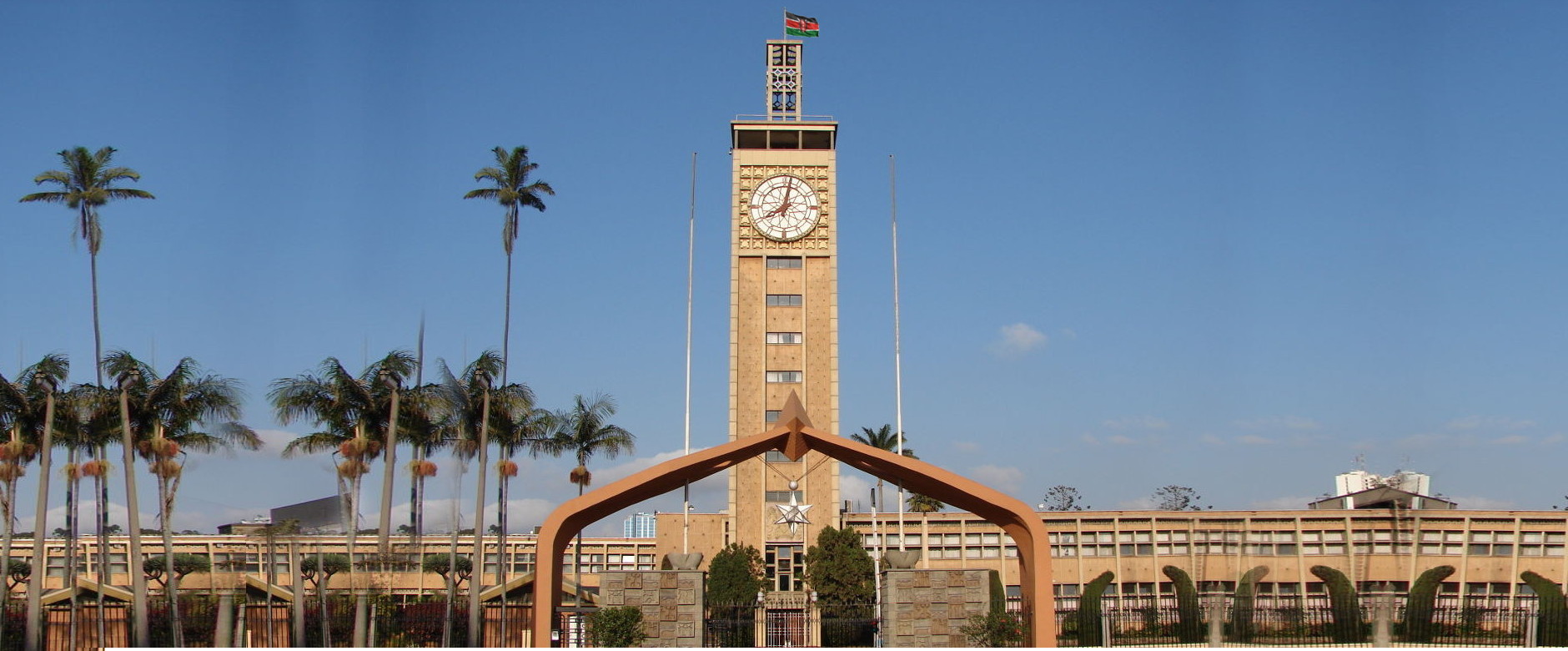
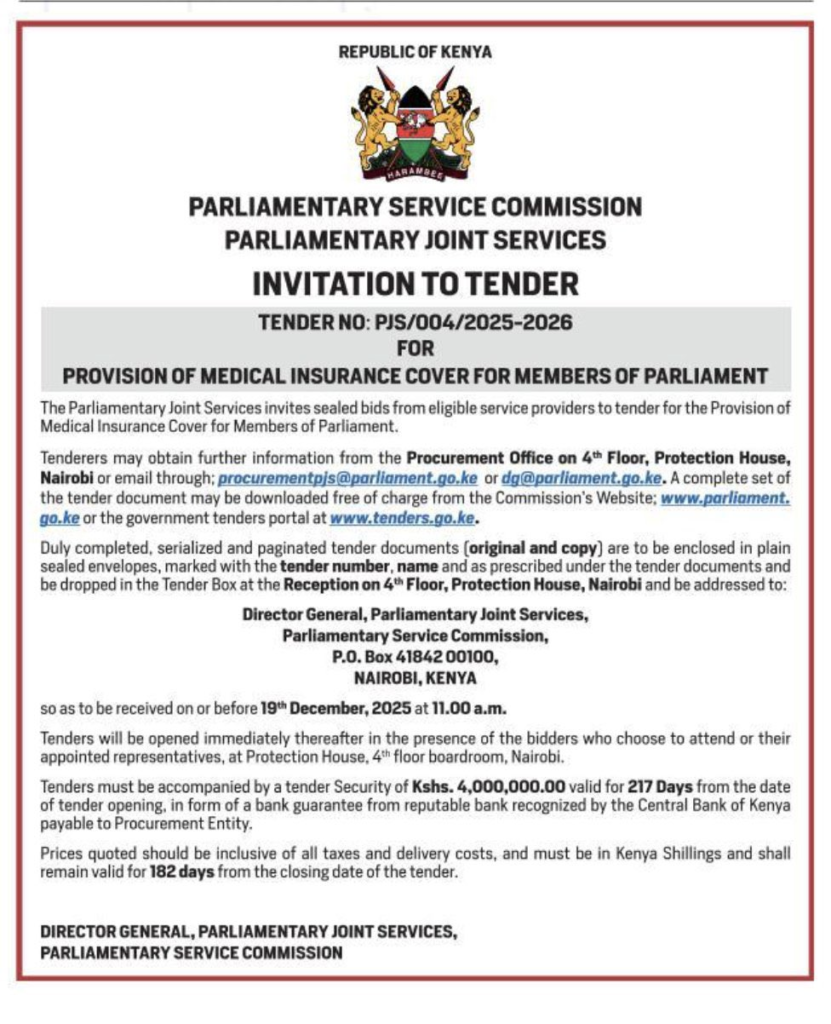
Kenya’s parliament has detonated a political storm by quietly publishing a tender to renew an extravagant private medical insurance scheme for MPs and senators, even as the government begs ordinary citizens to embrace the faltering Social Health Authority (SHA) it launched barely a year ago.
Tender No. PJS/004/2025-2026, floated this week by the Parliamentary Service Commission, will cost taxpayers several billion shillings over two years.
It offers 349 MPs and senators, plus their spouses and up to four dependants each, inpatient cover of up to KSh 10 million per family, KSh 500,000 outpatient allowance, full dental and optical benefits, maternity packages and treatment abroad if needed.
For most Kenyans, SHA provides nowhere near these levels of care, and many public hospitals still turn away patients who cant pay cash.
The hypocrisy is glaring. In October, National Assembly unanimously adopted a motion tabled by nominated MP Sabina Chege urging the government to fast-track Universal Health Coverage and make it mandatory for every public officer, including MPs, to seek treatment only in public hospitals.
Chege argued that channelling the billions currently spent on civil servants’ private medical allowances into public facilities would force rapid upgrades in equipment, staffing and service delivery. Days later, the same House is racing to renew a scheme that lets lawmakers leapfrog the very system they want teachers, nurses and market traders to endure.
Public reaction has been volcanic. Consumer Federation of Kenya secretary-general Stephen Mutoro described the tender as “legislative greed dressed up as routine procurement”.
“Cancel it tomorrow and enroll under SHA like the rest of us,” he demanded of National Assembly Speaker Moses Wetang’ula and Senate Speaker Amason Kingi.
“If they refuse, the entire SHA law should be scrapped and we revert to NHIF. Enough experiments that enrich a few while the majority suffer.”
On social media the anger is raw.
“Our MPs know SHA is broken. That’s why they’re running back to private insurance, yet they defend it on TV every day,” wrote Captain Omondi.
Another user, Random Uzza, lamented: “Sixty per cent of Kenyans will see this scandal and still vote for the same selfish leaders next election. It says everything about us.”
Funding Gap
Social Health Authority (SHA) has released Sh3.4 billion to 2048 hospitals across the country. Sh1.09 billion has been disbursed from the Primary Health Care Fund, with another Sh1.7 billion being processed to cater for dialysis, oncology, and surgical claims.
The full list of disbursements is on its website.
However, SHA itself is in crisis. Although 27 million citizens have been registered through aggressive county drives, only five million are active contributors, leaving a yawning funding gap worsened by Sh30.9 billion in debt inherited from the collapsed NHIF.
Forty-six per cent of healthcare providers report irregular or delayed payments; smaller faith-based and private clinics are owed months of reimbursements.
Patients face rising out-of-pocket costs, healthcare inflation hit 3.3 per cent this year, while the country grapples with an immediate shortage of 70,000 health workers and long queues in under-equipped public hospitals.
Parliamentary insiders insist the VIP medical scheme has existed for decades and is merely being renewed. And any Kenyan is invited to pay for an improved medical cover of their choice, ontop of SHA.
But in an era of supposed austerity, when salaries are taxed heavier and fuel levies bite deeper, the spectacle of lawmakers shopping for platinum healthcare while preaching sacrifice has become the perfect symbol of a political class that appears to live on a different planet from the citizens it claims to serve.