President William Ruto’s order to revert cargo clearing services to Mombasa port is set to shake up the revenue performance of the standard gauge railway (SGR), shifting the cost of financing the Chinese loan used to build the line to taxpayers.
While Dr. Ruto stated that resuming operations would restore thousands of jobs in Mombasa, the overall impact will be on taxpayers.
According to a 2019 study conducted by the University of Nairobi, the transfer of port operations resulted in the loss of 2,987 jobs in Mombasa and approximately 8.4 percent of the county’s revenue.
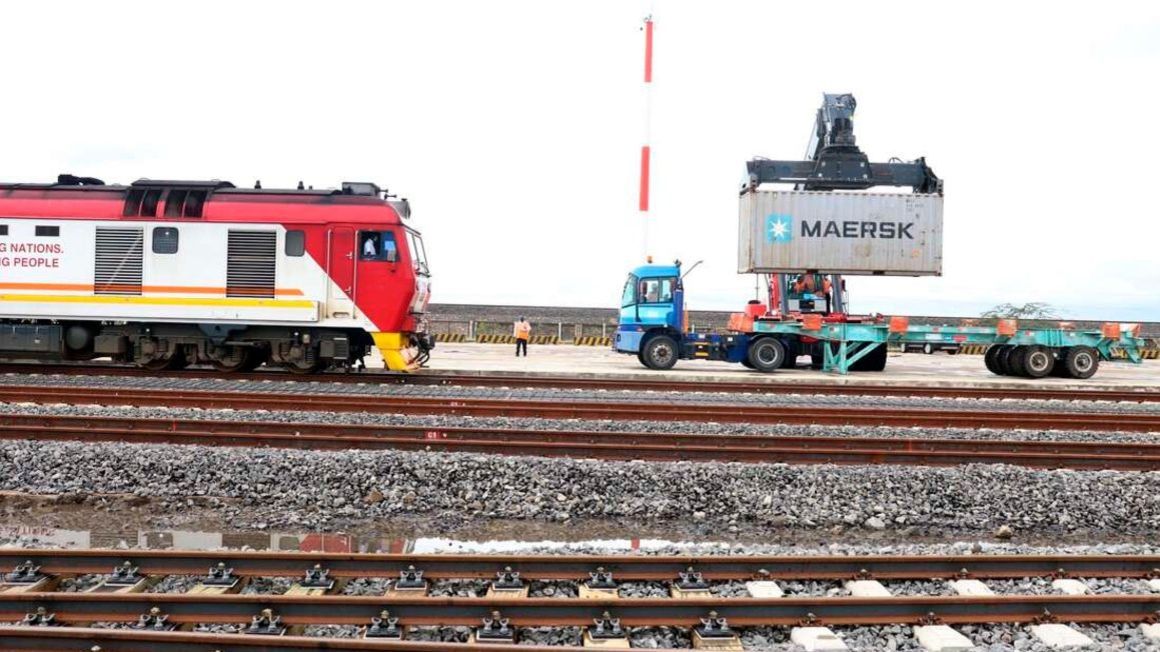
His predecessor, Uhuru Kenyatta, relocated cargo clearance to the Nairobi inland container depot (ICD) to relieve congestion at the Mombasa port and increase competitiveness, while also increasing traffic on the SGR to generate revenue for debt repayment and support operations.
Mr Kenyatta’s decision boosted SGR operations, with cargo accounting for nearly 90 percent of its revenue.
The immediate impact of returning port operations to Mombasa is expected to be a shift to road haulage, reducing cargo business for the SGR.
This will have repercussions for taxpayers because the SGR has debt obligations that the National Treasury will have to cover with public funds.
Since the start of SGR operations in June 2017, the investment has generated a total revenue of Sh54.3 billion.
The railway project has been operating passenger services since its inception on May 31, 2017, with cargo operations beginning months later in January 2018.
Cargo operations, on the other hand, have contributed Sh46.7 billion to SGR revenues over the last five years, while passenger revenues have totaled only Sh7.6 billion.
Apart from the SGR loan repayment burden, President Ruto’s decision will rekindle the port’s old challenges of congestion, affecting its competitiveness in comparison to ports in neighboring countries, such as Dar es Salaam in Tanzania.
Traders prefer non-congested and efficient ports to avoid incurring storage charges and penalties from port managers.
A congested Mombasa port would result in revenue losses as traders switched to competing ports.
Taxpayers may also suffer losses in the hundreds of millions of shillings on investments made along the SGR line, including at the Nairobi and Naivasha ICDs and special economic zones set up to boost business.