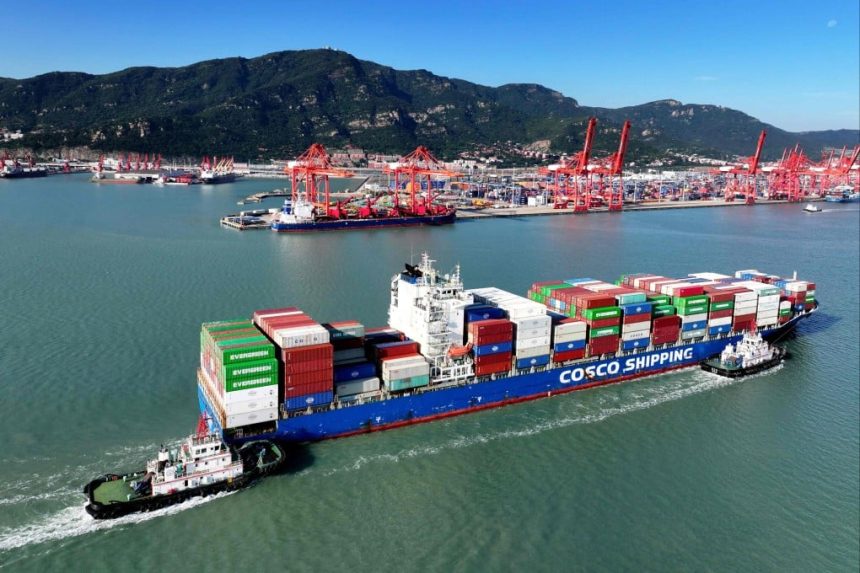
The first Kenyan exports under the zero-tariff regime established by China has arrived in the Asian country.
The 15,125 tonnes shipment by Quanzhou Danong Tea Import and Export Company Limited valued at Ksh 5.2 million ($40,000) arrived at Xiamen Port in Fujian Province on Tuesday.
According to the Ministry of Investment, Trade and Industry, the export represents the beginning of enhanced market access for Kenyan products under China’s preferential tariff arrangement aimed at supporting African exports and deepening economic cooperation between China and African nations.
Trade Principal Secretary Regina Ombam said the move demonstrates the growing strength of bilateral trade relations between Kenya and China and affirms Kenya’s position as a strategic trade and investment partner in Africa.
“The deal presents new opportunities for Kenyan farmers, manufacturers and exporters to expand their footprint in one of the world’s largest consumer markets,” said Ombam.
According to data by the Kenya National Bureau of Statistics (KNBS) exports to China fell to Ksh 16.9 billion last year from Ksh 26.3 billion reported in 2024.
Imports from mainland China on the other hand grew from Ksh 576 billion in 2024 to Ksh 671.2 billion a the trade between the two countries continue to favour the Asian economic giant.
In a bid to correct the trade imbalance that exists with low income countries especially in Africa, China introduced the zero-tariff regime on May 1, 2026 targeting 54 African countries including Kenya.
The preferential tariff arrangement is expected to lower the cost of entry and increase demand for locally produced goods.
Kenyan tea previously attracted a 15pc tariff before the implementation of the zero-tariff arrangement.
The export further underscores the government’s continued efforts to diversify export destinations, promote value addition and enhance the participation of Kenyan enterprises in international trade.
Ombam added that the government remains committed to supporting exporters in accessing new and emerging markets through strategic trade partnerships and favourable market access arrangements.