








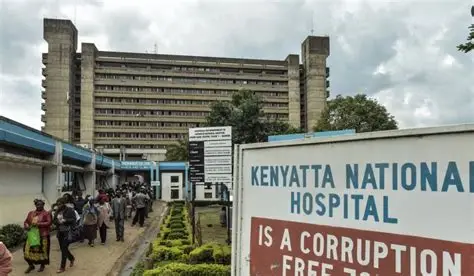
Kenyatta National Hospital (KNH) has announced a 90-day transition to a fully automated healthcare system as part of a major digital transformation.
In a statement on Sunday, May 3, KNH CEO Richard Lesiyampe said the transition is intended to align services with the demands of a modern healthcare environment.
“Kenyatta National Hospital is rolling out a full transition from manual to fully digital systems across all hospital operations. For over 125 years of KNH’s existence, patients have relied on outdated paper-based processes. This is no longer compatible with a modern healthcare system,” the statement read.
KNH said the new digital platform, known as Afya Apex, was designed and tailored internally by its own medical and technical teams to reflect existing clinical and operational needs.
“The new system, known as Afya Apex, has been fully configured and customised by our own staff, including nurses, consultants, and other specialists, in line with clinical and operational processes, ensuring strong ownership and alignment with service delivery needs,” the statement added.
KNH said the transition follows several earlier attempts to digitise its operations that did not succeed.
“Since 2012, the Hospital has unsuccessfully deployed three systems as part of its transformation journey. The current rollout of Afya Apex builds on this agenda and marks a decisive shift towards full automation and integration. This one will not fail,” the statement continued.
According to the hospital, the rollout started on April 15 and is expected to be completed within 90 days.
KNH acknowledged that some early operational challenges were experienced, especially in discharge procedures, but said the issues have since been addressed and the platform remains stable.
“The rollout began on April 15 and will be completed within 90 days. While minor teething challenges were experienced, particularly in discharge processes, these have now been resolved. The system has not collapsed; it remains operational and is stabilising as deployment continues,” the statement further read.

The hospital also apologised for delays that affected some patients during the early stages of deployment, while maintaining that patient safety remained central throughout the transition.
“The Hospital regrets any inconvenience caused by earlier delays in services, including patient clearance and billing, and assures the public that patient care and safety remained the top priority throughout,” the statement noted.
KNH said full implementation of the system is expected to place the hospital among other digitised healthcare institutions across Africa by delivering faster, more transparent, and higher-quality services.
The hospital further warned that any efforts aimed at undermining the digital transition would be met with firm action.
“Upon full implementation, KNH will deliver more efficient, transparent, and high-quality services at par with other digitised hospitals across Africa.
“We call on all patients and stakeholders to support this transition to ensure its successful completion. Any resistance to this transformation, whether from within or outside the Hospital, will be dealt with firmly,” the statement concluded.