By George Ndeto
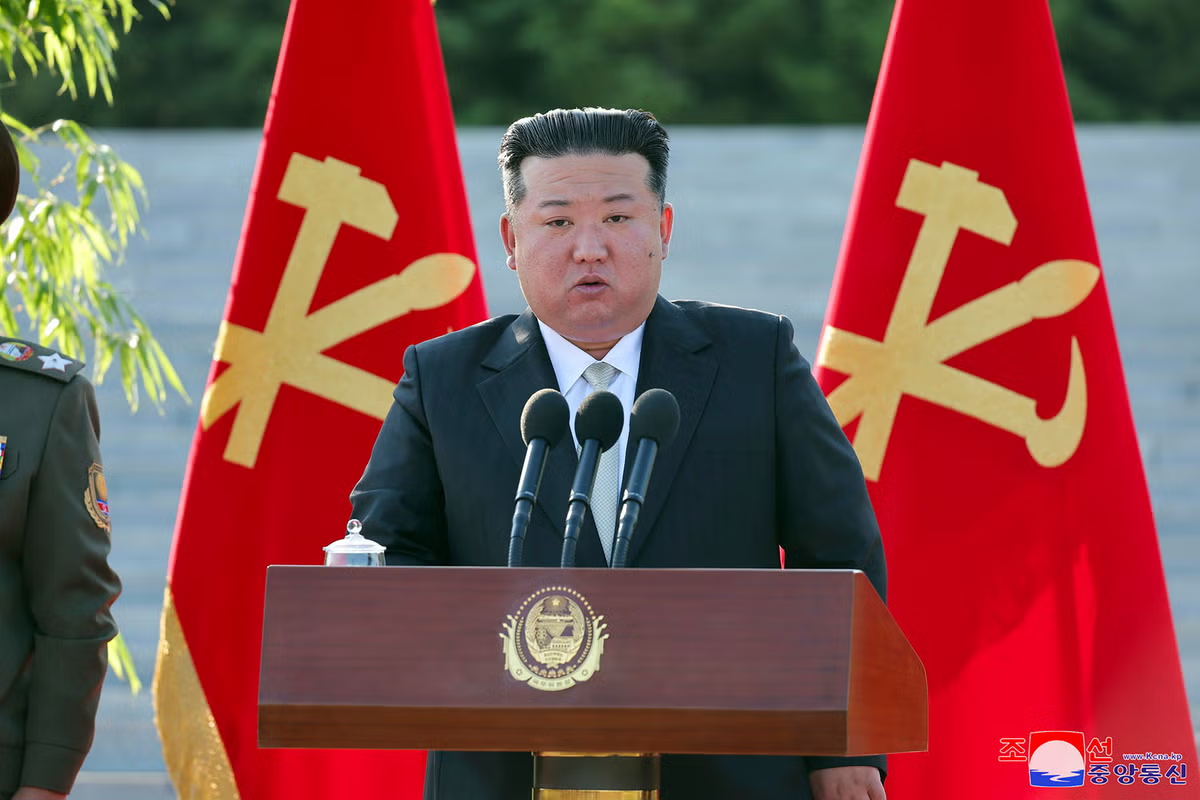
North Korea’s tightly controlled legislature has once again confirmed Kim Jong Un as President of State Affairs, according to reports by the state-run Korean Central News Agency (KCNA) on Monday.
Kim’s continued leadership of the powerful State Affairs Commission—the country’s highest governing body—was announced following a session of the Supreme People’s Assembly. The agency said his reappointment reflected what it described as the “unanimous will” of the North Korean people.
However, observers widely dismiss such elections as symbolic, arguing they are carefully orchestrated to project an image of democratic process while ensuring predetermined outcomes. Analysts note that these events are primarily aimed at reinforcing the regime’s legitimacy rather than offering genuine political choice.
Kim, who has been in power since 2011 after the death of his father Kim Jong Il, represents the third generation of leadership in the state established by his grandfather Kim Il Sung in 1948.
KCNA reported that the decision was made during the first session of the SPA’s 15th term held on March 22, describing it as a key state function. Images released from the event showed Kim seated prominently at the center of the assembly hall, surrounded by senior officials and positioned before large statues of his father and grandfather.
Ahead of the session, 687 deputies were elected to the assembly. Voters, all over the age of 17, were presented with a single candidate per seat endorsed by the ruling party. Official figures indicated near-total participation, with 99.99 percent turnout and 99.93 percent approval.
Political analysts say the gathering could also address constitutional changes, including proposals that may formally define relations with South Korea as those between “two hostile states.” Experts suggest that the language Kim uses in addressing the assembly will offer clues about his future approach to inter-Korean relations, particularly whether references to unity and reconciliation are replaced by more confrontational terms.
Overall, the session is viewed as both a reaffirmation of Kim’s authority and a platform for signaling potential policy shifts at home and abroad.