By Josphine Kasimu
The Kitui County Government, in partnership with animal welfare organisations and the national government, has issued a stern warning to business operators involved in the illegal buying and slaughtering of donkeys, cautioning that decisive legal action will be taken against offenders.
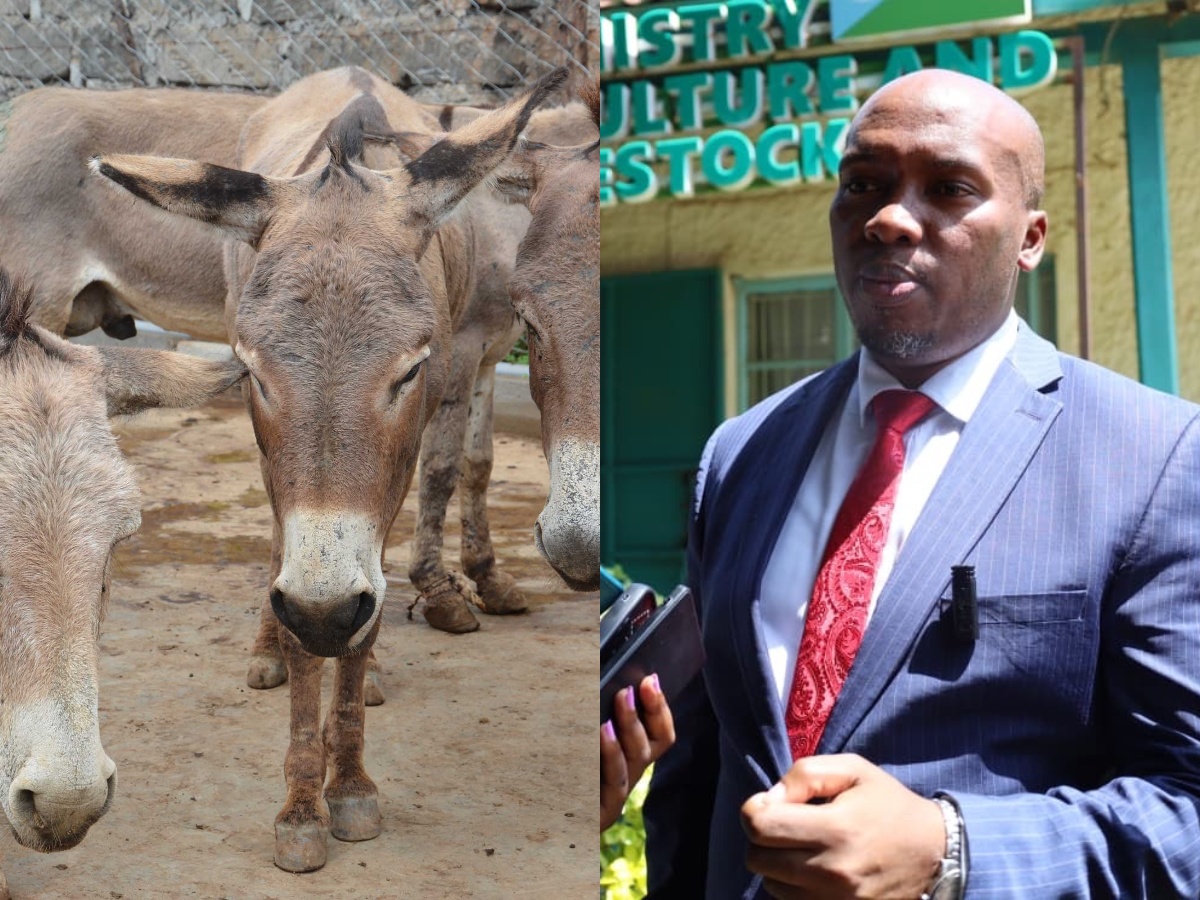
Speaking during a press briefing on 18 December 2025 at his office, the Kitui County Executive Committee Member (CECM) for Agriculture and Livestock Development, Dr Stephen Mbaya Kimwele, raised concern over the resurgence of the outlawed donkey slaughter trade, particularly during the ongoing festive season when meat consumption is high.
Dr Mbaya noted that Kitui County currently has an estimated donkey population of about 160,000 animals, according to recent data.
He emphasised that donkeys play a critical role in the livelihoods of many residents, especially in the arid and semi-arid areas of the county, where they are widely used for domestic chores such as fetching water and transporting goods, as well as for income-generating activities.
“Donkeys are a lifeline for many households in Kitui. They support daily survival and contribute significantly to the local economy. Any threat to their welfare is a direct threat to the wellbeing of our people,” Dr Mbaya said.
He recalled that last year the county experienced alarming levels of illegal slaughter, with close to 100 donkeys reportedly being killed daily by unscrupulous traders.
The practice not only led to widespread theft of donkeys but also heightened insecurity among residents.
“These incidents were at their worst last year. Through sustained operations, we arrested suspects and arraigned them in court, which significantly reduced the cases,” he explained.
However, Dr Mbaya warned that the illegal trade has recently resurfaced, with donkeys being sourced from various parts of the county, including Mwingi, Kitui Rural and Kitui West.
The animals are reportedly transported to markets such as Kithyoko, where they are slaughtered clandestinely in nearby forests. The meat is then supplied to urban centres and sold to unsuspecting consumers.
In collaboration with the national government and organisations such as Caritas Kitui, the county has intensified surveillance and enforcement.
Dr Mbaya confirmed that several suspects have already been arrested in recent operations, a move he said has helped curb the vice.
“Some criminals were slaughtering donkeys in forests, selling the meat locally and trafficking the skins to external markets. Our joint efforts have disrupted these networks,” he stated.
Ambrose Musyimi, an officer with Caritas Kitui, underscored the importance of public cooperation in combating the illegal trade. He warned that donkey meat is often sold fraudulently as other types of meat, posing both ethical and public health concerns.
“It is only through cooperation between citizens and authorities that we can stop these incidents and safeguard donkey welfare,” Mr Musyimi said, urging residents to report any suspected cases.
The county government has appealed to the public to remain vigilant and report instances where large numbers of donkeys are being transported without proper documentation or clear destinations.
Such cases, residents were advised, should be reported immediately to the nearest police station.
As the festive season continues, authorities have reiterated their commitment to protecting donkeys and preserving their vital role in the lives and livelihoods of Kitui residents.