







By Josphine Kasimu
Kitui County Executive Committee Member (CECM) for Agriculture and Livestock, Dr Stephen Mbaya Kimwele, has called on farmers across the county to adopt climate-smart agricultural practices as prolonged dry conditions continue to undermine food production and livestock survival.
Speaking during a press briefing in his office on 5th December, 2025 giving an assessment of the ongoing long-rains season, Dr Mbaya noted that most parts of Kitui have received little to no rainfall since the start of the expected rainy period.
He said the unpredictable weather patterns, driven by global climate change, have left farms unproductive and livestock under threat, heightening concerns over food insecurity in the region.
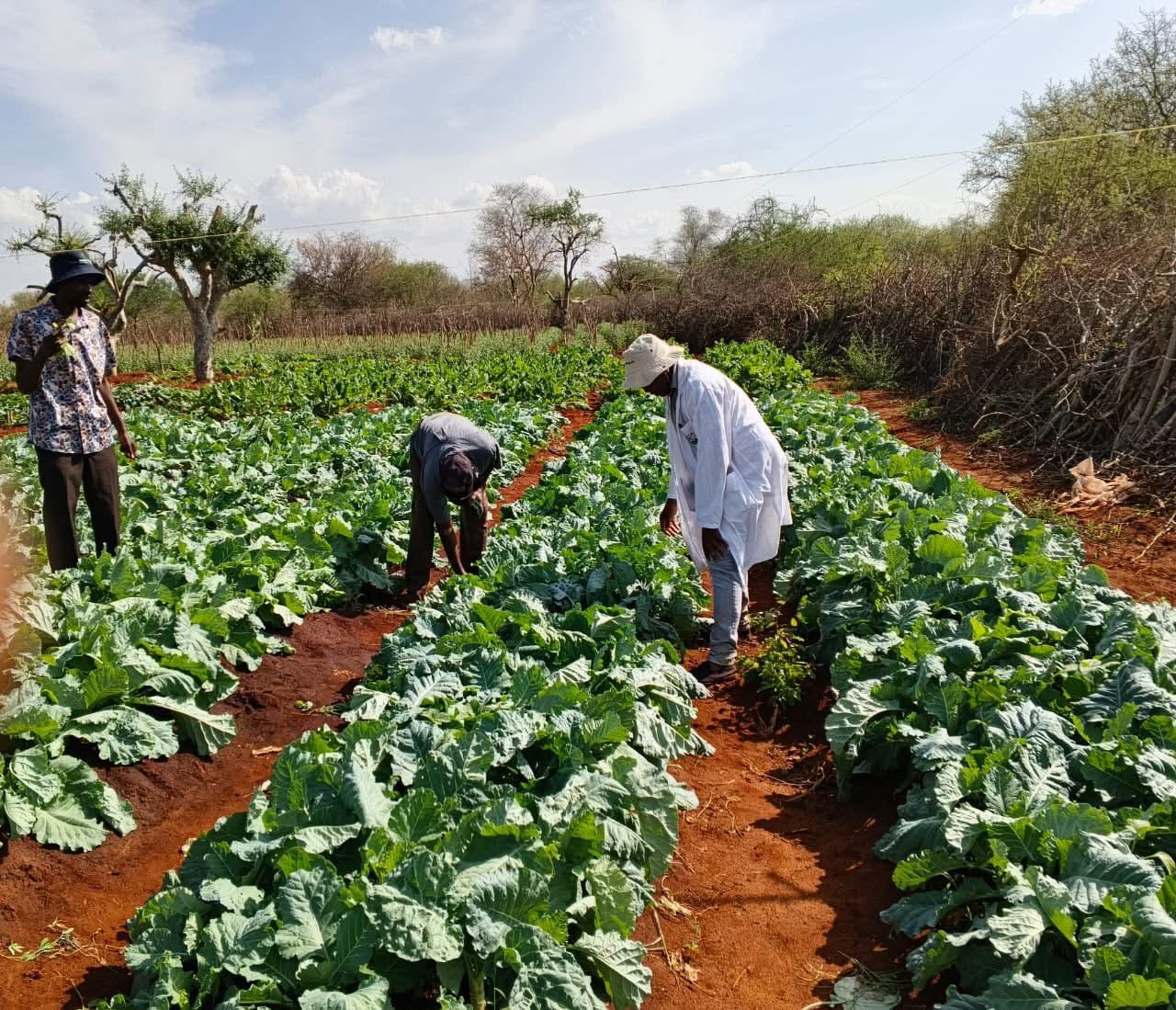
Dr Mbaya emphasised that despite the harsh conditions, residents must explore alternative ways of producing food. He urged farmers to shift gradually from rain-fed agriculture and embrace irrigation and other smart-farming methods that can sustain both crop and livestock production.
“Many areas, particularly in the three Mwingi constituencies, Kitui South and Kitui East, have not received meaningful rainfall even twice since the onset of the long rains. This has left the soils dry and contributed to severe losses in farming activities,” he said. “The only way we can secure food for our households and livestock is through climate-smart agriculture, especially irrigation.”
According to Dr. Mbaya, the county government has invested heavily in water infrastructure aimed at supporting alternative farming methods. Through the Ministry of Water, the county has drilled boreholes and constructed dams and sand dams to harvest and store water.
“The county government has drilled boreholes and built numerous dams and sand dams across all sub-counties. Farmers should take advantage of these resources to practise irrigation farming,” he urged.
Dr Mbaya further appealed to residents living near sand dams to cooperate with farmers who wish to use the water for domestic food production. He stressed that denying access to shared water sources only undermines community efforts to strengthen food security.
“We can only get food through irrigation farming. Those living near sand dams should not restrict others from accessing water for vegetable farming and other irrigation activities that support the community’s nutritional needs,” he said.
The Agriculture CECM also encouraged farmers to diversify their agricultural ventures as a way of cushioning themselves against climate shocks. He highlighted livestock development, beekeeping and planting drought-tolerant grasses as key enterprises that can thrive even under erratic rainfall patterns.
“Lack of rain is not the end of agriculture. We must adapt to the challenges brought by climate change, which is now inevitable,” he said.“Beekeeping, pasture production and livestock rearing remain viable options that farmers should take seriously.”
Kitui County has increasingly felt the impact of global climate change, with unreliable rainfall patterns becoming more frequent.
In response, the county government, in partnership with the national government and various development organisations, has initiated several measures to promote climate-smart farming. These efforts include training farmers’ groups in modern agricultural practices, apiculture, livestock management and sustainable water use.
Dr Mbaya reiterated the government’s commitment to supporting farmers as they transition to smart agriculture, noting that the long-term survival of communities depends on their ability to adapt.