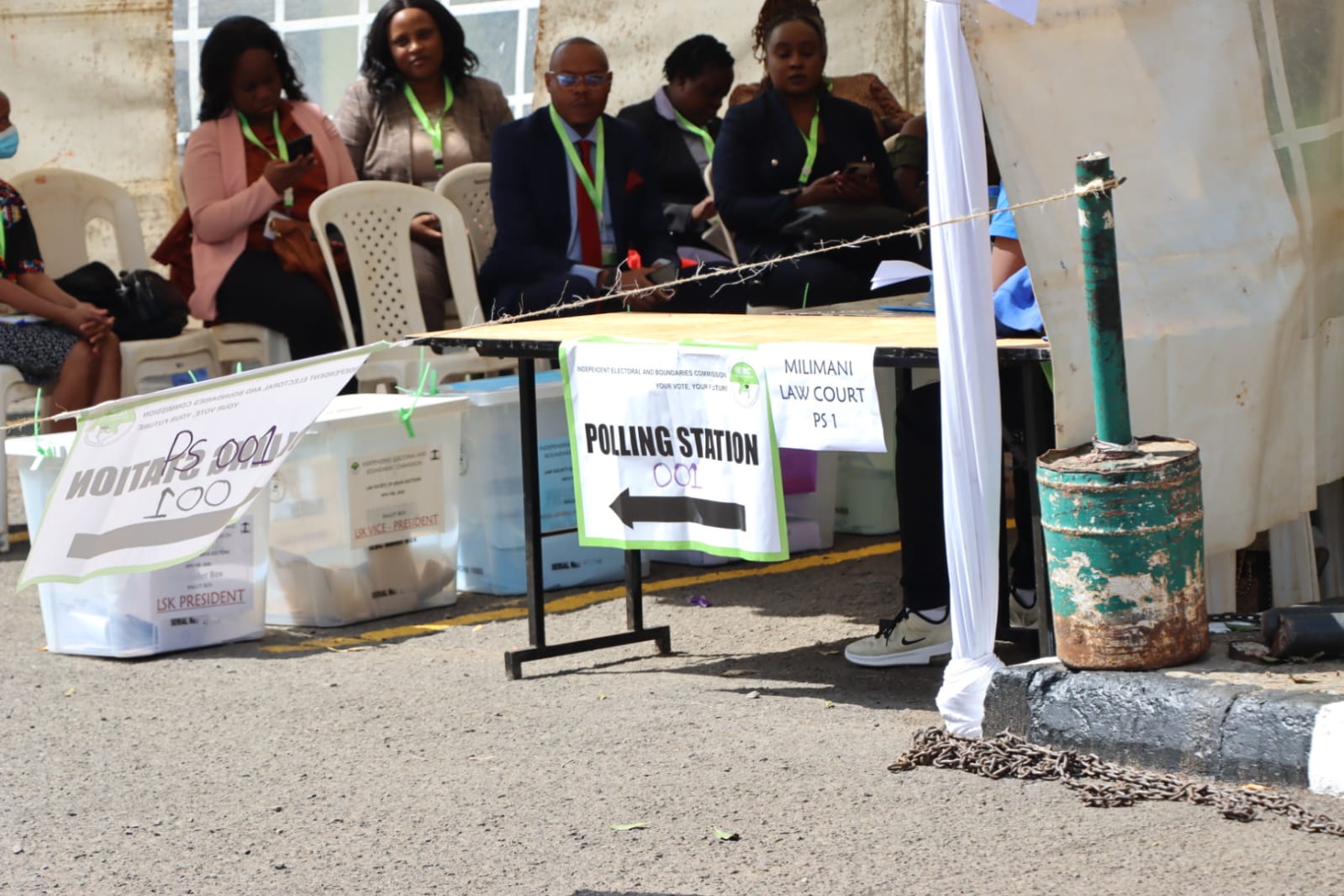
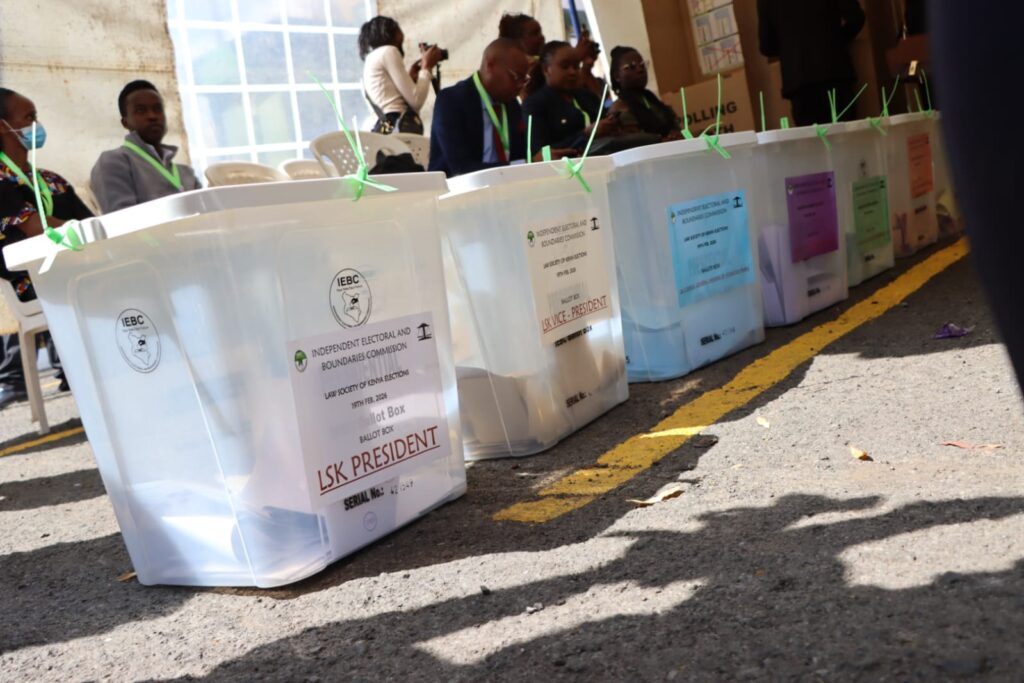
The Law Society of Kenya (LSK) elections have officially kicked off this morning, setting the stage for a high-stakes contest that is expected to shape the future direction of the legal profession.
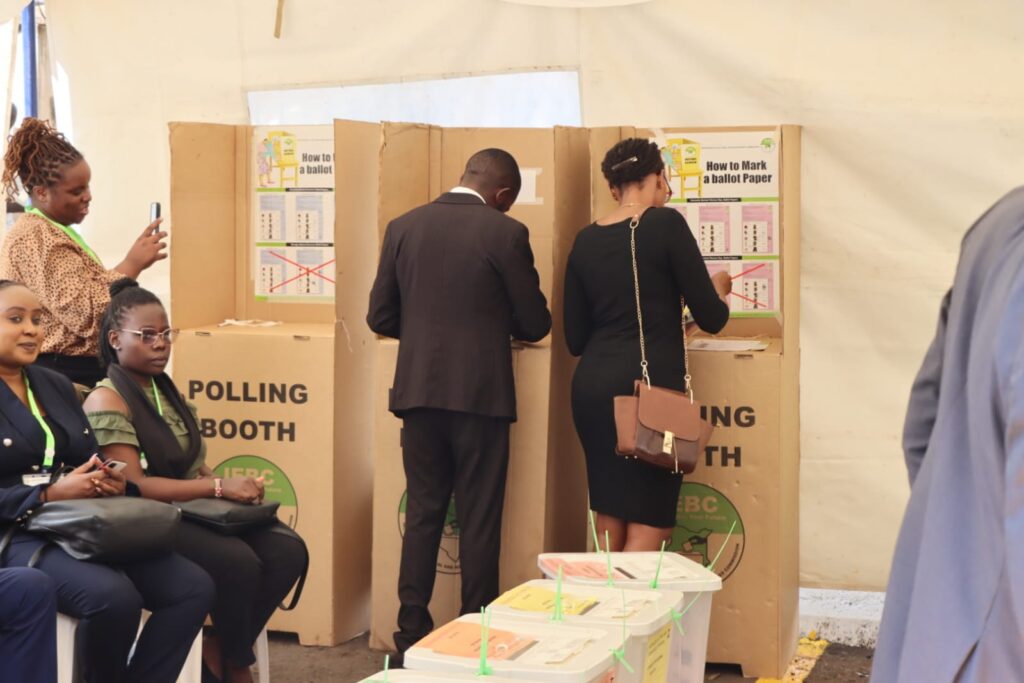
Voting is underway across designated polling centres, with lawyers turning out to elect new leadership for the Society.
The outgoing council assumed office on March 22, 2024, for a two-year term, and its exit has triggered a highly competitive race that will determine the society’s leadership at a politically sensitive moment for the country.
The polls come at a critical time, as the legal fraternity continues to play a central role in governance, constitutionalism and the rule of law.
On the ballot is the election of the LSK president and vice president, three representatives of the general membership of the society, four upcountry representatives, three Nairobi representatives, and one Coast representative who ordinarily practises at the Coast.
The current office holders are Faith Odhiambo as president and Mwaura Kabata as vice president.
The general membership representatives are Tom K’opere, Teresia Wavinya, and Hosea Manwa.
Nairobi is currently represented by Gloria Kimani, Irene Otto, and Stephen Mbugua, while Vincent Githaiga, Lindah Kiome, Hezekiah Aseso, and Zulfa Roble serve as upcountry representatives. Elizabeth Wanjeri is the Coast representative.
Attention is firmly fixed on the contest to replace Odhiambo as the 52nd LSK president, which has attracted three heavyweight contenders.
Among those seeking the top seat of President are lawyer Peter Wanyama, Senior counsel Charles Kanjama, and Mwaura Kabata.
The vice president’s position is also hotly contested. Wanjeri, who currently serves as the Coast representative, is competing against Debora Anditi and Teresia Wavinya, who presently sits on the council as a representative of the general membership.
Within the general membership category, Ndegwa Wahome and Tom K’opere are battling for the slot reserved for an advocate of at least 25 years’ standing, a position that counts among the three representatives of the general membership of the society.
Beyond that, a total of 11 candidates are competing for the remaining two general membership positions.
Competition is similarly intense in the regional contests, with 10 candidates vying for the three Nairobi representative positions, eight candidates seeking to fill the four upcountry posts, and two candidates facing off for the single Coast representative seat.
Beyond the council membership, nine candidates are contesting positions in the Advocates Disciplinary Tribunal (ADT).
The ADT is composed of six advocates of not less than 10 years’ standing, alongside the Attorney-General or a representative, the Solicitor General, and the chairperson or vice chairperson of the LSK. In addition, three laypersons are appointed to the tribunal.
Eligibility criteria for the various posts are tightly defined.
The race has been closely watched, with candidates during the campaigns outlining their visions on strengthening the rule of law, protecting advocates’ welfare, and enhancing the Society’s influence in national discourse.
Campaigns officially came to an end yesterday, paving the way for today’s vote.
The elections also come just a year before the country heads into the general election. This factor observers say makes the outcome even more significant, given the Society’s vocal role in matters of public interest and governance.
Voting is expected to continue throughout the day in designated courts across the country, with results anticipated later once tallying is complete.
The Independent Electoral and Boundaries Commission (IEBC) is conducting the elections with over 18,000 registered lawyers expected to vote.