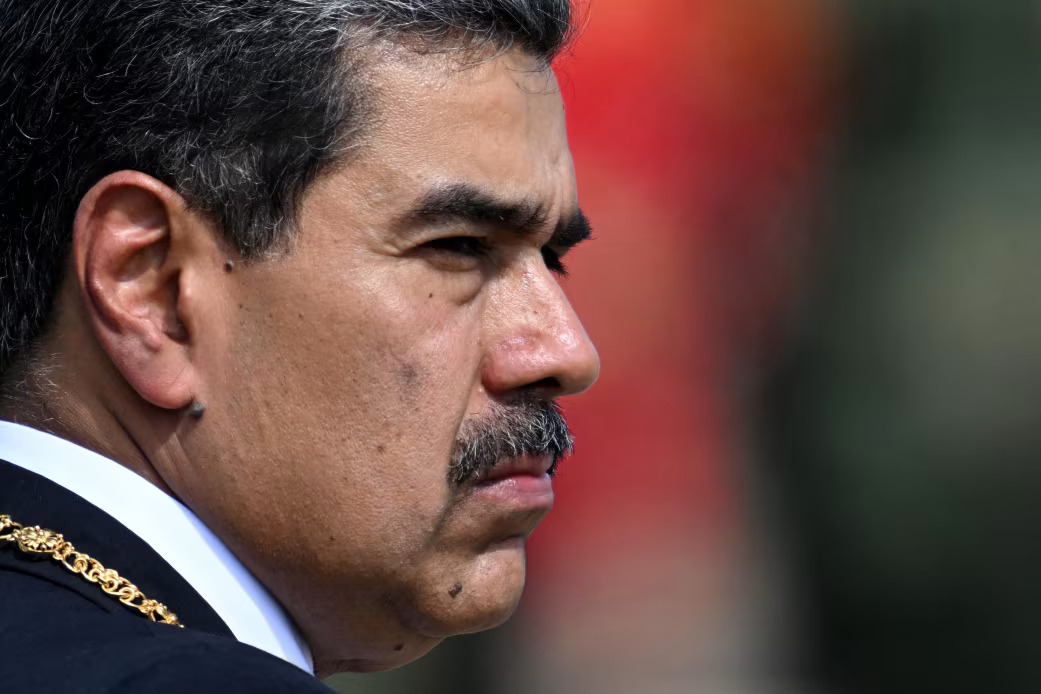
Venezuelan President Nicolás Maduro is facing one of his most politically isolated moments in years after two of his closest regional allies, Honduras and St. Vincent and the Grenadines, shifted to more conservative leadership within the span of a week.
The setbacks coincide with heightened U.S. military activity in the Caribbean and renewed scrutiny of Caracas’ influence across Latin America.
In Honduras, preliminary results from Sunday’s presidential election show leftist candidate Rixi Moncada, President Xiomara Castro’s protégé, trailing far behind two right-leaning contenders: Salvador Nasralla and Nasry Asfura, the latter recently endorsed by U.S. President Donald Trump.
Both candidates have vowed to sever diplomatic ties with Maduro’s government, signaling a significant geopolitical realignment.
In St. Vincent and the Grenadines, Prime Minister Ralph Gonsalves, one of Maduro’s strongest Caribbean allies for nearly 25 years, was defeated by center-right politician Godwin Friday, whose New Democratic Party secured 14 of the 15 parliamentary seats.
The loss marks another blow to the diminishing circle of governments aligned with the Venezuelan leader.
These developments underscore the rapid decline of Chavismo’s influence across the region. Once rooted in widespread left-wing populism under Hugo Chávez, the movement has steadily lost ground as Latin American electorates swing between ideological poles.
Even traditionally sympathetic governments in Brazil, Chile, Mexico and Colombia have kept Maduro at arm’s length since Venezuela’s heavily disputed 2024 election, in which he claimed reelection despite significant evidence of fraud.
Relations between Venezuela and its neighbors have been shaped by political pendulum swings. In Colombia, President Gustavo Petro initially rebuilt ties with Caracas but has since expressed concern about Venezuela’s “lack of democracy,” though he rejected U.S. claims linking Maduro to drug trafficking.
Argentina’s relations have similarly deteriorated, especially under libertarian President Javier Milei, who has denounced socialism and distanced himself sharply from Caracas.
Other countries, including Ecuador, El Salvador and Bolivia, have also moved rightward, leaving Maduro with increasingly little ideological company.
Brazil’s current president, Luiz Inácio Lula da Silva, restored diplomatic relations after returning to office three years ago, but analysts note that the partnership remains far weaker than during his earlier presidency.
Maduro’s remaining regional allies, Cuba and Nicaragua, offer moral support but little else. Cuba, in the grip of one of its worst economic crises in decades, has reaffirmed political solidarity but avoided committing to any military response should tensions escalate.
Nicaragua’s Daniel Ortega has criticized the U.S. naval buildup around Venezuela but has not offered concrete assistance.
The U.S. has deployed more than a dozen warships and roughly 15,000 personnel to the region under “Operation Southern Spear,” a show of force Washington says is intended to counter narcotrafficking. Sources told CNN that President Trump convened senior officials Monday to discuss next steps regarding Venezuela.
Maduro responded over the weekend with characteristic defiance, framing the U.S. pressure campaign as part of a long history of sanctions and economic warfare. Those who have worked with him say he is preparing for eventual negotiations with Washington and will avoid giving up leverage unless forced.
A diplomat in Caracas told CNN that Maduro is betting the U.S. lacks the political will for military intervention, a calculation informed by years of U.S. reluctance toward foreign entanglements and the isolationist leanings of Trump’s voter base.
Still, with allies dwindling and military pressure rising, Maduro’s longstanding strategy of political endurance faces new tests, and the regional landscape looks increasingly hostile to Venezuela’s once-dominant revolutionary project.
Source: CNN
Written By Rodney Mbua