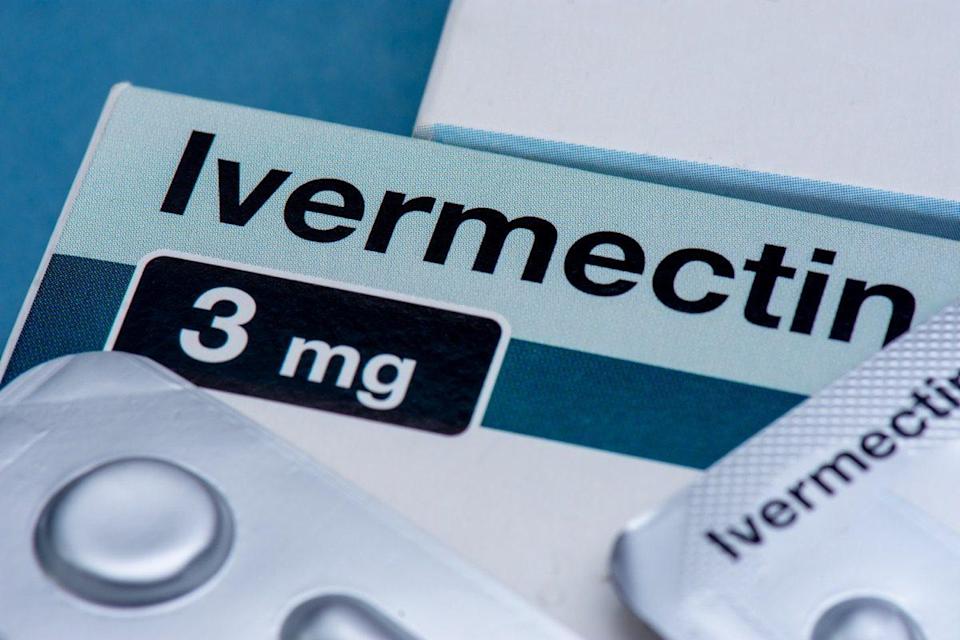
Kenya has been chosen for a mass drug administration trial of ivermectin, a 1975 antiparasitic drug used to treat cattle head lice and heartworms.
This follows a similar trial in Mopeia district, Mozambique, as part of the BOHEMIA project, which seeks to determine whether or not the preferred veterinary drug can be used to treat malaria.
Consultants will launch a malaria trial in Kwale County in collaboration with the Kenya Medical Analysis Institute and the Kemri Wellcome Trust Belief Analysis Programme.
According to Marta Maia, co-principal investigator in Kenya, the trial seeks to answer a number of questions concurrently.
“Gone are the times of siloed well being analysis. In the present day, we have now scientists, entomologists, anthropologists and neighborhood well being employees, all sharing the identical desk,” she mentioned.
Kwale County covers 3,200 square kilometers and is well-known for its hot and humid climate, with two wet seasons in the first half of the year and towards the top, ideal for mosquitos to thrive, according to the investigator.
“Starting from 20-30 %, it has the very best malaria prevalence in Kenya’s coastal area,” the researchers mentioned in a press release.
“Msambweni and Lungalunga, sub-counties in Kwale have been chosen because the goal areas for the MDA [mass drug administration] as their homogenous, rural inhabitants of over 375,000 inhabitants can self-contain the complete examine.
“In contrast to within the Mopeia district, the place a full census was carried out for the MDA, in Kwale, the undertaking will solely undertake a demographic survey as there’s pre-existing information from the nationwide census of Kenya.”
Apart from the epidemiological benefits of choosing Kwale, they stated, the location is also one of the areas with the highest cattle density in Japanese Africa, a factor that will likely be extremely useful for the project, which will consider the role of animals in malaria transmission alongside that of humans.
“Mapping has proven important overlap between the cattle-owning and malaria-affected populations,” the researchers mentioned.
Mr. Joseph Mwangangi, a co-principal investigator, stated that this can help to strengthen the information gathered.
“The one factor that Mozambique and Kenya have in widespread is maybe malaria. These are two nations with very totally different epidemiology, social constructions, and local weather circumstances and such variety of knowledge will play a vital position in informing coverage choices sooner or later,” he mentioned.
The trial will primarily evaluate the safety and efficacy of ivermectin in preventing malaria transmission at the community level. However, it will also include five sub-studies on demography, health economics and animal well being, entomology, and environmental impact.
“After step one of choosing the goal neighborhood for the MDA, the workforce will begin neighborhood engagement actions to make approach for the sleek introduction of the demographic survey,” the researchers mentioned.
“The MDA, which is the spine of this undertaking, is anticipated to happen round Might 2023.”
They stated that the environmental impact sub-study is unique to this trial and will most likely be led by Virginia Tech, a research university in the United States.
“This sub-study will assess whether or not mass administration of ivermectin to people and cattle may have any subsequent damaging environmental results,” the researchers mentioned.
“In the meantime, the entomology workforce in Kenya will probably be following the footsteps of the work carried out in Mopeia the place a domestically designed insectary and laboratory had been set as much as examine native mosquito populations.”
Unlike in Mopeia, where the work was carried out by a large group of fieldworkers who needed to be educated for the project, Kwale already has up to 670 educated volunteer neighborhood well being employees who will assist the BOHEMIA workforce with specific aspects of fieldwork, according to project supervisor Mary Mael.
“Having overcome obstacles like disruptions through the early waves of the Covid-19 pandemic and a number of devastating cyclones in Mozambique, the workforce has come out stronger,” she mentioned.
“We’re motivated and excited for this subsequent section of the undertaking, and able to soar by any future hoops we could face. Hopefully, all of the exhausting work may have been value it when we have now a brand new addition to the malaria management toolbox.”
In response to a Nationwide query on the use of ivermectin in August last year, the Pharmacy and Poisons Board (PPB) stated that the drug was only authorized to treat lymphatic filariasis, or elephantiasis, one of many untreated tropical illnesses.
The issue arose after the nation discovered that a number of hospitals in Kisumu, Mombasa, and Nairobi were using ivermectin to treat Covid-19 patients, despite the fact that it had been declared unfit for human use by the national pharmaceutical regulator.
“Present proof doesn’t assist using ivermectin for therapy or prevention of Covid-19, and thus just isn’t licensed to be used in administration of Covid-19 in Kenya,” PPB mentioned.
The Health Ministry determined that the drug is harmful to people.
“Ivermectin is at the moment on worldwide well being regulators’ radar — it’s seen to be probably dangerous as per the World Well being Organisation.”
Scientists tested the drug on humans but found no positive effects, even after administering as much as 400mg, which isn’t really helpful even for animals due to its toxicity, according to Dr. George Njoroge, founder of the Naivasha-based Centre of Africa’s Life Sciences who helped develop Boceprevir (Victrelis), a drug used globally to treat hepatitis C.