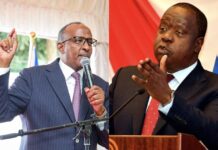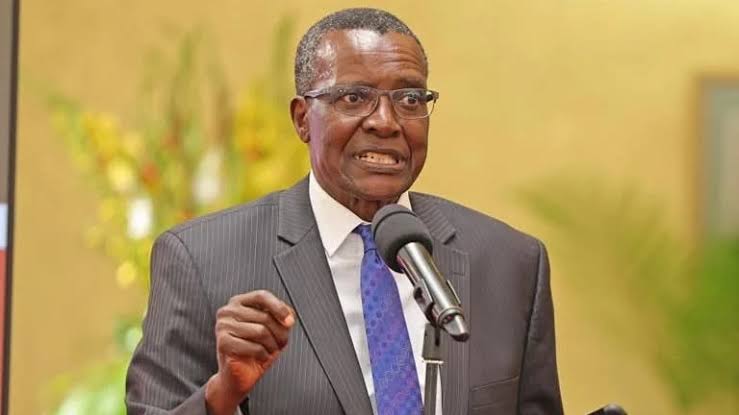
Chief Justice (Emeritus) and United Green Movement (UGM) presidential candidate David Maraga has urged President William Ruto to make public the details of a recently signed cooperation agreement between Kenya and the United States government.
Speaking at the Jumuia Conference Centre in Limuru, Maraga warned that the alleged commercialisation of key government institutions could have far-reaching consequences for the country.
He claimed that ongoing investigations would reveal additional undisclosed deals reportedly being conducted by the State.
Maraga noted that while Kenyans welcome development initiatives, concerns persist over the manner in which major projects—such as the expansion of the Rironi–Mau Summit Road and the SHA programme—are being implemented.
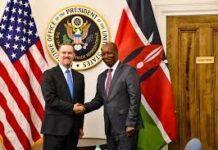
His remarks come amid public scrutiny over a new health cooperation framework signed in Washington on Thursday, prompting questions about whether Kenyan citizens’ medical data could be exposed under the deal.
The Ministry of Health (MoH) has firmly rejected those claims. In a statement on Sunday, Health Cabinet Secretary Aden Duale said the 5-year agreement, which will channel Ksh.208 billion into Kenya’s health sector, explicitly guarantees Kenya’s full ownership of its health data and all related intellectual property.
Duale stressed that the pact deals strictly with aggregate, non-personal information used in national dashboards and health reports.
It does not require the sharing of names, identification numbers, contact details, home addresses, or individual medical files.
“The Agreement sets a clear safeguard: to the maximum extent practical, Kenya shall not provide individual-level data or personally identifiable information to the U.S. Government,” Duale said, adding that the provision was intentionally included to protect Kenyans from privacy breaches.
He noted that the framework aligns with the Constitution, the Health Act (2017), the Data Protection Act (2019), and the Digital Health Act (2023), all of which outline strict standards for privacy and data protection.
According to the ministry, the partnership will help accelerate efforts to eliminate HIV, tuberculosis and malaria, while supporting Kenya’s transition to a self-reliant health system by 2030.
The U.S. Embassy in Nairobi has also reiterated that Kenyan health data will remain secure and anonymous, emphasizing that the Ksh.208 billion is not a loan but direct government-to-government assistance intended to strengthen national health systems and reduce dependence on fragmented donor projects.
Under the agreement, Kenya is required to increase its domestic health expenditure by Ksh.850 million over the five-year period.
The deal makes Kenya the first African nation to sign such a bilateral health cooperation framework with the United States.