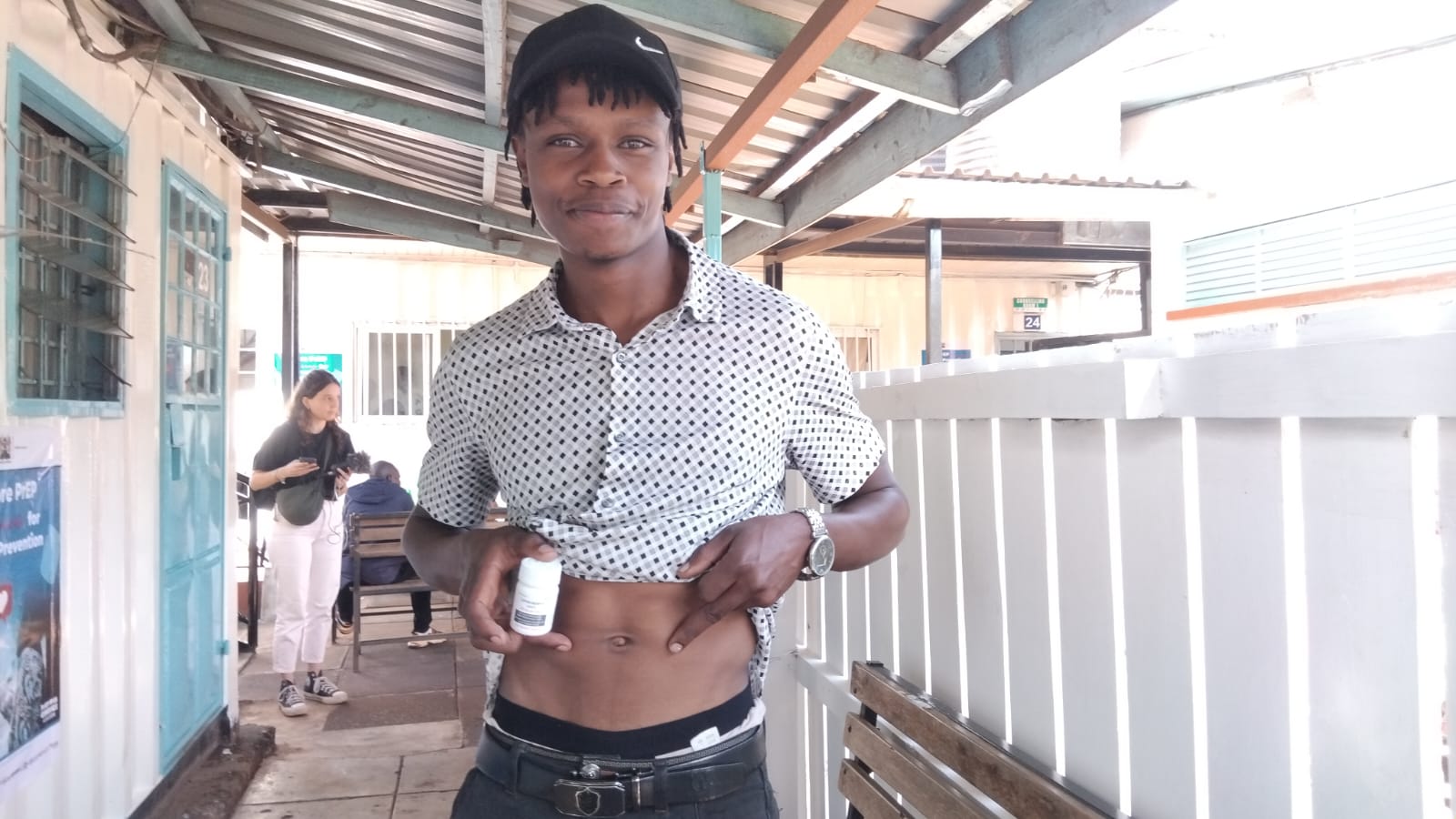
Samson Mutua, a 27-year-old delivery rider in Kawangware, Nairobi, has become the first Kenyan to receive the long-acting HIV prevention injection.
Mutua received two injections of Lenacapavir in the lower abdomen at the Riruta Health Centre in Kawangware at 8 am, and was witnessed by Health Cabinet Secretary Aden Duale.
After the injection, Mutua swallowed two oral Prep tablets immediately to ensure day one protection.
He will take two more Prep tablets tomorrow, Friday. After that, he is protected against HIV for the next six months, after which he will return for another injection.
He will not take any more Prep pills within those six months.
This approach aligns with clinical guidelines issued for the national rollout.
“When I heard about the drug that was coming, I was glad to be a volunteer. I was anxious today, obviously, I’m being pricked on live TV. I was anxious, plus it’s a new drug. But I’m feeling so enthusiastic about it. I’m feeling so good about it. And I feel protected,” he told The Star.
Mutua said he volunteered and qualified for the breakthrough following years of prevention counselling and daily Prep use.
“My whole identification process began in 2017, when there was a case that you were supposed to donate blood; it was an emergency, but I couldn’t because I used to engage in risky behaviour. If you have unprotected sex with someone who has not been tested, that falls under risky behaviours.”
Mutua, who works part-time as a delivery rider and as a community health promoter in Dagoreti South, said he is not married, but is a father of two boys.
The first phase of Kenya’s Lenacapavir rollout is backed by 21,000 starter doses for priority counties with high HIV burden, including Mombasa, Kilifi, Machakos, Nairobi, Kajiado, Nakuru, Uasin Gishu, Kakamega, Busia, Siaya, Kisumu, Migori, Homa Bay, Kisii and Kiambu.
The launch is part of a national strategy to cut new HIV infections to zero by 2030 under the Ministry of Health’s expanded prevention options.
Lenacapavir is a Pre-Exposure Prophylaxis (PrEP) option designed to protect HIV-negative individuals by blocking the virus from establishing infection and is administered once every six months once the initial course is complete. It prevents infection for six months.
“I am also a CHP, I’m a community health promoter for Dagoreti South. I’m championing it amongst the youth because this is added protection. This doesn’t mean that because you’ve been given an injection, you stop using other means of protecting yourself. You have to use other means of protecting yourself because there are still other diseases out there,” Mutua said.
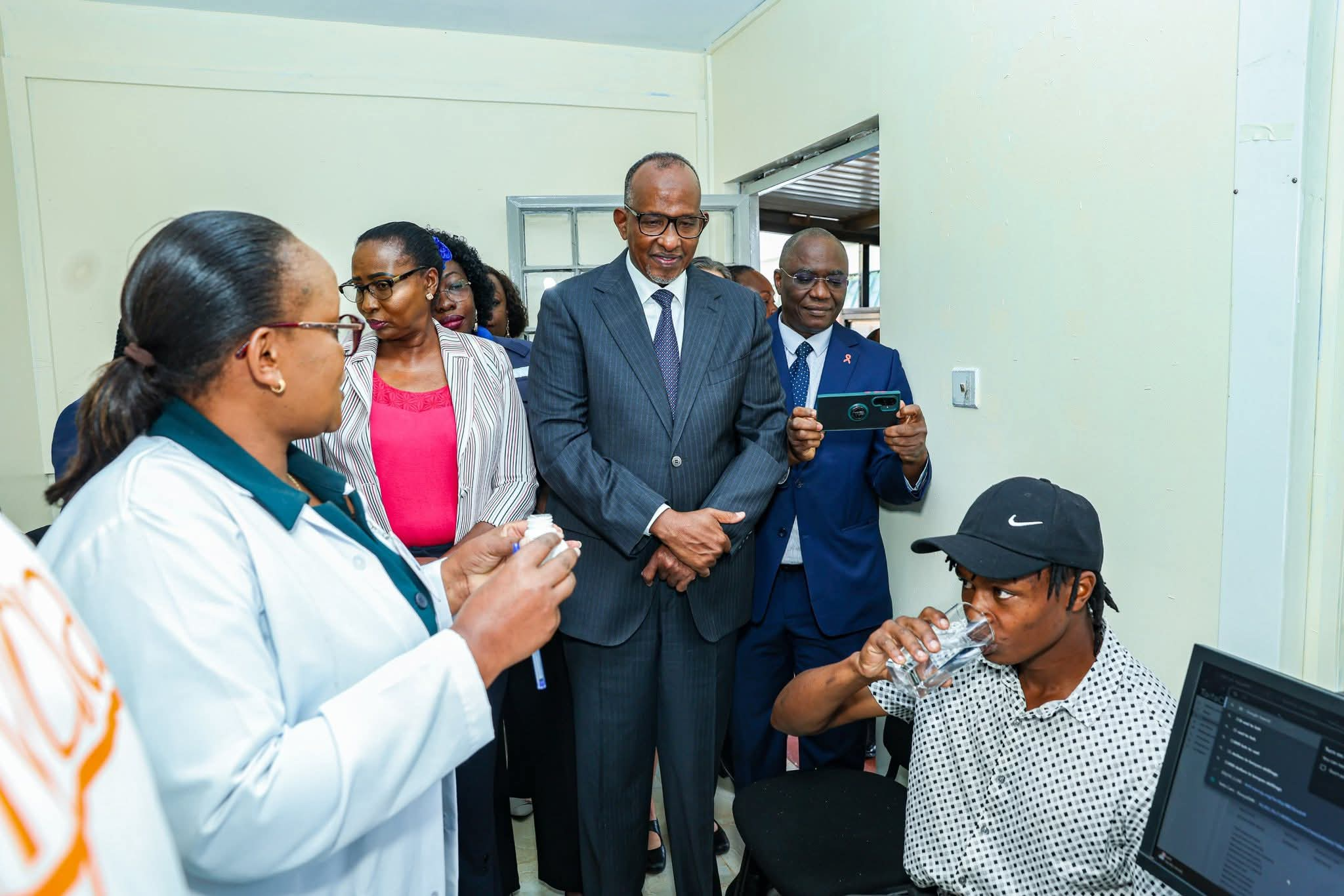
At the launch, Acting CEO of the National Syndemic Diseases Control Council (NSDCC) Douglas Bosire said Kenya’s progress in fighting HIV has been significant, yet the epidemic remains a priority.
“In the year 2013, this country recorded 110,000 new HIV infections … In the year 2024, the number of new cases reduced to 15,000 cases. The number of deaths reduced from 110,000 to 21,000. Yes, that is significant and tremendous as we are making progress,” he said.
Bosire also cautioned that HIV prevention requires a comprehensive package, touching on related issues such as early sexual debut and teenage pregnancy.
“We must take care of the syndemic issues that are related to the manner in which HIV is transmitted … The number of teenagers falling pregnant is testimony to unprotected early sexual debut,” he said.
Health officials say the Lenacapavir strategy, backed by doses received in partnership with the Global Fund, is designed for Kenya’s first 15 high-burden counties, with subsequent phases covering more regions over time. The drug will be offered free of charge at public health facilities under the national programme.
Under the phased plan, Kenya will expand distribution beyond the initial counties to reach all 47 counties, further enhancing prevention services alongside existing methods such as daily oral PrEP and condom promotion.
CS Aden Duale described the rollout as bold leadership in HIV prevention and urged communities to embrace the new option as part of a comprehensive strategy to end the epidemic.