By Peter John
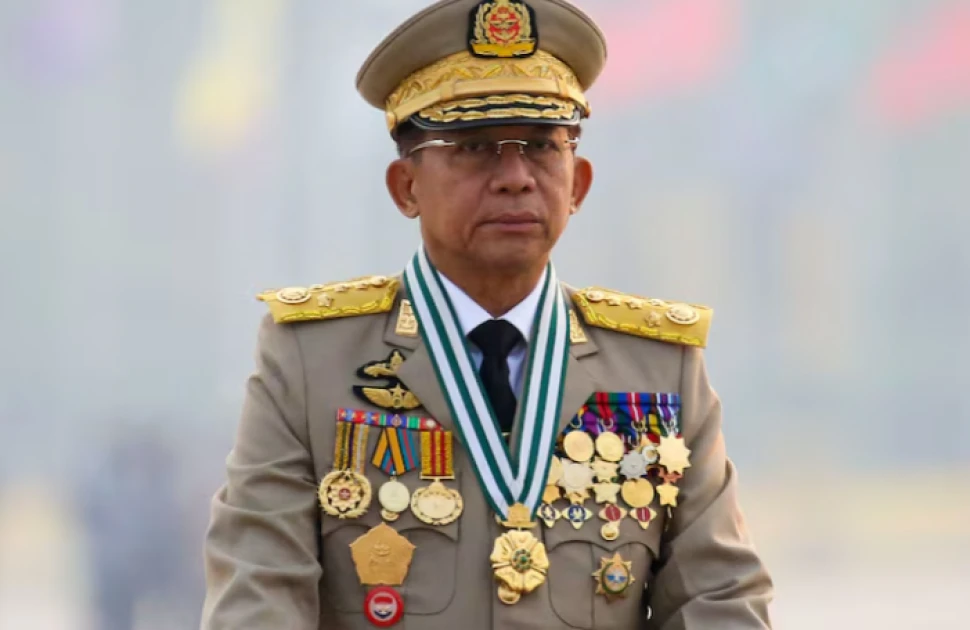
Myanmar’s junta chief Min Aung Hlaing has been elected president, formalising his hold on power nearly five years after overthrowing the elected government in a 2021 coup.
The 69-year-old general secured a decisive parliamentary victory on Friday, backed by lawmakers from the military-aligned Union Solidarity and Development Party and a bloc of military-appointed legislators.
He defeated rival candidate Nyo Saw by 429 votes to 126.
His elevation to the presidency follows a widely criticised election held in December and January, which saw a landslide win for the army-backed party.
Critics, including Western governments, dismissed the vote as a sham designed to legitimise continued military rule under the guise of civilian leadership.
Min Aung Hlaing’s rise marks the culmination of a long-anticipated transition from army chief to head of state. Earlier this week, he nominated loyalist Ye Win Oo to succeed him as commander-in-chief of the armed forces, further consolidating his influence over both political and military structures.
The general first seized power in 2021 by ousting the government of Nobel laureate Aung San Suu Kyi, triggering mass protests that escalated into a nationwide armed resistance.
The country has since been engulfed in a protracted civil war that has devastated its economy and displaced millions.
Despite assuming a civilian title, analysts say the move is unlikely to alter the military’s dominance in Myanmar’s governance. Instead, it is seen as an effort to secure international legitimacy while maintaining tight control over the state apparatus.
The ongoing conflict shows no signs of easing, with the military accused by rights groups and UN experts of widespread abuses against civilians—allegations the junta has consistently denied.
In 2024, the prosecutor of the International Criminal Court sought an arrest warrant for Min Aung Hlaing over alleged crimes linked to the persecution of the Rohingya minority, which forced more than a million people to flee to neighbouring Bangladesh in 2017.
Human rights organisations, including Amnesty International, have condemned his elevation, arguing it entrenches impunity rather than accountability.
Meanwhile, opposition forces—including pro-democracy groups and ethnic armed organisations—have announced a new متحد front aimed at dismantling military rule and establishing a federal democratic system.
However, analysts warn that resistance groups may face increased military pressure and economic constraints, even as regional powers move to engage with the new administration.
With the civil war still raging and political divisions deepening, Min Aung Hlaing’s presidency is expected to further entrench Myanmar’s crisis rather than resolve it.tion, some analysts say.
“It may become even harder to build mutual understanding and trust between groups, reach firmer agreements, and sustain cooperation,” analyst Sai Kyi Zin Soe said of the opposition.