By Andrew Kariuki
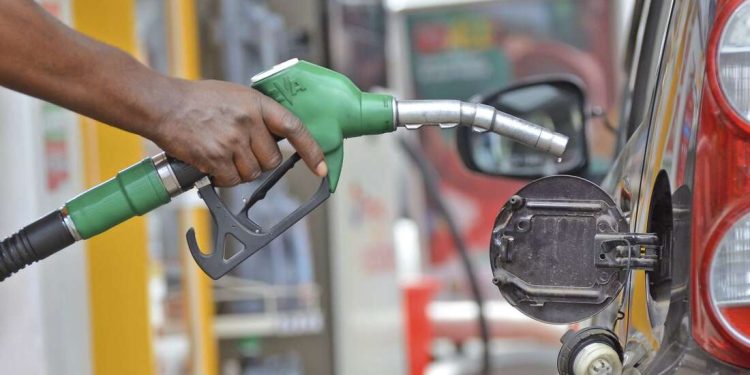
Kenyans are set to dig deeper into their pockets after the Energy and Petroleum Regulatory Authority (EPRA) announced sharp increases in fuel prices under the latest monthly fuel review effective from May 15, 2026 to June 14, 2026.
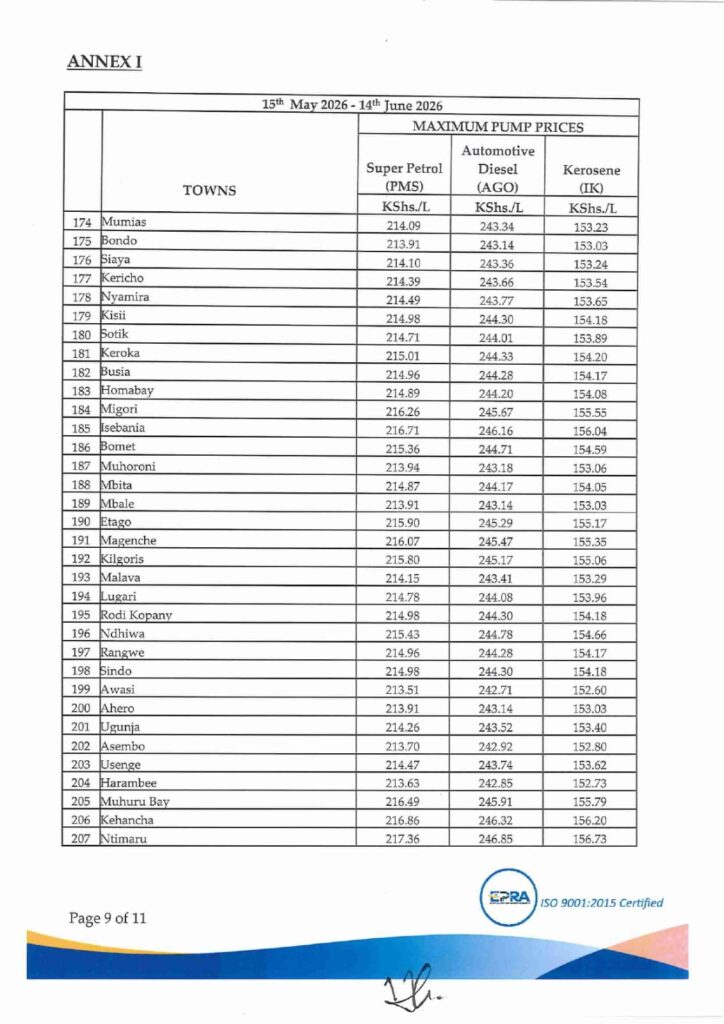
In the new pricing schedule released Thursday, EPRA announced that the maximum retail price of Super Petrol has increased by Ksh16.65 per litre while Diesel recorded a massive Ksh46.29 per litre increase. Kerosene prices however remain unchanged.
The new prices take effect under Section 101(y) of the Petroleum Act 2019 and Legal Notice No.192 of 2022.
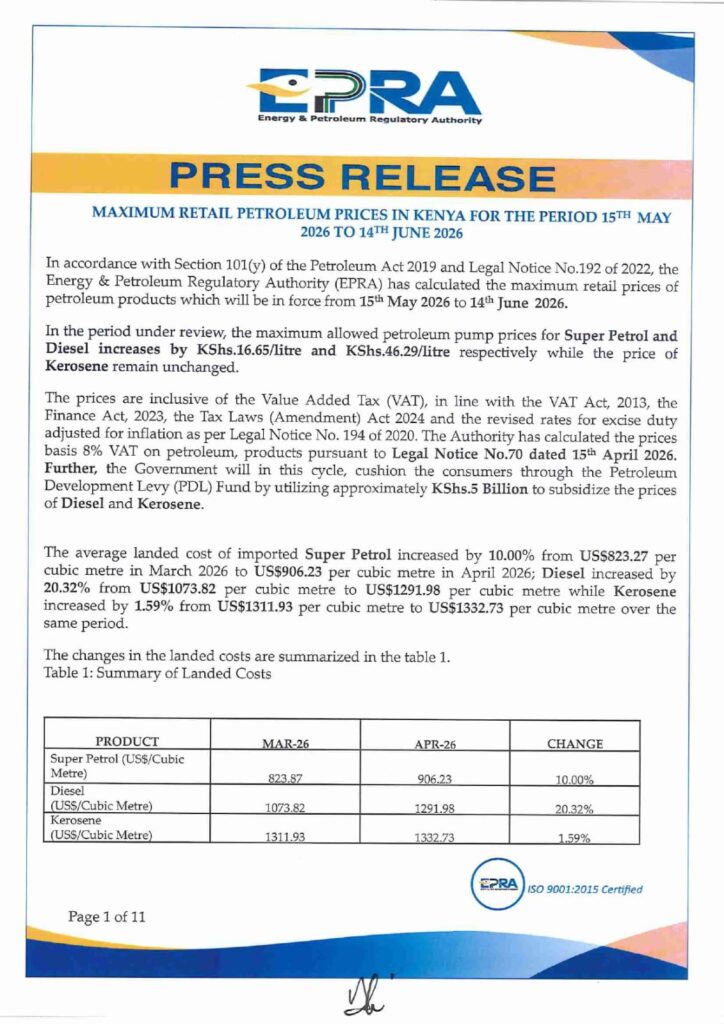
According to the regulator, the prices are inclusive of VAT in line with the VAT Act, 2013, the Finance Act 2023, the Tax Laws (Amendment) Act 2024 and Legal Notice No.70 dated April 15, 2026.
EPRA further stated that despite the increase, the government will utilize approximately KSh5 billion from the Petroleum Development Levy (PDL) Fund to cushion consumers through subsidies on Diesel and Kerosene prices.
“The Government will in this cycle, cushion the consumers through the Petroleum Development Levy (PDL) Fund by utilizing approximately Kshs.5 Billion to subsidize the prices of Diesel and Kerosene,” the statement reads in part.
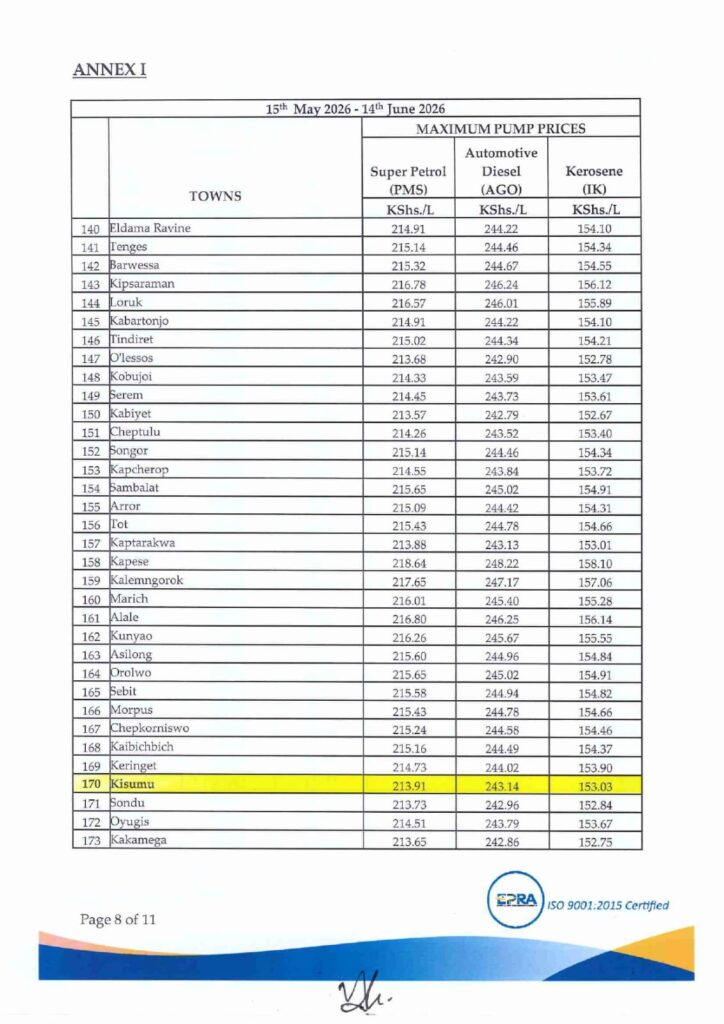
Under the new pricing structure, motorists in Nairobi will now pay Ksh214.25 per litre for Super Petrol, Ksh242.92 for Diesel and Ksh152.78 for Kerosene.
In Kisumu, Super Petrol will retail at Ksh213.91, Diesel at Ksh243.14 and Kerosene at Ksh153.03 per litre.
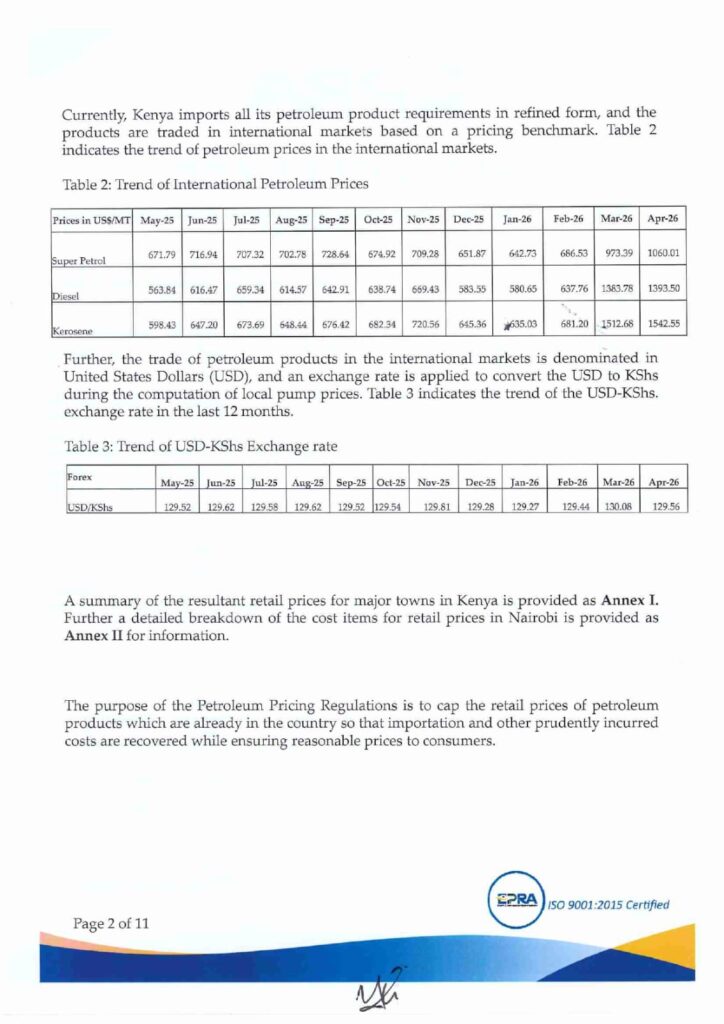
The regulator attributed the rise in local pump prices to increased international landed costs of imported petroleum products.
According to EPRA, the average landed cost of imported Super Petrol rose by 10% from US$823.27 per cubic metre in March 2026 to US$906.23 in April 2026.
Diesel recorded an even steeper increase of 20.32 percent, rising from US$1073.82 per cubic metre to US$1291.98 over the same period.
Kerosene prices in the international market also increased by 1.59 percent from US$1311.93 to US$1332.73 per cubic metre.
The report further noted that Kenya continues to import all petroleum products in refined form, meaning local pump prices remain heavily influenced by fluctuations in global fuel markets and the Kenya shilling exchange rate against the US dollar.
EPRA maintained that the purpose of petroleum pricing regulations is to cap retail fuel prices in order to ensure prudent recovery of importation and operational costs while protecting consumers from excessive pricing.
The pricing schedule was signed by Acting Director General Dr. Eng. Joseph Okech on May 14, 2026.