Mount Kenya, long viewed as a politically cohesive region, is showing signs of fragmentation, with eastern and western counties increasingly at odds over leadership, representation, and development priorities.
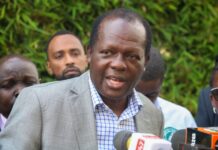
On Sunday, Public Service Cabinet Secretary Geoffrey Ruku delivered a stark warning at the Mt Kenya Leaders Caucus meeting at Nairobi’s Glee Hotel, suggesting that the eastern bloc is prepared to pursue an independent political path if its grievances remain unaddressed.
Speaking to a room that included Cabinet Secretary Rebecca Miano and Government Spokesperson Isaac Mwaura, Ruku described years of perceived marginalisation by western counterparts and framed his remarks as both a caution and a statement of intent.
“Mt Kenya East is ready to break away politically if this pattern continues,” Ruku said, highlighting Deputy President Kithure Kindiki as the region’s anchor. He added that mobilisation is already underway to secure Kindiki’s position as President William Ruto’s running mate in 2027, while keeping open the possibility of a presidential bid in 2032.
The call for unity, frequently invoked at the caucus, now comes with explicit conditions. Eastern leaders are demanding recognition of their political weight and a greater voice in shaping regional and national priorities.
Underlying the current tensions are long-standing grievances about the perception that Kikuyu leaders from Mt Kenya West often treat Meru and Embu leaders from the East as junior partners, only involving them when convenient. This has renewed calls for the region to consider formalising separate political operations to address localized interests.
The East-West tensions intersect with a broader push for Kiambu County to be recognised as a standalone political entity. Led by National Assembly Majority Leader Kimani Ichung’wah and supported by MPs including Gabriel Kagombe and Elijah Kururia, Kiambu lawmakers argue that the county’s population, over 2.7 million, according to the 2019 census, warrants greater representation and development autonomy.
Detachment from the larger Mt Kenya bloc, they contend, would allow Kiambu to secure funding and influence commensurate with its demographic weight, while maintaining alignment with President Ruto.
Historical parallels are striking. During Jomo Kenyatta’s era, Kiambu faced opposition from anti-Kiambu elites such as J.M. Kariuki, and similar dynamics continue today, with leaders from different counties vying for regional dominance. Promising figures from Meru and Embu often find themselves sidelined in these contests.
Meanwhile, former deputy president Rigathi Gachagua is positioning himself as the region’s opposition anchor. Having formed the Democracy for Citizens Party and forged alliances with opposition figures, including Kalonzo Musyoka, Gachagua has accused President Ruto of employing “divide-and-rule” tactics and warned that disunity could undermine Mt Kenya’s influence.
His camp, however, suffered a setback in the recent Mbeere North by-election, where his allies lost narrowly to UDA, prompting plans to contest the results in court.
The unfolding dynamics reveal that Mount Kenya is no longer a singular voting bloc but a contested space where political allegiance, demographic weight, and regional identity collide. With the 2027 election looming, the region’s leaders face the delicate task of balancing internal ambitions with the need for cohesion, a challenge that may determine the future political order in Kenya.
The East-West divide, Kiambu’s growing assertiveness, and Gachagua’s opposition manoeuvres suggest that the era of Mt Kenya’s political predictability is coming to an end. What emerges in its place could reshape the region’s influence on national politics for years to come.