Githunguri MP Hon. Gathoni Wamuchomba made headlines on January 26, 2026, when she attended a United Democratic Alliance (UDA) National Governing Council meeting at State House, Nairobi, and publicly declared her support for “Tutam,” the ruling coalition’s campaign slogan. This marks a striking turnaround for a politician who had been a vocal critic of President William Ruto and a close ally of former Deputy President Rigathi Gachagua.
Gathoni’s political journey over the past year has been marked by high-profile clashes with state authorities and a visible rift with the leadership of the Democracy for Citizens Party (DCP), Gachagua’s political outfit. In April 2025, she was summoned by police over alleged incitement during a presidential tour, reflecting her adversarial stance toward the ruling coalition at the time. She had also been removed from key parliamentary committee leadership roles, a move she described as politically motivated due to her opposition to certain government bills.
Her presence at State House among UDA leaders signals a clear strategic repositioning. By breaking ranks with Gachagua and publicly endorsing Tutam, Gathoni appears to be aligning herself with the ruling party’s momentum and broader coalition-building efforts, particularly as UDA and ODM explore pre-election cooperation ahead of 2027. Analysts see this as a pragmatic move to regain influence and relevance in national politics, securing access to party structures and decision-making circles that could bolster her political career.
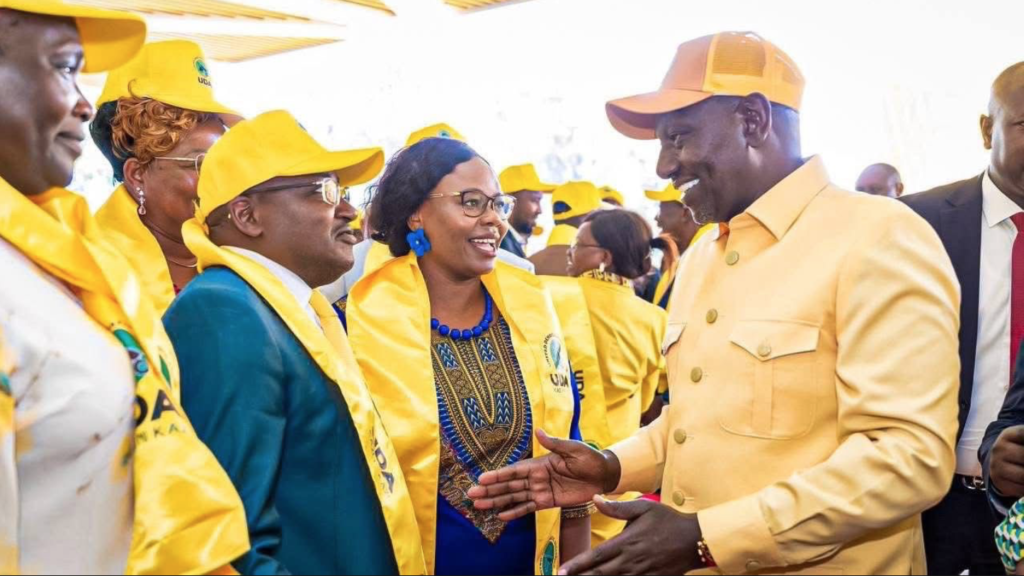
Several factors contributed to Gathoni’s shift. The political landscape in the Mt Kenya region, a key vote-rich area, has been changing, with cracks appearing in DCP’s cohesion. Behind the scenes, disagreements with Gachagua over candidate selections and the party’s direction reportedly fueled friction, making the ruling coalition a more attractive political home. With the 2027 elections approaching, aligning with UDA provides both security and strategic advantage.
For UDA, Gathoni’s realignment demonstrates political pragmatism and the ability to attract former critics. Her support enhances the ruling coalition’s narrative of unity and strengthens its position ahead of the elections. Her move also highlights broader trends in Kenyan politics: the fluidity of party allegiances, the influence of regional loyalties, and the impact of strategic alignments on the balance of power.
Hon. Gathoni Wamuchomba’s shift from outspoken critic to supporter of the ruling coalition encapsulates the dynamic nature of Kenyan politics, where strategic considerations, timing, and personal ambition often outweigh ideological consistency. Her journey underscores how individual political realignments can ripple across party structures, influence regional dynamics, and shape the strategies of major coalitions as the nation prepares for the 2027 polls.