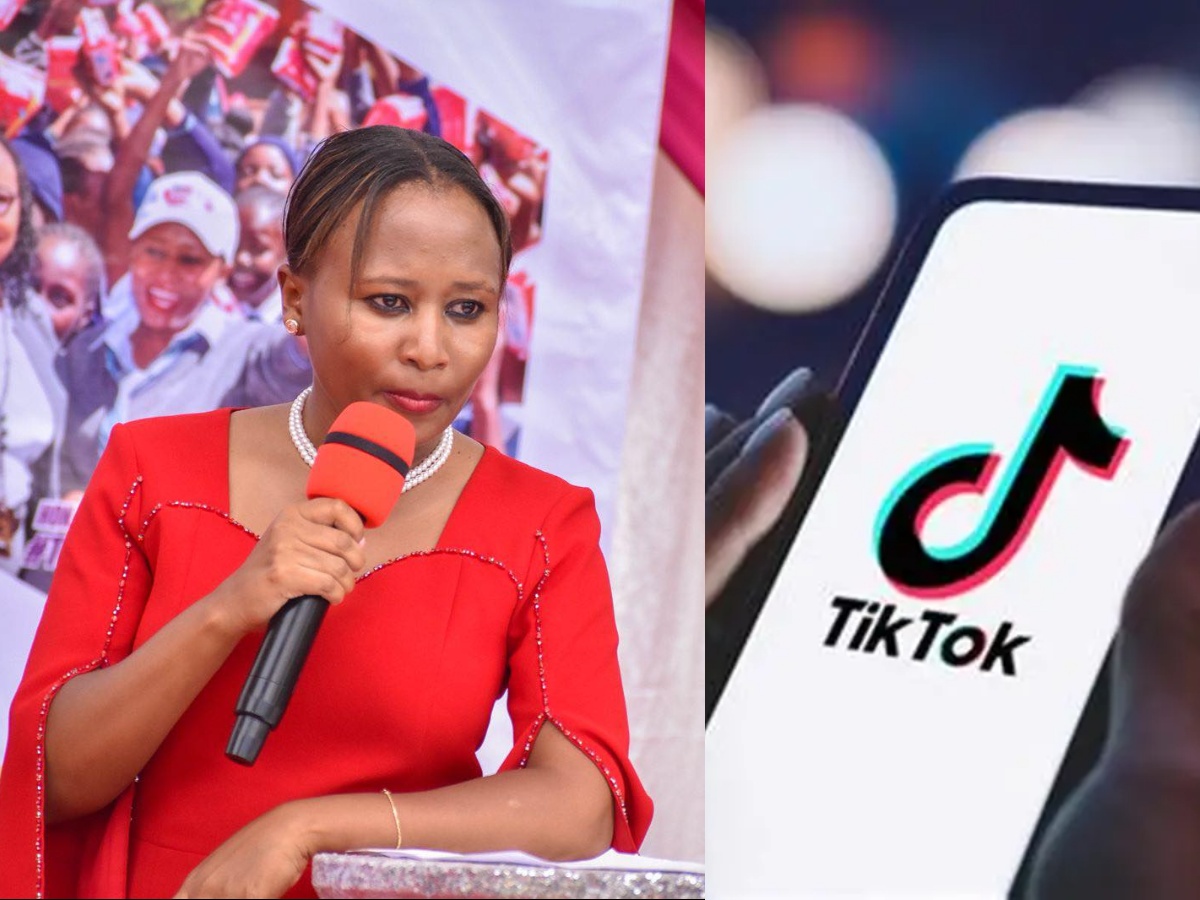
Kirinyaga Woman Representative Njeri Maina schooled senior colleagues in the National Assembly who complained about the prevalence of sexual and explicit content on TikTok.
Speaking while making submissions in Parliament on Tuesday, February 17, Maina told the MPs that they received the videos based on their interests.
She explained that TikTok works on a pinpoint algorithm that recommends content to users based on predicted behaviour.
“I have heard Members say that they saw very graphic videos on TikTok. TikTok operates on a very sequential algorithm. It feeds you what you search for and the information that you look for,” she explained.
Maina commended the Parliamentary Committee on Public Petitions’ recommendation to reject the ban on TikTok but questioned the stringent regulations it had proposed.

She questioned whether the regulations recommended by the Committee would empower the government to frustrate the freedom of expression of the youth.
“We have seen autocratic governments that seek to govern absolutely stifle communication used by the young people to engage with each other. Will the regulations be used to stifle dissent and key fundamental rights and freedoms?” Maina posed.
Maina reiterated the sentiments of MPs who recommended regulating TikTok as opposed to banning it.
The MPs demanded that the regulation be focused mostly on explicit content, fake content and access to age-inappropriate content by children.
The Parliamentary Committee on Public Petitions proposed an amendment to the law to allow the state agencies to regulate social media.
” We recommend that the Departmental Committee on Communication introduce an amendment to the Kenya information and ommuniations akt kap 411 a to mandate the Communications Authority of Kenya to regulate social media platforms in the country,” the report read in part.
Furthermore, the Committee asked the Ministries of Interior and ICT to establish a mechanism for the enhancement of age verification on social media platforms.
In addition, it pushed for discussions with TikTok towards monetisation, which will allow content creators to earn from the app.